10 Painting Art Projects for Kids
Painting is one of the most engaging and educational activities for children. Beyond just being a fun pastime, painting fosters creativity, fine motor skills, color recognition, and emotional expression. Art allows kids to explore their imagination, experiment with different techniques, and develop problem-solving skills.
For parents, painting projects are a wonderful way to encourage independent play, introduce structured learning, and spend quality creative time together. With the right materials and guidance, painting can be adapted to various age groups, abilities, and interests. Whether using watercolors, acrylics, finger paints, or mixed media, the possibilities are virtually endless.
In this article, we’ll explore 10 painting art projects for kids that are fun, simple, and educational. Each project includes a description, materials list, step-by-step instructions, and the developmental benefits for your child. These projects are perfect for home, classroom, or group activities.
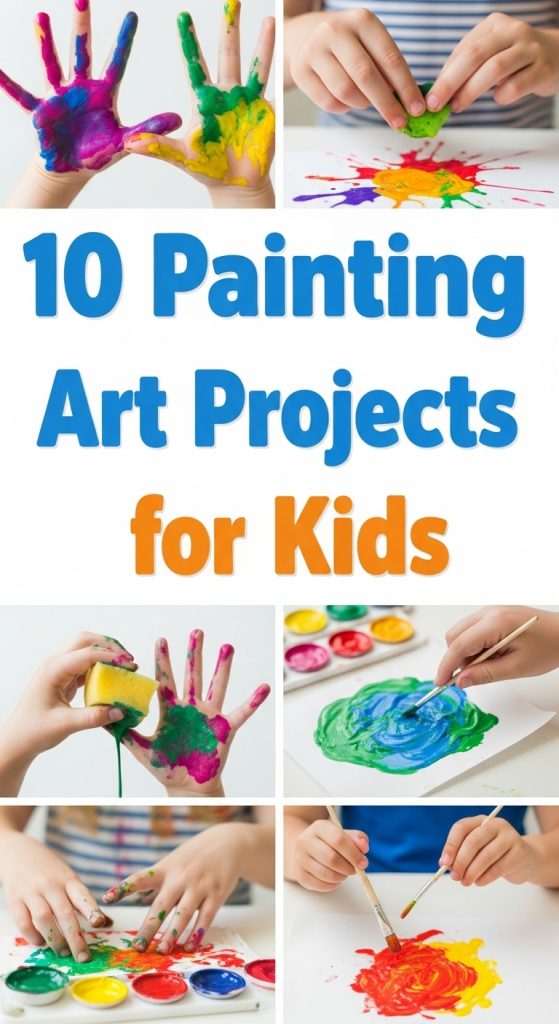
1. Finger Painting Fun
Finger painting is ideal for younger children to explore textures, colors, and shapes.
Materials Needed:
- Non-toxic finger paints
- Large sheets of paper or canvas
- Aprons or old clothes
How to Do It:
- Pour a variety of colors onto a palette or paper plate
- Encourage your child to use fingers to smear, swirl, and dab paint
- Create abstract patterns, shapes, or even simple animals
Benefits:
- Develops fine motor skills and hand-eye coordination
- Encourages creativity and self-expression
- Introduces basic color theory and blending
Finger painting can be messy, but it’s a wonderful sensory experience for toddlers and preschoolers.
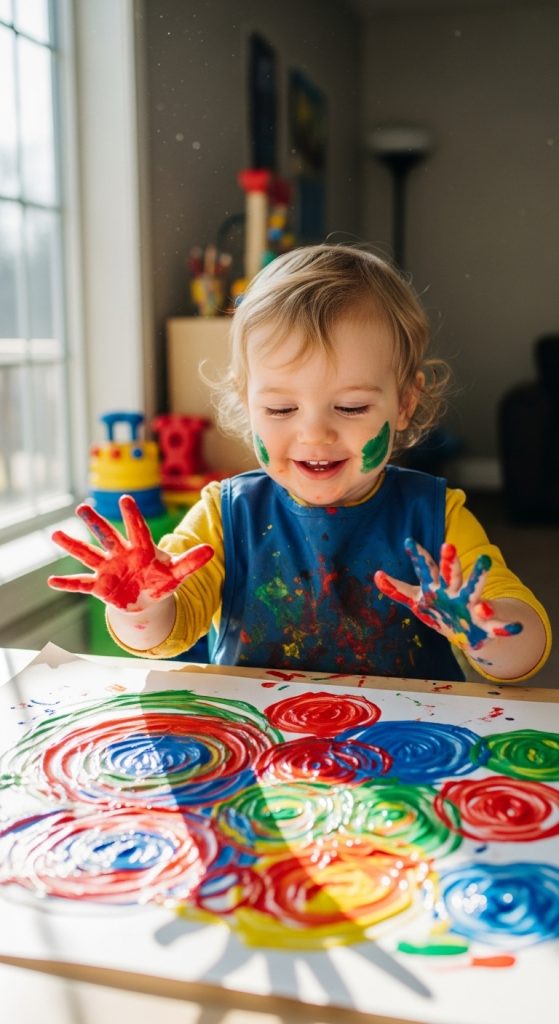
2. Sponge Painting
Sponge painting introduces texture and layering to children’s artwork.
Materials Needed:
- Various shapes and sizes of sponges
- Acrylic or washable paints
- Paper or canvas
How to Do It:
- Dip sponges into paint and press onto paper
- Experiment with layering colors and overlapping shapes
- Create scenes such as forests, clouds, or abstract designs
Benefits:
- Enhances fine motor control
- Teaches pattern recognition and layering
- Encourages experimentation with textures
Sponge painting is ideal for group activities as it allows multiple children to work simultaneously.
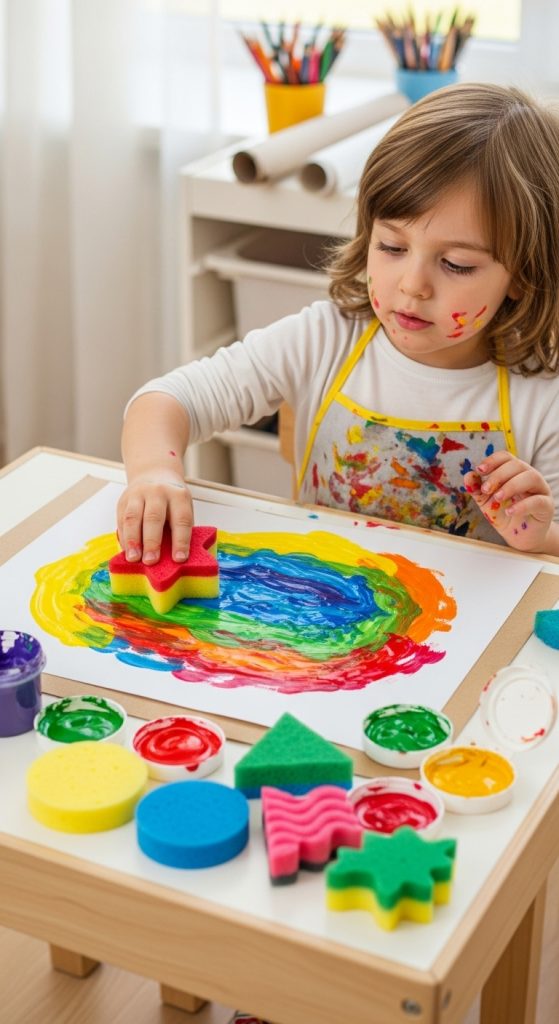
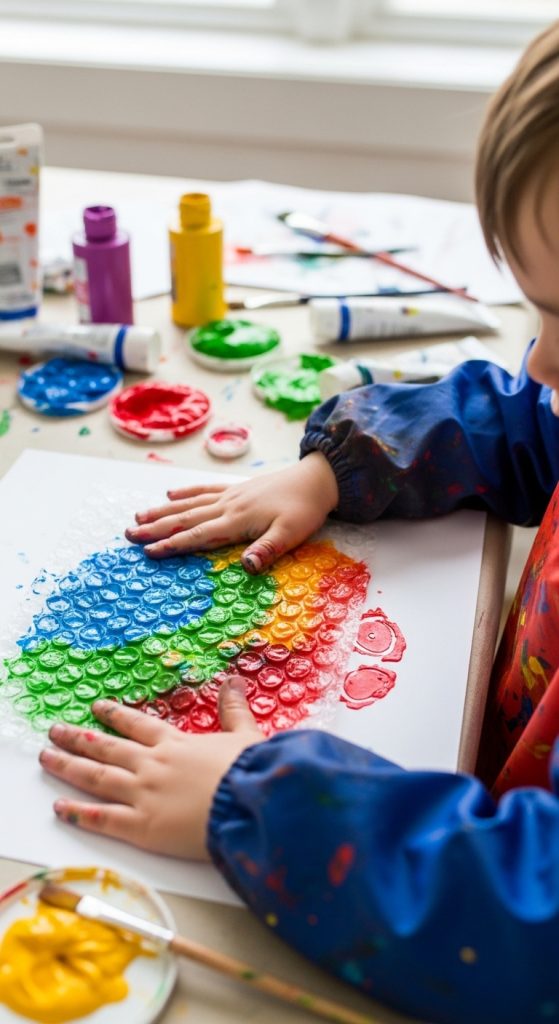
3. Bubble Wrap Painting
This project combines printmaking with painting, producing fun textures.
Materials Needed:
- Bubble wrap sheets
- Paints (tempera or acrylic)
- Paper or cardboard
- Roller or sponge
How to Do It:
- Apply paint to the bubble wrap using a sponge or roller
- Press the painted side onto paper to transfer the pattern
- Experiment with overlapping colors for creative effects
Benefits:
- Develops sensory awareness
- Introduces basic printmaking techniques
- Encourages experimentation with color blending
Kids love the popping textures of bubble wrap, making this project both tactile and visually exciting.
4. Salt and Watercolor Art
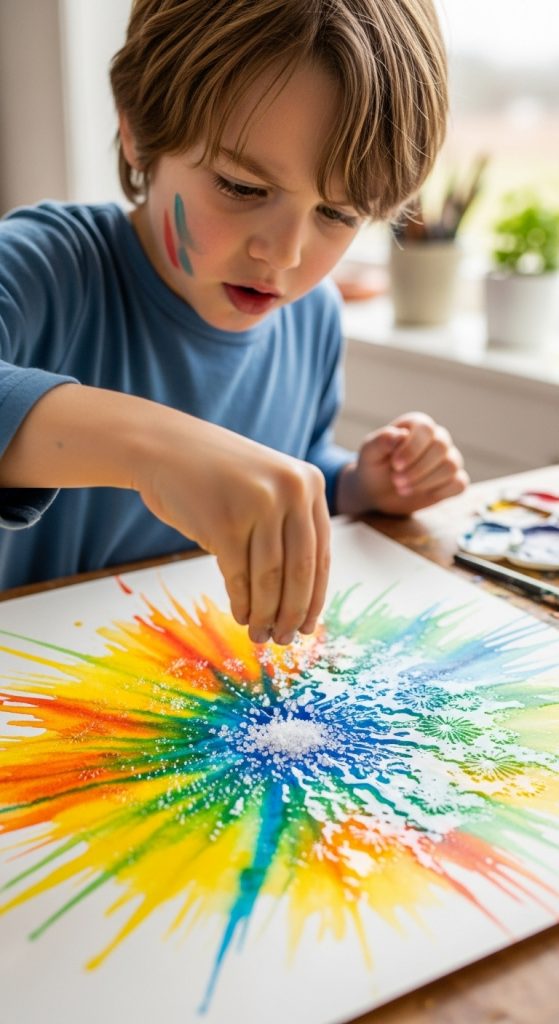
Combining salt with watercolor paints creates beautiful, textured effects that fascinate children.
Materials Needed:
- Watercolor paints
- Paintbrushes
- Watercolor paper
- Table salt
How to Do It:
- Paint a colorful background using watercolors
- While the paint is still wet, sprinkle salt over the surface
- Watch the paint spread and create starburst-like patterns
- Allow to dry completely and gently brush off salt
Benefits:
- Introduces cause-and-effect observation
- Encourages experimentation with new materials
- Teaches patience and careful handling
This project is especially great for introducing kids to the magic of chemical reactions in art.
5. Nature-Inspired Leaf Prints
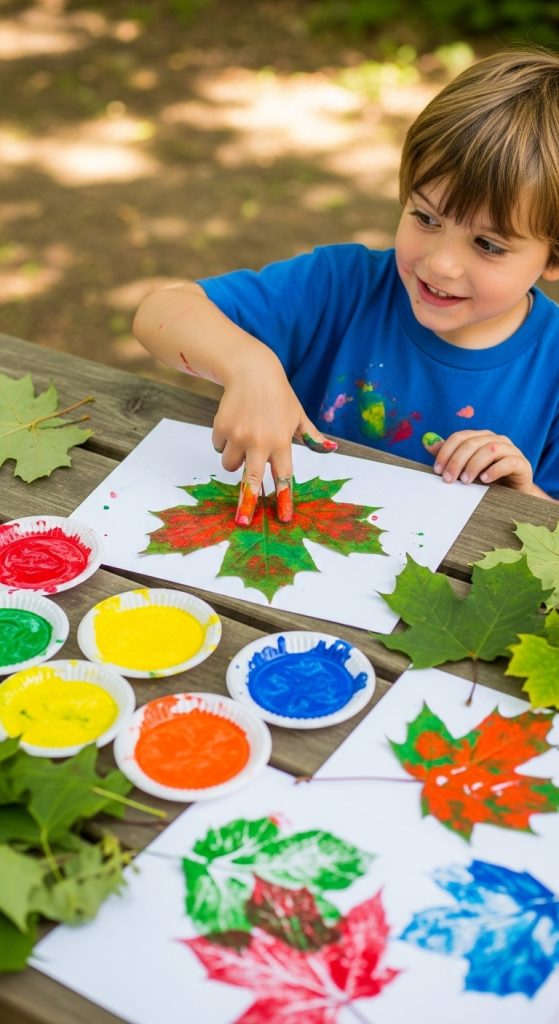
Leaf printing combines art and nature exploration, helping kids learn about plants.
Materials Needed:
- Leaves of various shapes and sizes
- Paints (tempera or acrylic)
- Paper or fabric
- Roller or sponge
How to Do It:
- Paint the surface of a leaf
- Press the leaf onto paper to create prints
- Experiment with different leaf shapes, sizes, and colors
Benefits:
- Encourages observation of natural forms
- Teaches basic printing techniques
- Enhances fine motor skills
Leaf printing is ideal for seasonal projects and helps kids connect with the outdoors.
6. Blow Painting
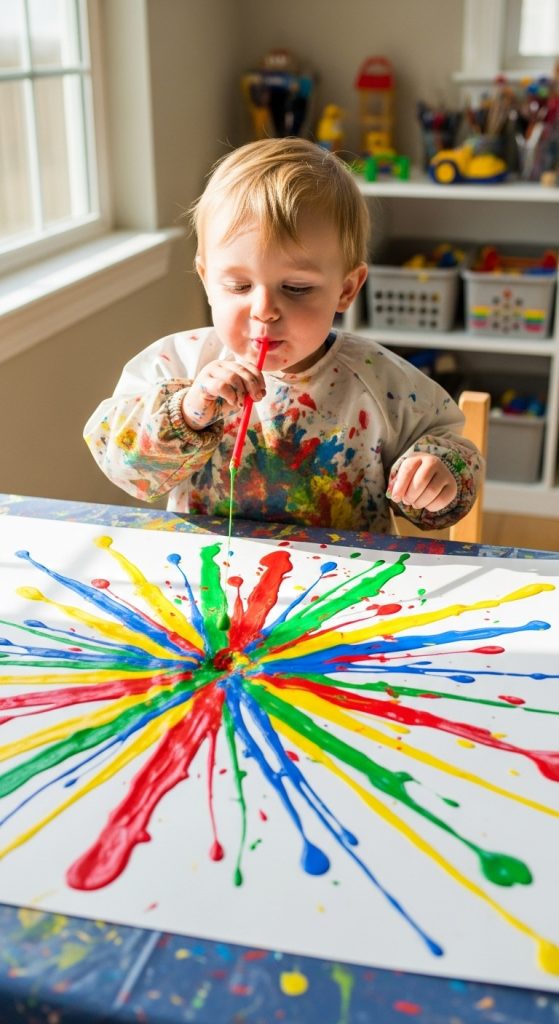
Blow painting introduces movement and creativity using straws or air.
Materials Needed:
- Watercolor or thinned acrylic paints
- Paper
- Straws
How to Do It:
- Place drops of paint on the paper
- Use a straw to blow the paint, spreading it in different directions
- Create abstract landscapes, flowers, or imaginative shapes
Benefits:
- Enhances fine motor control and lung strength
- Encourages experimentation with motion
- Promotes creativity and spontaneity
Blow painting is messy but incredibly fun, producing surprising and unique results every time.
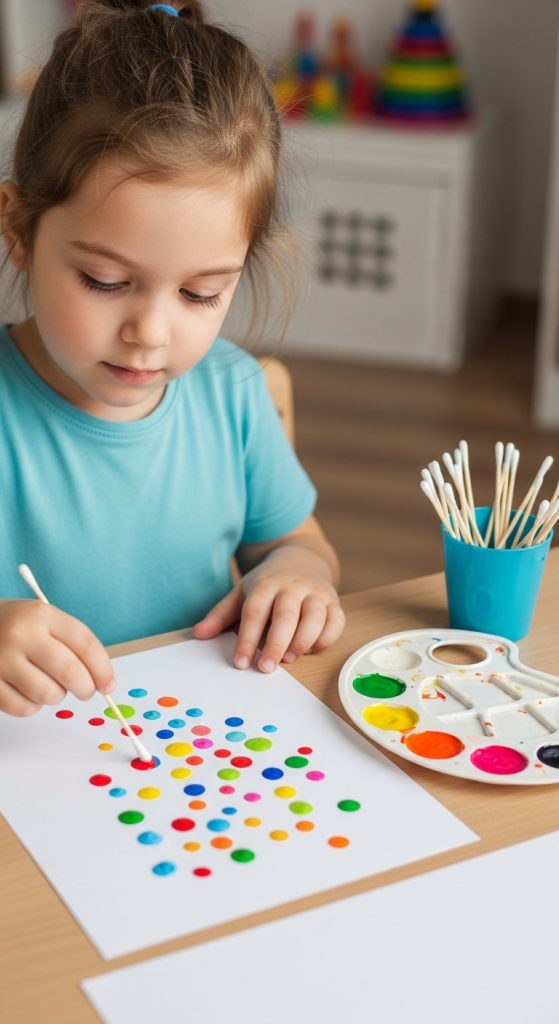
7. Q-Tip Pointillism
Q-tip painting introduces precision and pattern-making, inspired by pointillism art.
Materials Needed:
- Q-tips
- Paints (tempera or acrylic)
- Paper or canvas
How to Do It:
- Dip Q-tips into paint and create small dots on the paper
- Arrange dots to form shapes, animals, or patterns
- Experiment with color blending by layering dots
Benefits:
- Develops fine motor skills and focus
- Introduces concepts of color mixing and shading
- Encourages patience and attention to detail
Pointillism is a perfect project for slightly older kids who can handle fine, repetitive movements.
8. Resist Painting with Crayons
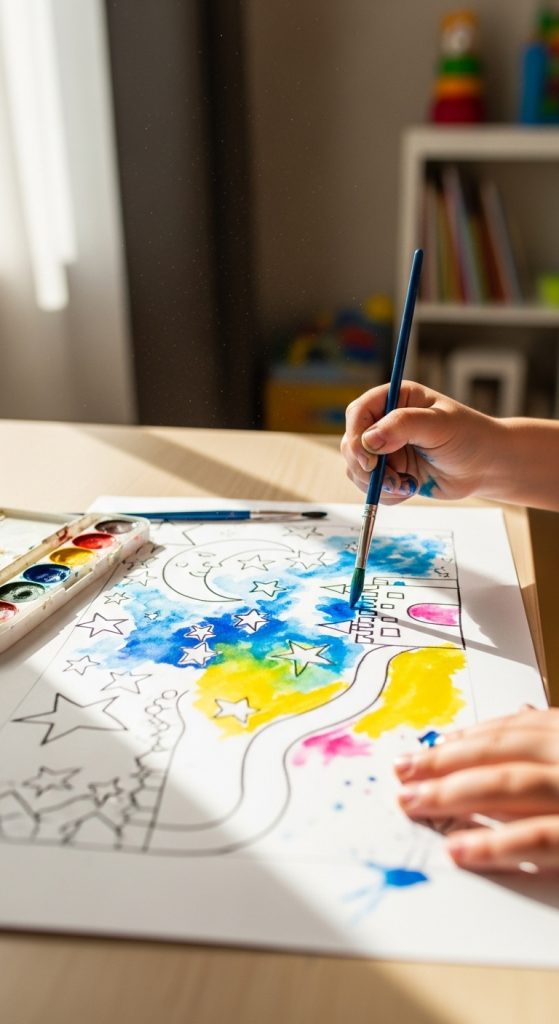
Resist painting teaches contrast and layering techniques while being easy and fun.
Materials Needed:
- White crayons
- Watercolor paints
- Paper
How to Do It:
- Draw shapes, patterns, or pictures on paper using white crayons
- Paint over the drawings with watercolors
- Watch as crayon marks resist the paint, revealing hidden designs
Benefits:
- Teaches layering and color theory
- Encourages creativity and problem-solving
- Fun for introducing kids to experimental art techniques
Resist painting is simple but creates magical effects, captivating children’s attention.
9. Marble Painting
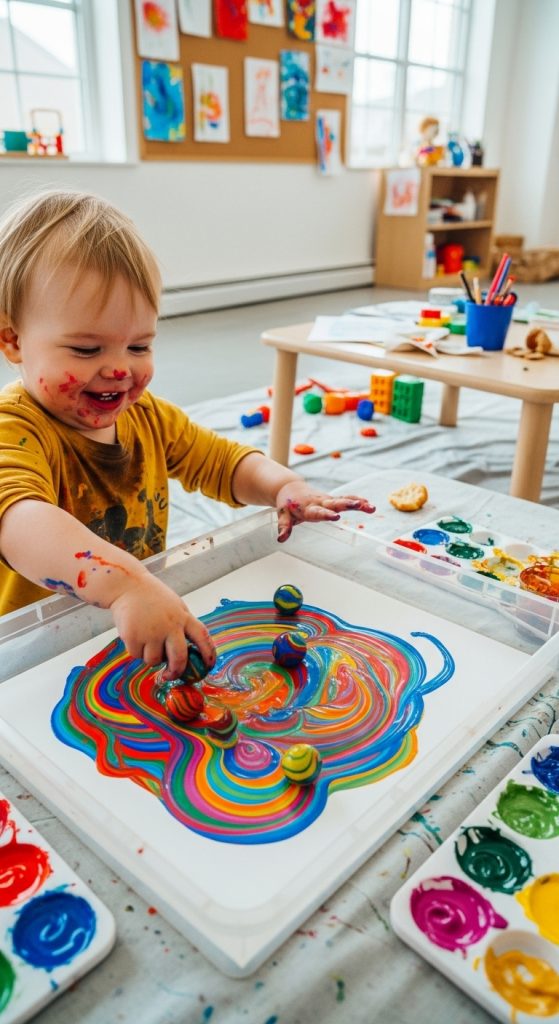
Marble painting combines motion and paint mixing for colorful abstract results.
Materials Needed:
- Marbles or small balls
- Paints
- Box or tray
- Paper
How to Do It:
- Place paint drops on paper inside a shallow box
- Add marbles and tilt the box to roll the marbles through paint
- Experiment with colors and directions to create abstract designs
Benefits:
- Introduces cause-and-effect learning
- Enhances hand-eye coordination and control
- Encourages creativity and experimentation
This project is ideal for messy play days and produces unique abstract artwork every time.
10. Handprint and Footprint Art
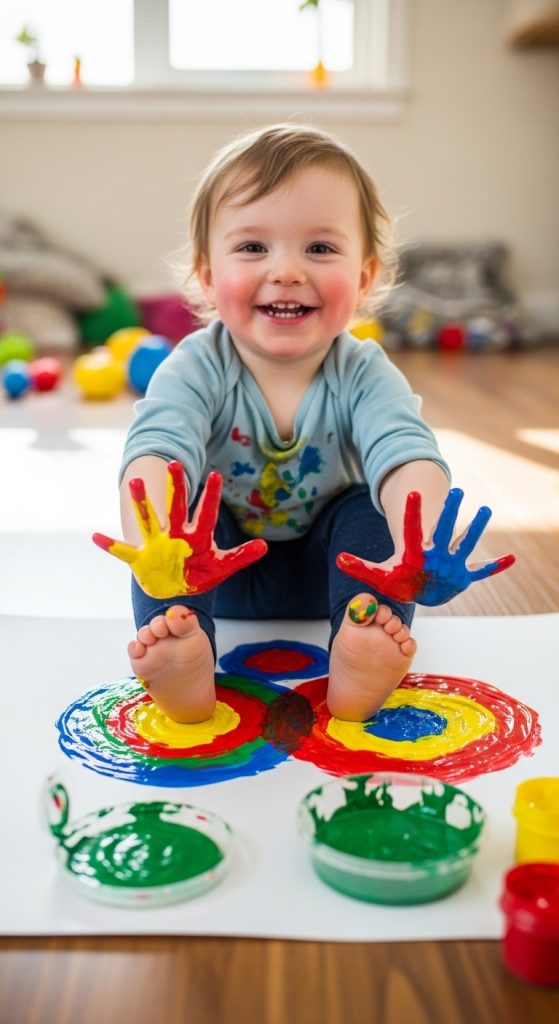
Handprint and footprint painting is personal, fun, and memorable for kids and parents.
Materials Needed:
- Non-toxic paints
- Large paper or canvas
- Wet wipes for easy cleanup
How to Do It:
- Paint hands or feet with bright colors
- Press them onto paper to create shapes, animals, or scenes
- Combine prints to make patterns, trees, flowers, or abstract art
Benefits:
- Encourages sensory exploration
- Creates lasting memories and keepsakes
- Teaches children about shape, proportion, and spatial awareness
Handprint art is also perfect for seasonal projects like trees, turkeys, or flowers.
Final Thoughts
Painting projects for kids are more than just entertainment—they develop essential skills, stimulate creativity, and boost confidence. By exploring different techniques, textures, and materials, children learn to express themselves while enhancing fine motor skills, color recognition, and problem-solving abilities.
When planning painting activities:
- Choose age-appropriate, non-toxic materials
- Protect surfaces with newspaper or plastic sheets
- Encourage exploration, even if the result is messy
- Celebrate effort and creativity rather than perfection
These 10 painting art projects for kids provide a balance of fun, education, and creativity, making them ideal for home, school, or group activities. With these ideas, parents and teachers can foster a love of art, encourage self-expression, and create beautiful memories with children of all ages.