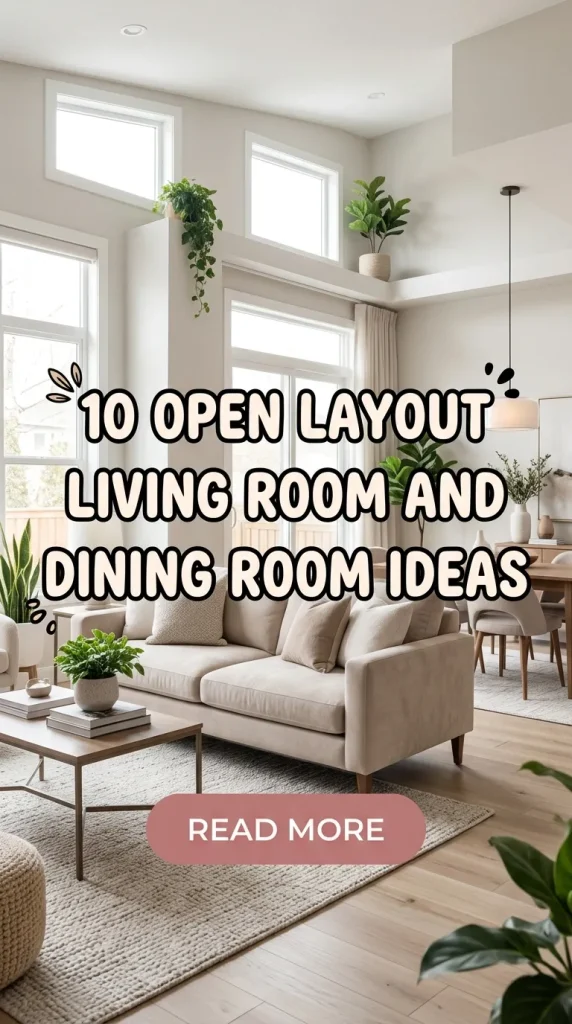
10 Open Layout Living Room and Dining Room Ideas
The open-concept living and dining room layout has become one of the most sought-after designs in modern homes. It removes physical barriers, creating a spacious, airy, and connected environment where families can cook, dine, and relax together. By blending these spaces seamlessly, you can achieve a harmonious balance between functionality and style.
However, designing an open layout requires thoughtful planning to ensure that each area maintains its distinct purpose while still feeling unified. From choosing the right furniture arrangement to selecting complementary colors and lighting, every element plays a vital role in shaping the overall ambiance.
In this article, we’ll explore 10 inspiring open layout living room and dining room ideas that blend practicality with aesthetic appeal. Whether you prefer a modern minimalist look or a cozy farmhouse feel, these concepts will help you create a cohesive and inviting space that truly feels like home.
1. Define Spaces with Area Rugs
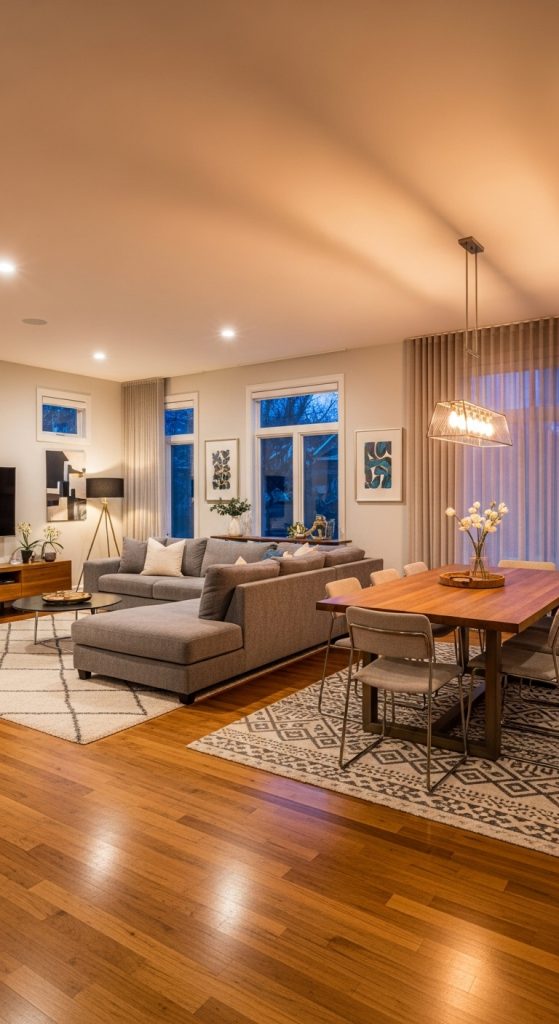
One of the simplest yet most effective ways to distinguish between the living and dining areas in an open layout is through the use of area rugs. Rugs naturally create visual boundaries without the need for walls, helping to anchor furniture and define each zone.
For example, a plush textured rug under your sofa and coffee table can establish a cozy living area, while a low-pile or flat-weave rug under the dining table offers a cleaner, more practical surface for meals. Choose colors and patterns that complement each other—such as a soft neutral in the living room paired with a bolder geometric rug in the dining area.
The key is coordination, not matching. Using different but complementary rugs keeps the space cohesive while adding texture and visual depth.
2. Use Furniture to Create Flow
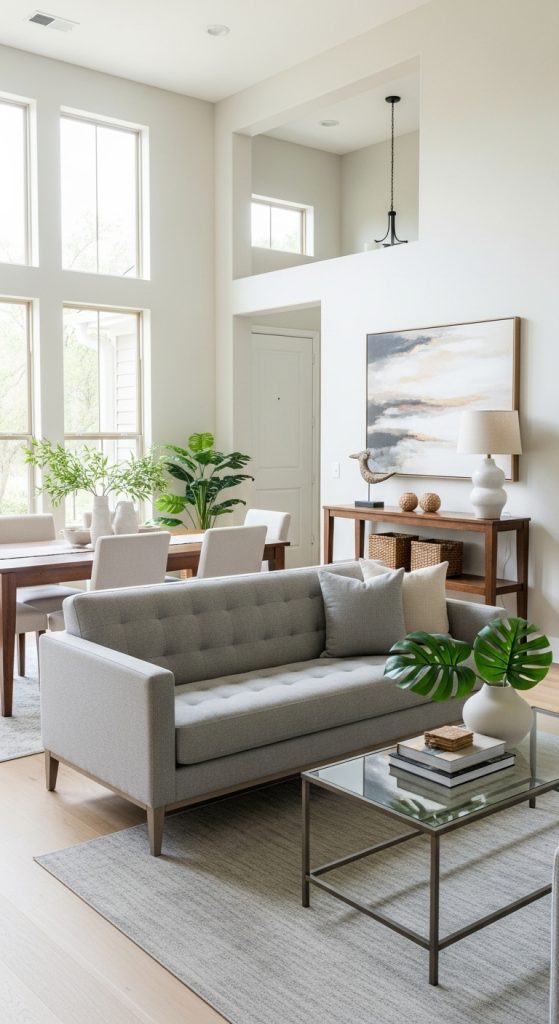
Furniture placement plays a significant role in maintaining openness while subtly separating the spaces. Instead of pushing everything against the walls, try floating furniture to define areas naturally.
A sectional sofa can act as a divider, with its back facing the dining area, signaling the start of the living space. Alternatively, a slim console table behind the sofa can provide both a functional surface and a soft boundary between zones.
Keep traffic flow in mind—ensure that pathways between the kitchen, dining area, and living room remain unobstructed. Arrange furniture to encourage conversation and connection while preserving an easy, natural flow throughout the space.
3. Choose a Cohesive Color Palette
A unified color scheme is essential in open layouts. Since there are no walls separating the spaces, colors must flow smoothly from one area to another.
Start with a neutral base such as white, beige, light gray, or soft taupe to create an airy foundation. Then, introduce accent tones—perhaps blues, greens, or warm terracotta—through textiles, decor, and artwork. Use similar shades across both spaces to maintain visual harmony.
For instance, if your living room has navy throw pillows, bring that same hue into the dining room through chair upholstery or wall art. Consistent use of color ties everything together, ensuring the entire open layout feels intentional and balanced.
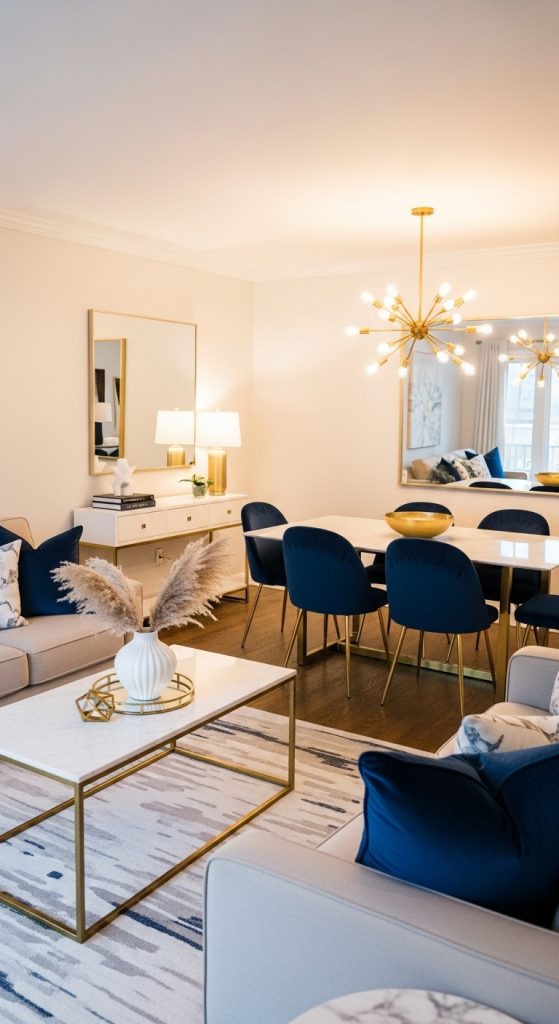
4. Incorporate Statement Lighting
Lighting not only enhances ambiance but also helps define zones within an open-concept layout. By using distinctive lighting fixtures for each area, you can add character and dimension to your design.
Install a chandelier or pendant light above the dining table to draw attention and anchor the dining zone. In the living area, consider layered lighting—floor lamps, sconces, or recessed lights—to create warmth and depth.
To maintain cohesion, ensure that lighting fixtures share a common design language. For example, if your dining chandelier features matte black metal, choose living room lamps or sconces with similar finishes. The result is a coordinated yet distinctive look that complements the open flow of the room.
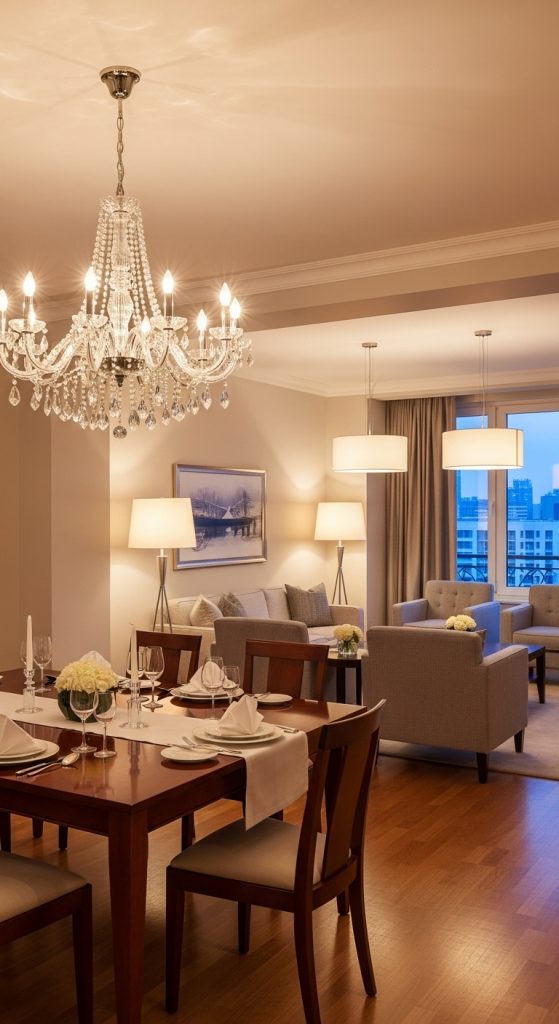
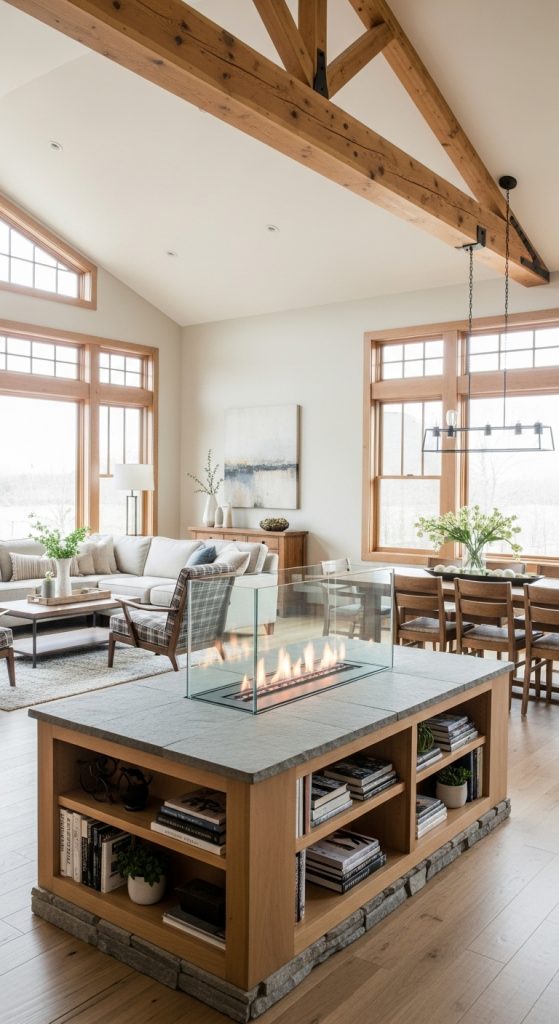
5. Add Architectural Elements for Subtle Separation
If you want to define spaces more distinctly without closing them off, consider architectural features that provide gentle separation.
Half walls, columns, wooden beams, or glass partitions can create a sense of division while preserving openness. A wooden beam running across the ceiling, for example, can visually mark the transition from living room to dining area.
Built-in shelving units or double-sided fireplaces can also serve as functional dividers. They offer storage or display opportunities while maintaining the airy feel of the open-concept space. These subtle architectural cues guide the eye naturally from one area to another, adding sophistication and structure.
6. Mix Textures for Warmth and Depth
An open floor plan can sometimes feel too vast or sterile if not properly balanced with texture. Combining various materials helps create warmth, character, and visual interest.
In the living area, use soft fabrics like velvet, linen, or wool for cushions and throws. Pair them with a wooden coffee table or metal accents to add contrast. In the dining space, choose a natural wood dining table, woven placemats, and upholstered chairs for a comfortable yet refined look.
Even small details—like textured wall art, ceramic vases, or rattan baskets—add layers of dimension. Mixing textures throughout the combined space helps make the room feel inviting, cohesive, and full of life.
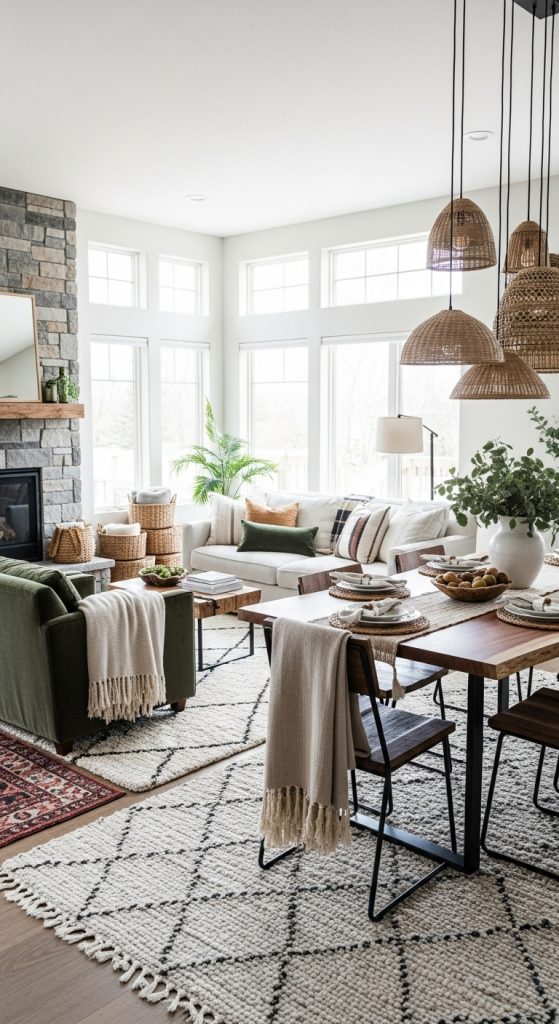
7. Use Consistent Flooring Throughout
One of the easiest ways to unify an open-concept design is by using the same flooring material across both the living and dining areas. Consistent flooring creates visual continuity, making the entire space feel larger and more fluid.
Hardwood, laminate, or luxury vinyl planks are ideal options because they provide warmth and durability. If you prefer tile, consider large-format tiles in neutral shades that complement your decor.
By avoiding abrupt changes in flooring material, you eliminate visual breaks, allowing furniture and decor to define zones instead. This consistency enhances the sense of openness and elegance.
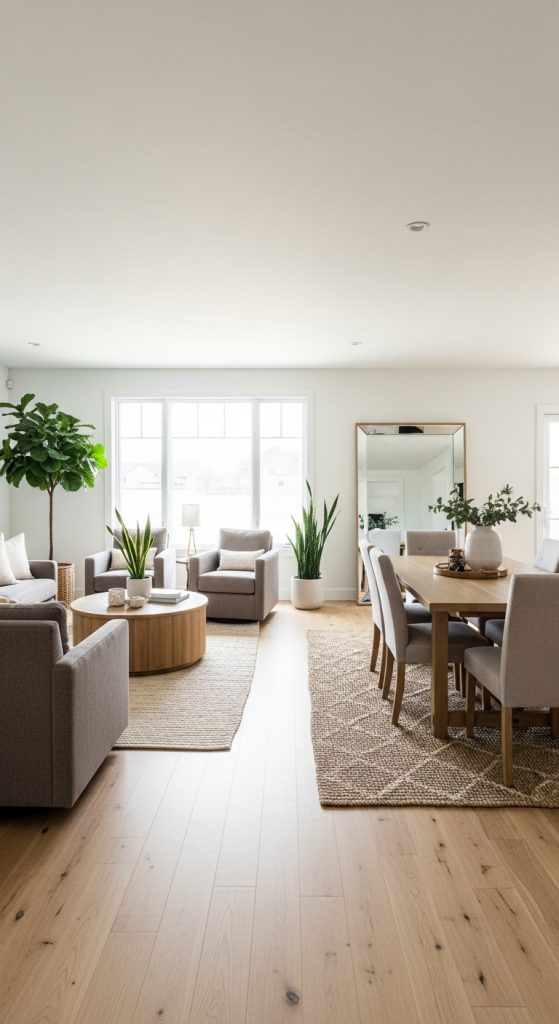
8. Embrace Natural Light and Windows
Open layouts thrive on light. Large windows, glass doors, and skylights make the space feel even more expansive and inviting.
Keep window treatments minimal—sheer curtains, Roman shades, or light linen drapes—to let sunlight pour in. Natural light not only brightens both areas but also enhances colors and textures, giving your decor more vibrancy.
If privacy is needed, use translucent shades that maintain brightness without closing off the space. To complement the natural light, incorporate mirrors strategically to reflect light and create an even airier atmosphere.
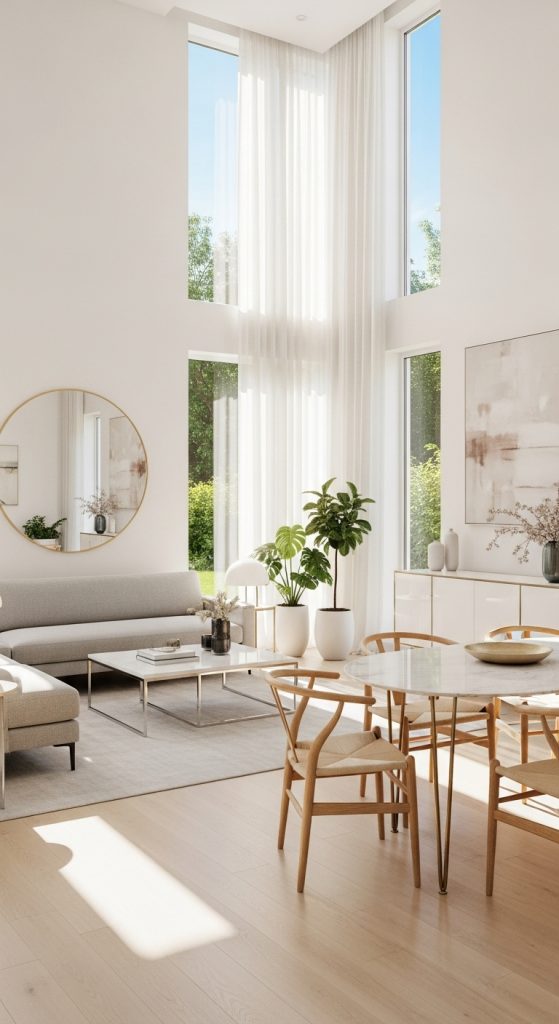
9. Create a Focal Point
Every well-designed space needs a focal point that draws attention and anchors the overall composition. In open layouts, a shared focal point can visually connect the living and dining areas.
For instance, a stunning fireplace that sits between the two zones can serve as a unifying centerpiece. Alternatively, a statement wall with textured wallpaper, a bold paint color, or built-in shelving can tie the spaces together.
Artwork can also bridge the gap—choose a large-scale piece that spans both areas or hang complementary art pieces that echo each other’s colors and themes. A strong focal point keeps the design cohesive and engaging.
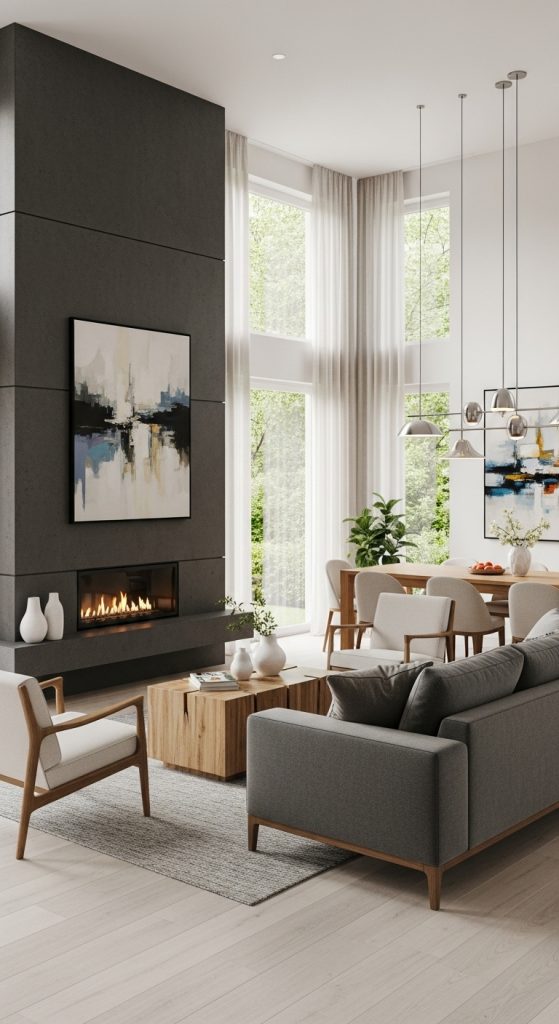
10. Blend Functionality with Personal Style
Finally, the most successful open-concept layouts blend practicality with personal expression. These spaces should not only look good but also cater to your lifestyle.
If you entertain often, prioritize a large dining table and flexible seating arrangements. If you love movie nights, design a comfortable living zone with a sectional sofa and a media console. Consider adding multi-functional furniture—like benches with storage or extendable tables—to maximize utility.
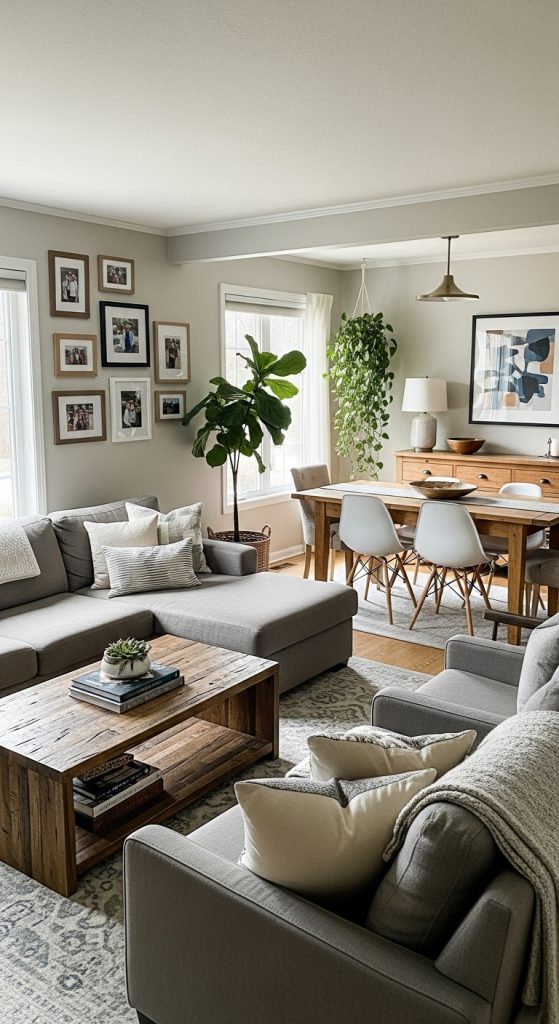
Personal touches such as family photos, travel souvenirs, or heirloom pieces bring warmth and authenticity to the design. By mixing functionality and personality, your open living-dining area becomes not just a shared space but a reflection of who you are.
Bonus Tips for Designing an Open Living-Dining Space
1. Maintain Proportion: Choose furniture sizes that suit the overall scale of your room to avoid overcrowding or imbalance.
2. Mind the Ceiling: Use pendant lights, beams, or ceiling textures to define spaces vertically as well as horizontally.
3. Balance Symmetry: Arrange furniture symmetrically to establish harmony, especially when the room shape is irregular.
4. Integrate Storage Smartly: Use sideboards, credenzas, and built-ins to keep clutter hidden and maintain a clean, open look.
5. Add Greenery: Plants bridge the spaces naturally, adding freshness and color while improving air quality.
6. Experiment with Shape: Mix rectangular dining tables with rounded coffee tables to soften transitions and add visual contrast.
7. Use Art and Decor Wisely: Choose decor that complements both areas; for example, use matching frames or coordinated wall art themes.
8. Keep Circulation Clear: Avoid blocking pathways; leave at least three feet of walking space between zones.
9. Opt for Multi-Purpose Furniture: Nesting tables, ottomans, or movable bar carts work well in shared spaces.
10. Layer Lighting: Combine ambient, task, and accent lighting to create flexible mood settings for various activities.
Example Design Styles for Open Layouts
Modern Contemporary:
Clean lines, neutral palettes, and sleek finishes. Use glass, metal, and minimalistic decor to create a sophisticated and airy look.
Scandinavian:
Light wood tones, white walls, and cozy textures emphasize functionality and simplicity while keeping the atmosphere warm and welcoming.
Industrial:
Exposed brick, metal frames, and reclaimed wood bring character to large open spaces. Add pendant lights and neutral tones for balance.
Farmhouse:
Rustic wood beams, shiplap walls, and soft textiles make open layouts feel homey and inviting, perfect for family gatherings.
Bohemian Chic:
Layered rugs, vibrant colors, and eclectic furniture pieces create a relaxed and expressive vibe while still maintaining flow between rooms.
Common Mistakes to Avoid
- Overcrowding the Space: Too much furniture can disrupt flow and make the area feel cramped.
- Ignoring Acoustics: Open layouts can amplify noise; use textiles, rugs, and soft furnishings to absorb sound.
- Clashing Styles: Keep the design language consistent to avoid visual chaos.
- Poor Lighting Placement: Uneven lighting can make one zone feel disconnected from the other.
- Neglecting Scale: Oversized furniture can dominate the space; choose appropriately scaled pieces.
Conclusion
An open layout living and dining room offers endless design possibilities. By combining thoughtful planning, cohesive color palettes, and practical furniture arrangements, you can create a space that feels both connected and defined. The beauty of open-concept design lies in its flexibility—it adapts effortlessly to modern lifestyles while promoting togetherness and openness.
Whether you prefer a clean, modern aesthetic or a cozy, rustic vibe, these 10 ideas provide the foundation for crafting a home that flows beautifully from one area to the next. With attention to detail, creative vision, and a touch of personality, your open living-dining area can become the heart of your home—a space where connection, comfort, and style truly coexist.