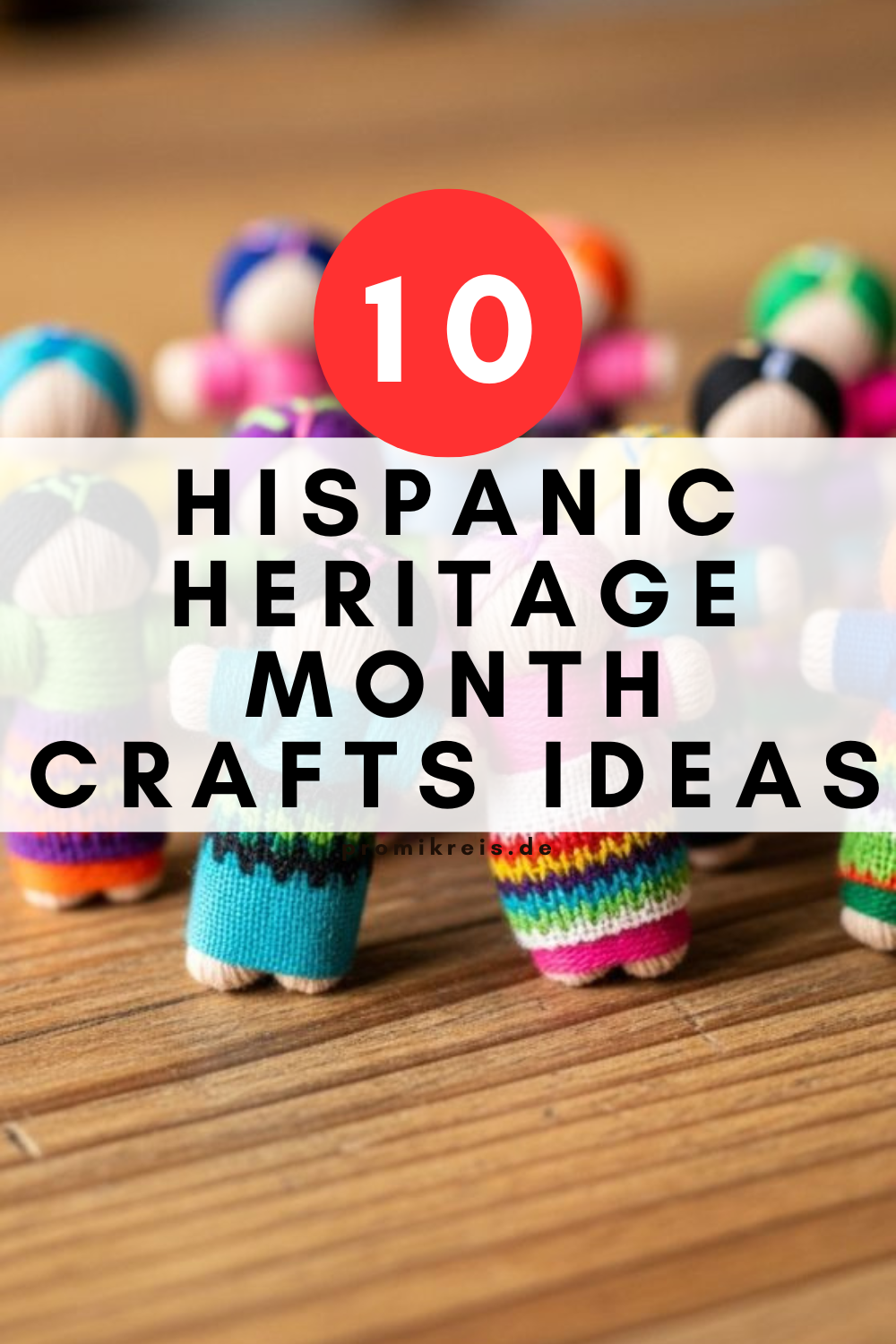
10 Hispanic Heritage Month Crafts Ideas
Hispanic Heritage Month, celebrated annually from September 15 to October 15, is a vibrant time to honor the diverse cultures, traditions, and artistic contributions of Hispanic and Latino communities. From Mexico and Puerto Rico to Colombia, Peru, and Spain, each country brings its own colorful stories, crafts, and celebrations to the table. What better way to engage with this cultural richness than through DIY crafts that celebrate Hispanic art, history, and heritage?
Crafting for Hispanic Heritage Month is more than a fun activity—it’s an opportunity for children and adults alike to learn about meaningful traditions. These projects are perfect for classrooms, families, or community events. They bring the spirit of Hispanic culture alive through color, creativity, and connection.
Below, you’ll find 10 engaging craft ideas inspired by Latin American and Spanish traditions. From papel picado and worry dolls to piñatas and Talavera-inspired art, these projects will add a joyful splash of culture to your celebrations.
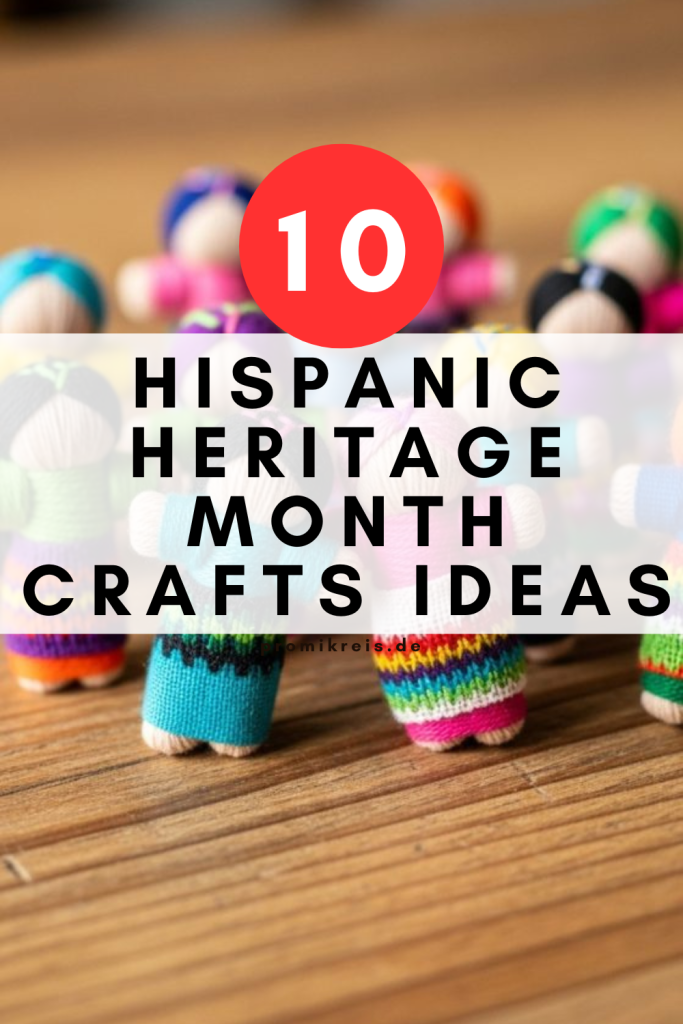
1. Papel Picado Banners – Mexican Folk Art in Color
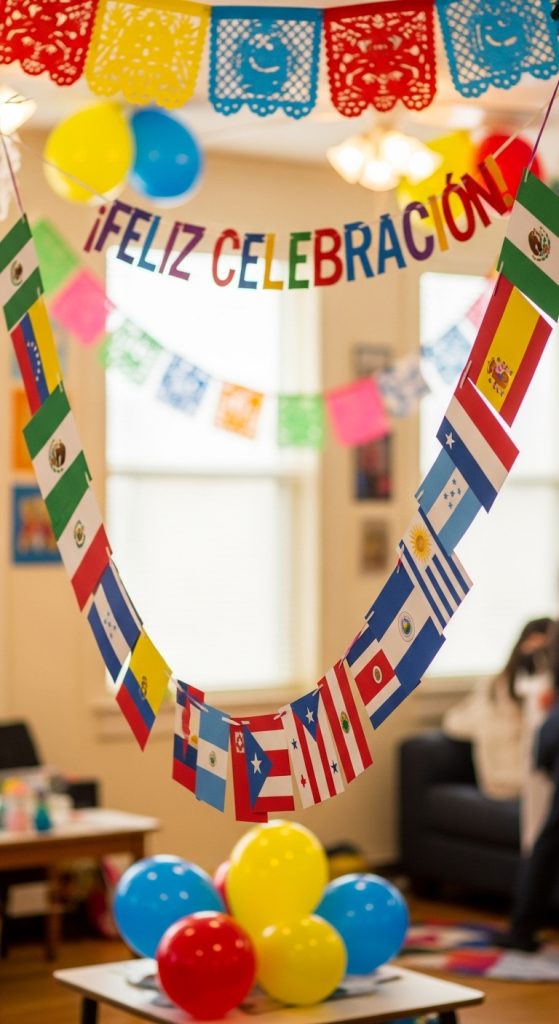
Papel picado, meaning “perforated paper,” is one of the most iconic Mexican folk crafts. These vibrant banners are often hung during Día de los Muertos, fiestas, and national celebrations—but they’re also perfect for Hispanic Heritage Month.
Materials Needed:
- Tissue paper in multiple colors
- Scissors or craft knives
- String or yarn
- Glue or tape
Instructions:
- Fold tissue paper in half, then into quarters.
- Cut out small shapes along the folds (like hearts, flowers, or geometric patterns).
- Unfold to reveal your beautiful cut-out design.
- Attach each sheet to a long piece of string with glue or tape to make a banner.
Cultural Connection:
Papel picado represents the fragility and beauty of life in Mexican culture. Each design tells a story and adds joy to any celebration. Encourage children to explore traditional patterns or invent their own!
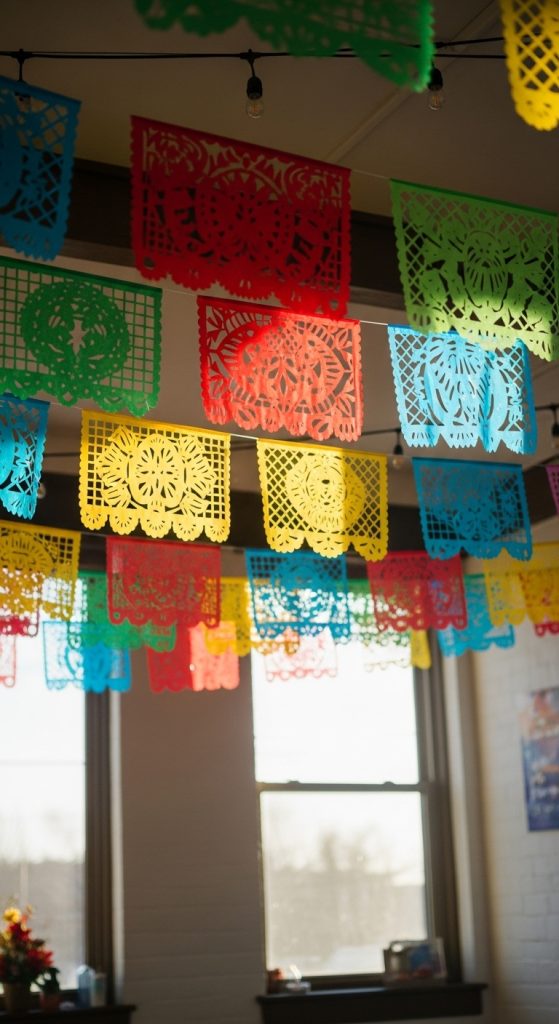
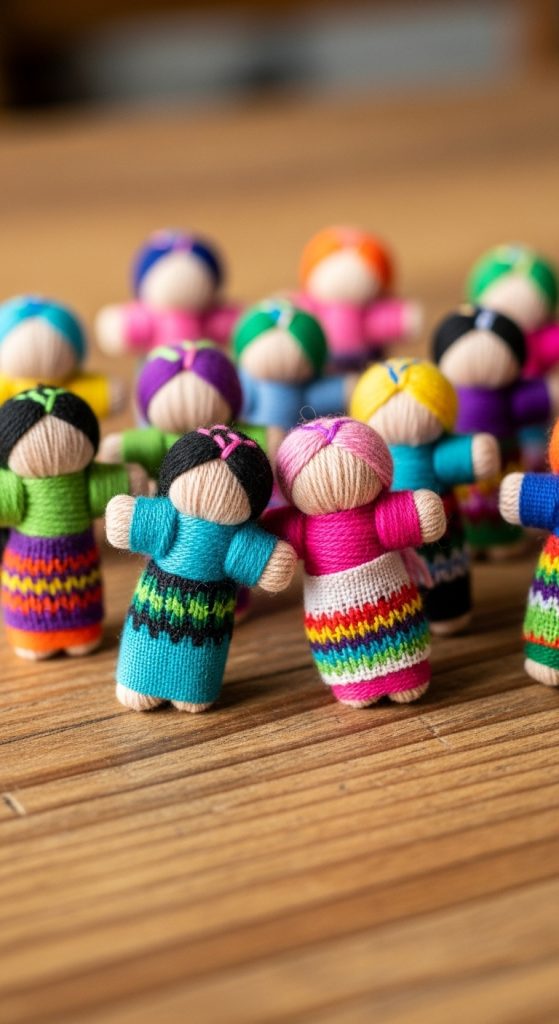
2. Guatemalan Worry Dolls (Muñecas Quitapenas)
Originating from Guatemala, worry dolls are tiny handmade figures that children tell their worries to before placing them under their pillows. By morning, the dolls are believed to have taken the worries away.
Materials Needed:
- Wooden clothespins or small twigs
- Embroidery floss or colorful yarn
- Fabric scraps
- Glue
Instructions:
- Wrap embroidery floss around the clothespin to make clothing.
- Glue small fabric scraps for skirts or ponchos.
- Draw tiny faces with a fine-tipped marker.
- Optionally, make a small cloth pouch to keep the dolls in.
Cultural Connection:
This Guatemalan tradition teaches empathy and emotional expression, helping children connect with the symbolic strength of indigenous crafts. It’s a beautiful project for classrooms exploring Latin American folklore.
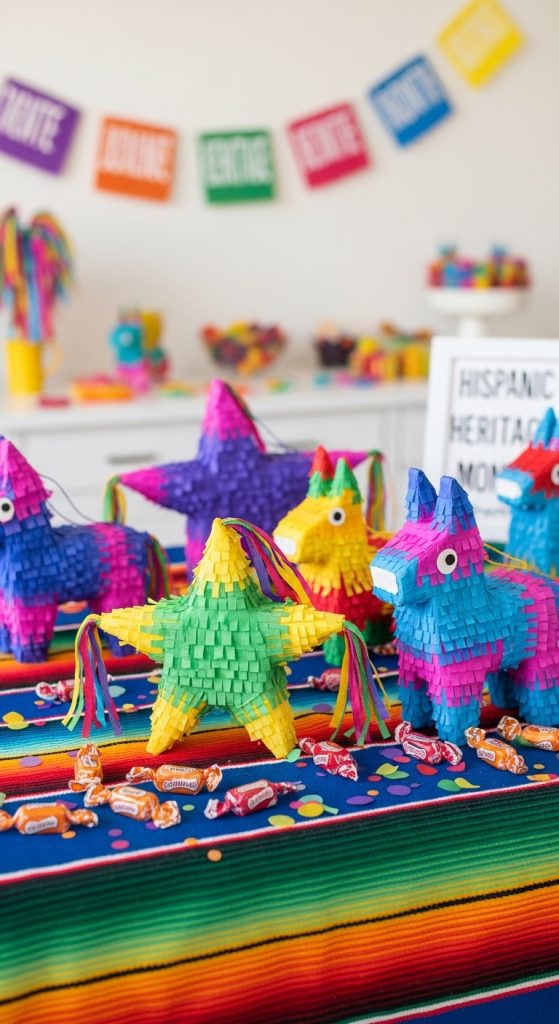
3. Mini Piñatas – The Joy of Celebration
Piñatas are a festive highlight across Hispanic cultures, especially in Mexico, Puerto Rico, and the Dominican Republic. Traditionally filled with candy, they symbolize joy, sharing, and reward after hard work.
Materials Needed:
- Cardboard or paper mache
- Tissue paper
- Glue
- String
- Candy or confetti
Instructions:
- Cut cardboard into a shape (star, donkey, heart, etc.).
- Assemble it with tape or glue, leaving a small opening.
- Cover the structure with fringed tissue paper layers.
- Fill with candy or confetti before sealing the opening.
Cultural Connection:
The piñata dates back to both pre-Columbian and Spanish influences, merging indigenous symbolism with festive Christian traditions. Making mini piñatas is a hands-on way to honor this cultural fusion.
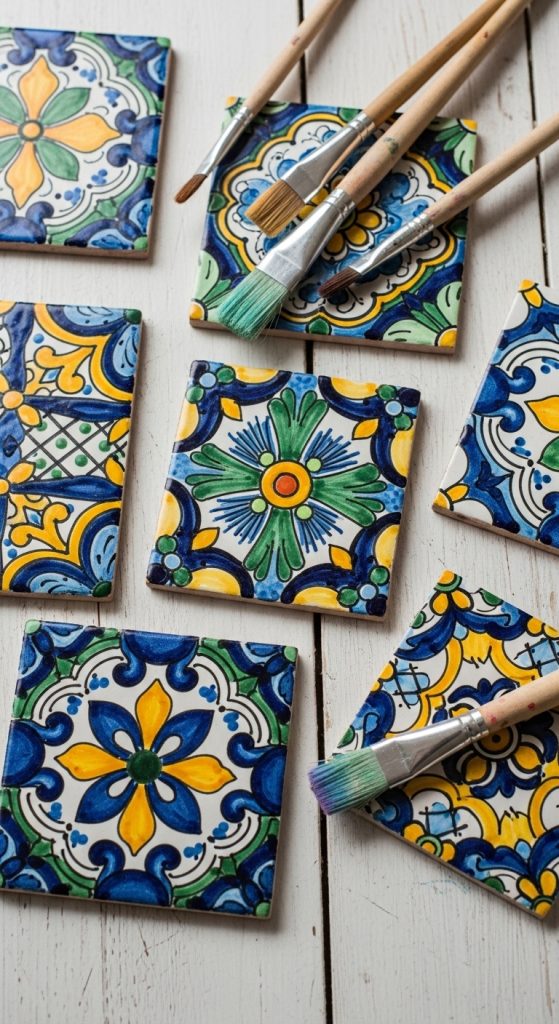
4. Talavera-Inspired Tile Art
Talavera pottery, famous in Puebla, Mexico, combines Spanish and Indigenous artistry. The tiles’ bright blues, yellows, and greens make them an excellent inspiration for a colorful craft.
Materials Needed:
- White ceramic tiles or cardstock squares
- Acrylic paint or paint pens
- Brushes
- Clear sealant (optional)
Instructions:
- Research Talavera tile designs for inspiration.
- Paint geometric or floral patterns in bold colors.
- Let dry and seal if using ceramic.
Cultural Connection:
This art form reflects the blending of Spanish and Mexican creativity. Children can learn about design symmetry and color balance while celebrating an enduring Hispanic art tradition.
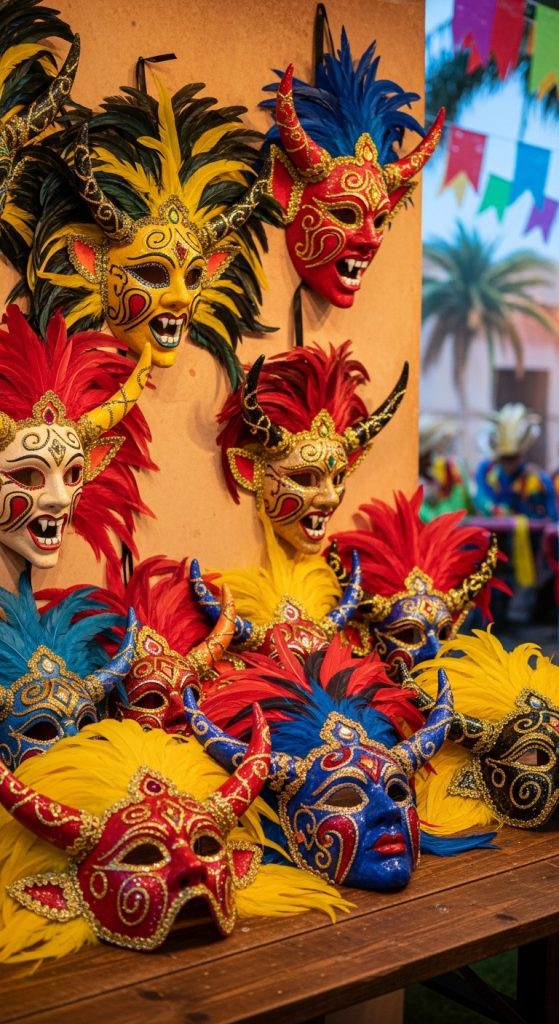
5. Puerto Rican Vejigante Masks
Vejigante masks are a hallmark of Puerto Rican festivals like Ponce Carnival, representing the fusion of African, Spanish, and Taíno influences.
Materials Needed:
- Paper plates or papier-mâché
- Paints and brushes
- Scissors
- Feathers, horns, and glitter
Instructions:
- Cut eye holes and shape horns or spikes with cardboard.
- Paint the mask in bold colors—red, yellow, green, blue.
- Decorate with feathers and glitter for dramatic flair.
Cultural Connection:
The vejigante character symbolizes mischief and transformation. This craft invites children to explore Caribbean art styles and the joy of performance.
6. Luminarias – Light the Hispanic Spirit
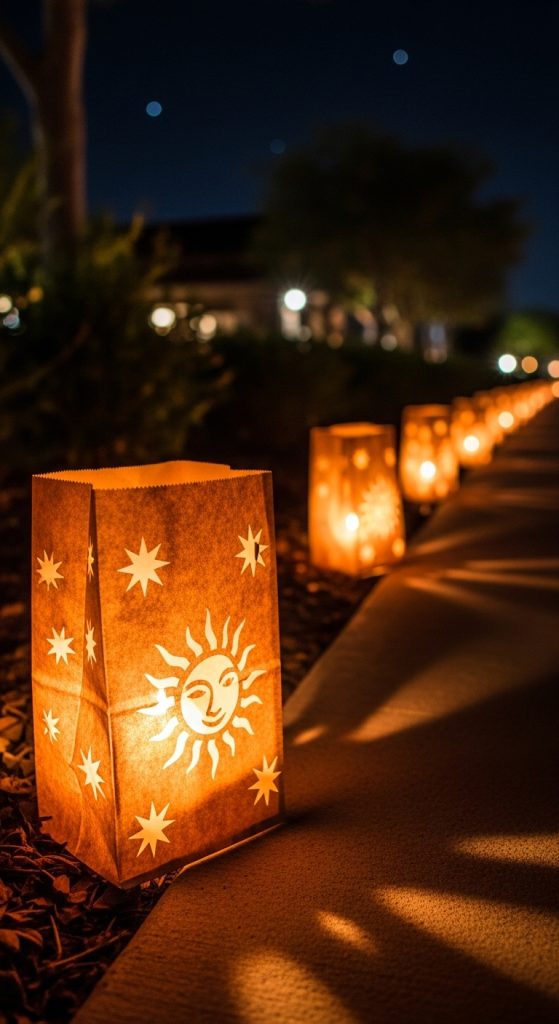
Luminarias or farolitos are small lanterns traditionally used in Mexico and the American Southwest during holidays. They bring warmth and light to evening celebrations.
Materials Needed:
- Paper bags or mason jars
- Battery tea lights
- Hole punch or scissors
- Markers or paint
Instructions:
- Decorate bags or jars with stars, crosses, or sun motifs.
- Punch holes or cut designs for light to shine through.
- Place tea lights inside to glow safely.
Cultural Connection:
Luminarias symbolize hope, guidance, and hospitality—a universal value in Hispanic culture. They can also honor ancestors during Día de los Muertos or Las Posadas.
7. Peruvian Textile Weaving
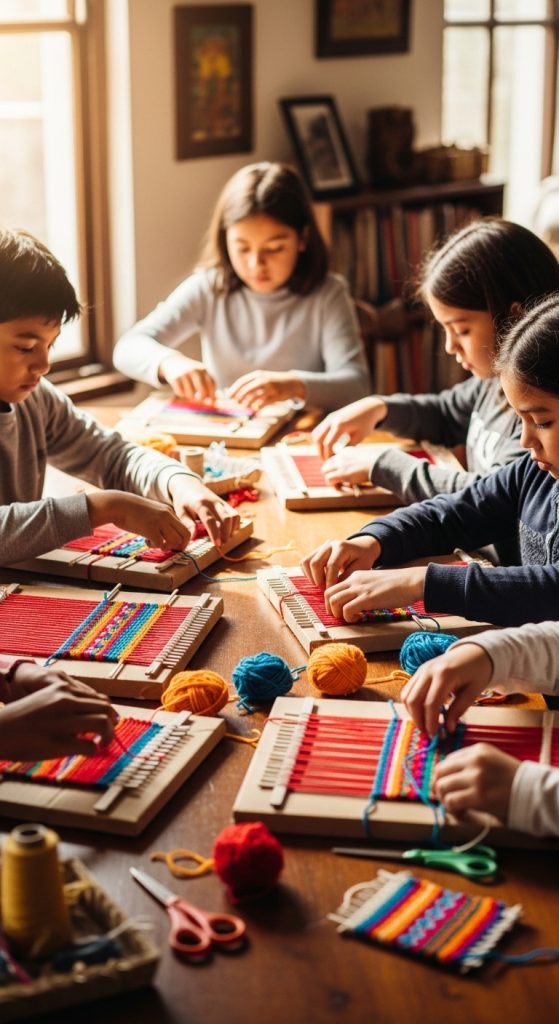
Peru is renowned for its Andean textiles, woven with patterns that tell stories of the mountains, animals, and daily life. This simplified craft version celebrates that rich tradition.
Materials Needed:
- Cardboard loom
- Yarn in multiple colors
- Scissors
- Tape
Instructions:
- Cut slits at the top and bottom of cardboard.
- Thread vertical strands (warp).
- Weave horizontal yarn (weft) in alternating patterns.
- Experiment with stripes or diamond shapes.
Cultural Connection:
Weaving teaches patience and precision while connecting children to centuries-old Andean traditions. Each pattern can symbolize family, community, or nature.
8. Mexican Amate Paper Art
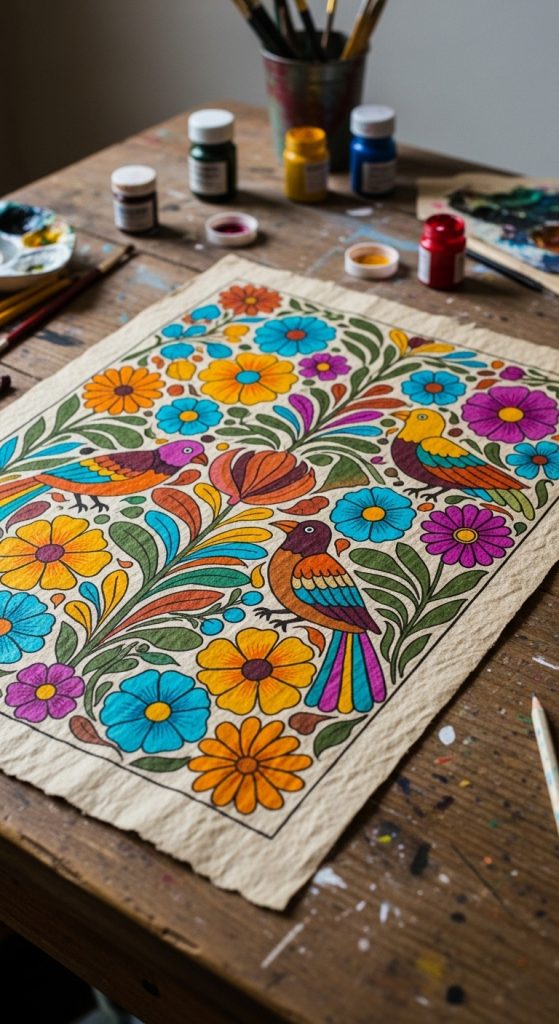
Amate painting is an ancient Mexican craft that uses bark paper and bright folk designs depicting flora, fauna, and everyday life.
Materials Needed:
- Brown construction paper or kraft paper
- Acrylic paint or oil pastels
- Black marker
Instructions:
- Crumple paper slightly to create texture.
- Paint birds, flowers, and geometric shapes in bold colors.
- Outline with black marker for definition.
Cultural Connection:
Amate art originated from Otomi and Nahua communities and was once used for codices. This project blends art and history beautifully.
9. Ojo de Dios (God’s Eye) – Symbol of Protection
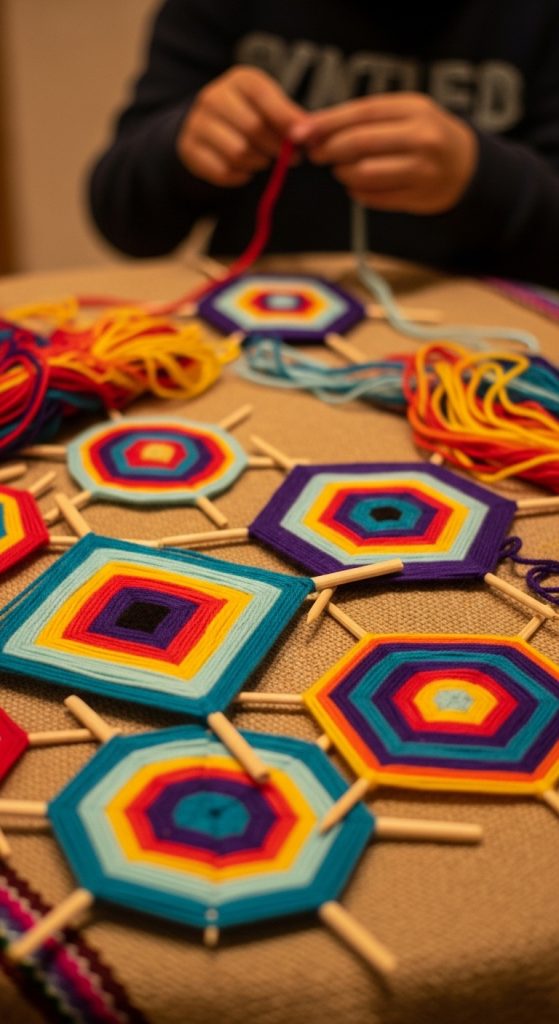
The Ojo de Dios, or God’s Eye, comes from the Huichol and Tepehuan peoples of western Mexico. It represents protection, spirituality, and the power to see and understand things clearly.
Materials Needed:
- Two craft sticks or twigs
- Colorful yarn
- Scissors
Instructions:
- Cross two sticks to form an “X.”
- Wrap yarn around the center and then around each stick, alternating colors.
- Continue until the sticks are mostly covered.
Cultural Connection:
Traditionally made to bless homes and newborns, the Ojo de Dios teaches mindfulness and appreciation for indigenous symbolism.
10. Latin American Flag Garland
Celebrate unity and diversity with a garland showcasing flags from Hispanic countries—Mexico, Argentina, Colombia, Spain, Cuba, Chile, and more.
Materials Needed:
- Cardstock
- Markers or paints
- String
- Hole punch
Instructions:
- Draw and color miniature flags from different Hispanic nations.
- Punch holes and string them together.
- Hang as classroom or party décor.
Cultural Connection:
This project emphasizes the shared pride and individuality among 20+ nations that make up the Hispanic world. It’s also a great geography and cultural awareness activity.
Tips for Teachers and Parents
- Incorporate storytelling: Share short folktales or historical facts alongside each craft.
- Play Latin music: Let kids listen to mariachi, salsa, or Andean pan flute music while crafting.
- Encourage bilingual learning: Label materials in English and Spanish for extra fun (“tijeras” = scissors, “pegamento” = glue).
- Celebrate diversity: Remind children that “Hispanic” includes a mosaic of cultures—from Afro-Latino to Indigenous, European, and Asian influences.
Conclusion
Hispanic Heritage Month is a time to celebrate art, history, and heart. These ten craft ideas capture the essence of Hispanic creativity—bright, meaningful, and rooted in community. Whether you’re creating papel picado banners, weaving a Peruvian textile, or making a colorful Ojo de Dios, each project honors generations of artistry and resilience.
Crafting is storytelling. It connects us to the past, teaches us about the present, and inspires us to share our creativity with future generations. So gather your materials, play some lively Latin music, and let your imagination dance through these colorful cultural crafts.