10 Tiny House Design Ideas
Tiny house design has emerged as one of the most influential movements in modern architecture and lifestyle design. As people increasingly seek simplicity, affordability, and sustainability, the concept of living small has gained widespread appeal. A tiny house is not merely a reduced version of a traditional home; it is a carefully planned space where every square foot serves a purpose. Thoughtful design, creativity, and functionality are at the heart of successful tiny houses, transforming limited space into comfortable and meaningful living environments.
The tiny house movement is driven by various motivations. For some, it is a response to rising housing costs and financial pressures. For others, it represents a desire to live more sustainably by reducing energy consumption and environmental impact. Many are drawn to the idea of decluttering their lives, prioritizing experiences over possessions, and embracing intentional living. Regardless of the reason, tiny houses challenge conventional ideas about space, comfort, and luxury.
Designing a tiny house requires a shift in perspective. Instead of thinking in terms of separate rooms and excess storage, designers must focus on flexibility, multifunctionality, and efficiency. Furniture often serves multiple purposes, storage is integrated into walls and floors, and vertical space is fully utilized. Natural light, clever layouts, and innovative materials play a crucial role in making tiny houses feel open rather than confined.
This essay explores ten tiny house design ideas, each offering a unique approach to small-scale living. From minimalist and modern designs to rustic retreats and off-grid homes, these ideas demonstrate how tiny houses can be tailored to different lifestyles and aesthetic preferences. Together, they highlight the creativity and ingenuity required to make small spaces both functional and inspiring.
1. Minimalist Tiny House Design
The minimalist tiny house design is one of the most popular approaches to small living. Rooted in the philosophy of “less is more,” this design prioritizes simplicity, clarity, and functionality. The goal is to eliminate unnecessary elements while retaining comfort and beauty.
In a minimalist tiny house, the color palette is typically neutral, featuring whites, soft grays, and natural wood tones. These colors help create a sense of openness and calm. Furniture is streamlined and purposeful, often built-in to reduce clutter and maximize space. Open shelving replaces bulky cabinets, allowing residents to display only essential items.
Natural light is a key feature, achieved through large windows, skylights, and glass doors. The absence of visual clutter makes the space feel larger and more breathable. Storage is discreetly integrated into walls, staircases, and furniture, ensuring that everything has a designated place.
This tiny house design is ideal for individuals who value simplicity, organization, and mental clarity. It encourages mindful living and demonstrates how thoughtful design can create comfort without excess.

2. Modern Tiny House with Smart Technology
The modern tiny house design embraces technology to enhance convenience and efficiency. Smart systems allow residents to control lighting, temperature, security, and appliances through mobile devices or voice commands, making daily life easier within a compact space.
Architecturally, modern tiny houses feature clean lines, flat or slightly angled roofs, and contemporary materials such as metal, glass, and engineered wood. Interiors are sleek and functional, with multifunctional furniture and modular layouts.
Smart storage solutions, such as automated cabinets and hidden compartments, maximize usability. Energy-efficient appliances and LED lighting reduce power consumption, while solar panels and battery systems support sustainable living.
This tiny house design is ideal for tech-savvy individuals who enjoy innovation and efficiency. It demonstrates how modern technology can elevate small-space living without compromising comfort or style.

3. Rustic Cabin-Style Tiny House
The rustic cabin-style tiny house draws inspiration from traditional cabins and countryside retreats. This design emphasizes warmth, natural materials, and a strong connection to nature, making it perfect for those seeking a cozy and grounding living environment.
Wood is the dominant material, used for walls, floors, ceilings, and furniture. Exposed beams, reclaimed wood, and natural finishes enhance the rustic charm. Stone accents, such as a small fireplace or backsplash, add texture and visual interest.
The interior layout is simple and functional, often featuring an open living area with a sleeping loft above. Warm lighting, layered textiles, and handcrafted décor create a welcoming atmosphere.
This tiny house design is ideal for nature lovers and those who value comfort, tradition, and a slower pace of life. It offers a retreat-like experience within a compact footprint.

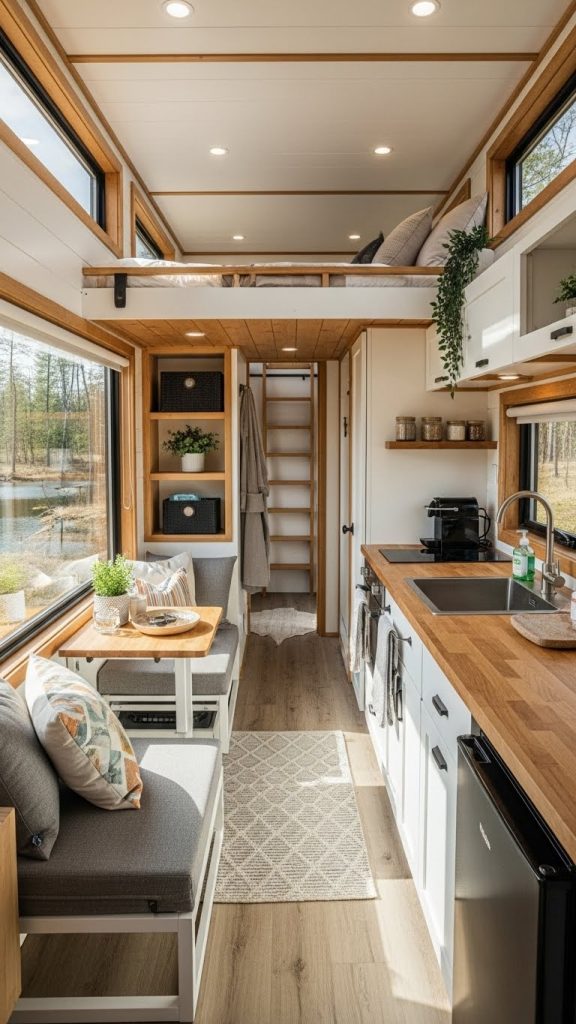
4. Tiny House on Wheels (THOW)
A tiny house on wheels offers mobility and freedom, allowing residents to travel while maintaining the comforts of home. This design is particularly appealing to those who enjoy adventure, flexibility, and a nomadic lifestyle.
Because of transportation requirements, THOW designs must adhere to size and weight regulations. As a result, layouts are highly efficient, with foldable furniture, compact appliances, and lightweight materials.
Sleeping lofts are common, maximizing floor space for living and dining areas. Storage is integrated into staircases, walls, and under seating. Large windows provide natural light and scenic views, enhancing the sense of openness.
This tiny house design is ideal for individuals who value freedom and adaptability. It represents a lifestyle centered on experiences rather than permanence.
5. Off-Grid Sustainable Tiny House
The off-grid sustainable tiny house is designed for self-sufficiency and minimal environmental impact. This design prioritizes renewable energy, water conservation, and eco-friendly materials.
Solar panels, rainwater harvesting systems, composting toilets, and energy-efficient appliances are key features. The house is often oriented to maximize natural light and passive heating, reducing reliance on artificial energy sources.
Materials such as reclaimed wood, bamboo, and recycled metal are commonly used. Insulation is carefully selected to ensure comfort in various climates.
This tiny house design is ideal for environmentally conscious individuals who seek independence and sustainability. It demonstrates how thoughtful design can support responsible living without sacrificing comfort.

6. Scandinavian-Inspired Tiny House
The Scandinavian-inspired tiny house emphasizes simplicity, functionality, and warmth. Known for its clean lines and cozy interiors, this design style is well-suited to small spaces.
Light colors, particularly white and soft gray, dominate the interior, enhancing brightness and openness. Natural wood accents add warmth and texture. Furniture is minimal yet comfortable, often featuring clean lines and multifunctional designs.
Large windows and efficient insulation are key features, reflecting Scandinavian principles of light and comfort. Cozy elements such as rugs, throws, and soft lighting contribute to a welcoming atmosphere.
This tiny house design is ideal for those who appreciate balance, comfort, and understated elegance.

7. Family-Friendly Tiny House Design
A family-friendly tiny house design proves that small living is possible even for families. This approach requires careful planning to accommodate multiple occupants while maintaining privacy and functionality.
Bunk beds, lofts, and convertible furniture help maximize sleeping space. Open layouts encourage interaction, while designated zones provide structure and organization. Storage solutions are essential, ensuring that toys, clothing, and supplies are neatly stored.

Durable materials and flexible spaces allow the house to adapt as children grow. Outdoor living areas often extend the usable space, providing room for play and relaxation.
This tiny house design is ideal for families seeking affordability, simplicity, and closer connections.
8. Luxury Tiny House Design
The luxury tiny house design challenges the idea that small living must be modest. This approach focuses on high-quality materials, elegant finishes, and premium amenities within a compact footprint.
Features may include designer kitchens, spa-like bathrooms, custom cabinetry, and high-end appliances. Thoughtful lighting and rich textures enhance the sense of sophistication.
Despite its small size, the luxury tiny house feels refined and comfortable. Every detail is carefully curated, demonstrating that luxury is not defined by size but by quality and design.
This tiny house design is ideal for individuals who value elegance and comfort while embracing minimalism.

9. Industrial-Style Tiny House
The industrial-style tiny house draws inspiration from urban lofts and warehouses. This design features raw materials, bold contrasts, and a modern aesthetic.
Exposed metal, concrete finishes, and dark color palettes define the interior. Open layouts and minimal partitions enhance spatial flow. Large windows and industrial lighting fixtures add character and brightness.
This tiny house design is ideal for creatives and urban dwellers who appreciate bold design and unconventional aesthetics.

10. Tiny House with Outdoor Integration
A tiny house with strong outdoor integration expands living space beyond the interior. Decks, patios, and outdoor kitchens serve as extensions of the home, enhancing functionality and enjoyment.
Large sliding doors and windows create a seamless transition between indoor and outdoor areas. Landscaping and thoughtful placement ensure privacy and connection to nature.
This tiny house design is ideal for those who enjoy outdoor living and wish to maximize space without increasing the house’s footprint.

Conclusion
Tiny house design represents a powerful shift toward intentional, sustainable, and thoughtful living. The ten tiny house design ideas explored in this essay demonstrate the versatility and creativity of small-space architecture. From minimalist and modern designs to rustic retreats and luxury interpretations, tiny houses can be tailored to suit a wide range of lifestyles and preferences.
Ultimately, tiny houses are not about limitation but about possibility. They encourage us to rethink our relationship with space, possessions, and comfort. Through smart design and purposeful living, tiny houses prove that even the smallest spaces can offer beauty, functionality, and fulfillment.