10 Living Room Wall Decor Ideas
The living room is the heart of the home—a gathering space, a place for conversation, and an area where style and comfort meet. While furniture plays a major role in shaping the room’s personality, the walls serve as the backdrop that completes the story. They define atmosphere, influence spatial perception, and provide a canvas for creativity. Wall décor is therefore not merely ornamental; it is an essential element that communicates aesthetic intention and shapes the emotional tone of the room.
Well-designed walls can make a living room feel larger, cozier, brighter, or more dramatic. They can introduce texture, color, rhythm, and architectural character. Whether your style leans modern, classic, eclectic, minimal, rustic, or luxury, the right wall décor can transform a basic living room into a space that feels curated, welcoming, and visually rich.
This article explores 10 distinct living-room wall décor ideas, each offering deep insight into materials, aesthetic influences, layout principles, and practical application. The goal is to provide a comprehensive guide that helps you understand not just what to place on your walls, but why certain design choices work and how to achieve a balanced, high-impact look.

1. Oversized Art as a Focal Point
One of the most powerful ways to transform a living room wall is to install an oversized piece of art. Large-scale artwork creates immediate impact, anchoring the eye and giving the room a strong design direction.
Design Characteristics
Oversized art typically includes:
- Large canvas abstracts
- Minimalist color-field works
- Black-and-white photography
- Bold contemporary paintings
- Mixed-media textured pieces
The size alone creates visual drama, so the artwork does not require complex patterns.
Aesthetic Advantages
- Defines the room’s color palette
- Creates a clear focal point
- Adds sophistication and personality
- Makes walls appear more intentionally designed
Large pieces also eliminate the need for multiple small objects, making the wall feel clean yet expressive.
Styling and Practical Tips
- Center the artwork above a sofa or console to create balance.
- Leave generous negative space around the art for an upscale gallery feel.
- Choose frames that complement furniture metals or wood tones.
- Use proper lighting—spotlights or track lighting can elevate the piece dramatically.
Oversized art works exceptionally well in both minimal and maximal interiors because it brings coherence and intentionality.

2. Gallery Walls for Personalized Storytelling
A gallery wall introduces personality through curated groupings of art, photographs, prints, and sometimes sculptural pieces. Unlike oversized art, gallery walls rely on variety and rhythm.
Design Characteristics
- Multiple frames in different or matching sizes
- A mix of artworks, family photos, illustrations, and typography
- Optional sculptural pieces like small shelves or objects
- A cohesive theme—color, subject, or frame style
Gallery walls can be symmetrical, grid-based, or free-form.
Aesthetic Advantages
- Offers a personalized, storytelling aesthetic
- Adds dynamic movement and visual interest
- Creates warmth and homeliness
- Easily updated over time
Styling Strategies
- Plan the layout on the floor before hanging anything.
- Choose either matching frames for cohesion or mixed frames for an eclectic look.
- Maintain consistent spacing between frames (2–3 inches).
- Mix vertical and horizontal pieces for balance.
- Incorporate at least one piece that breaks the grid, such as a sculptural object or wall sconce.
Gallery walls are ideal for living rooms that need personality or visual richness.

3. Feature Walls with Texture and Architectural Elements
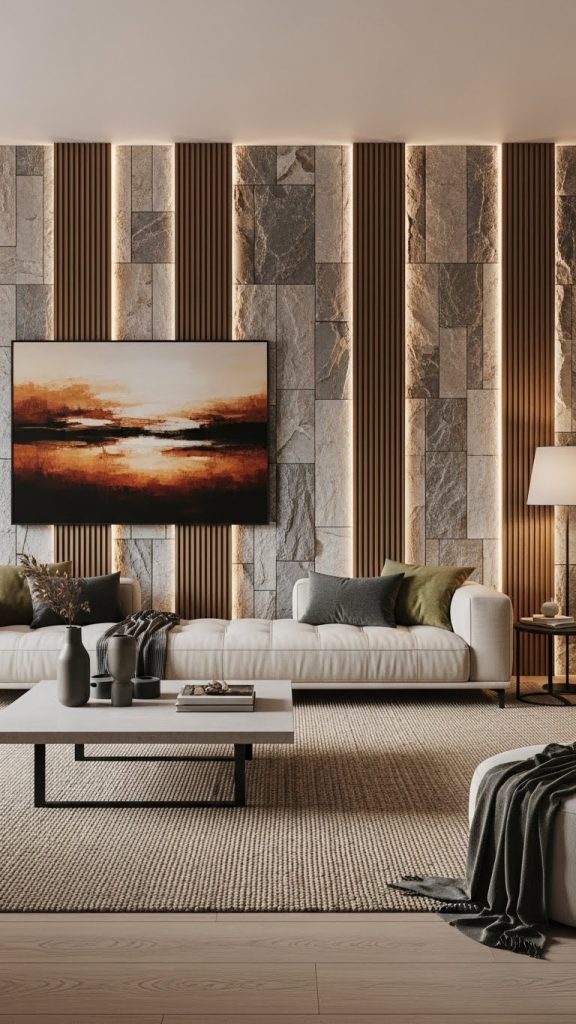
Feature walls introduce depth and dimension through panels, textured materials, or architectural treatments. Rather than adding décor, this approach makes the wall itself the décor.
Design Characteristics
Common materials include:
- Wood slats or paneling
- Stone veneer or brick finish
- 3D gypsum panels
- Venetian plaster or troweled textures
- Fluted panels and batten trim
Each material creates a distinct mood—warmth from wood, urban ruggedness from brick, luxury from stone or plaster.
Aesthetic Advantages
- Adds architectural value and permanence
- Enhances lighting and shadows
- Creates a sophisticated backdrop for furniture
- Works well in minimalist spaces where décor is limited
Styling and Application Tips
- Use textured walls behind TVs, fireplaces, or main seating zones.
- Combine neutral tones to keep the design timeless.
- Highlight texture with strategic lighting (wall washers or overhead spots).
- Consider acoustic benefits—wood slats improve sound quality.
Feature walls transform ordinary living rooms into designer spaces.
4. Mirrors to Expand and Brighten the Space
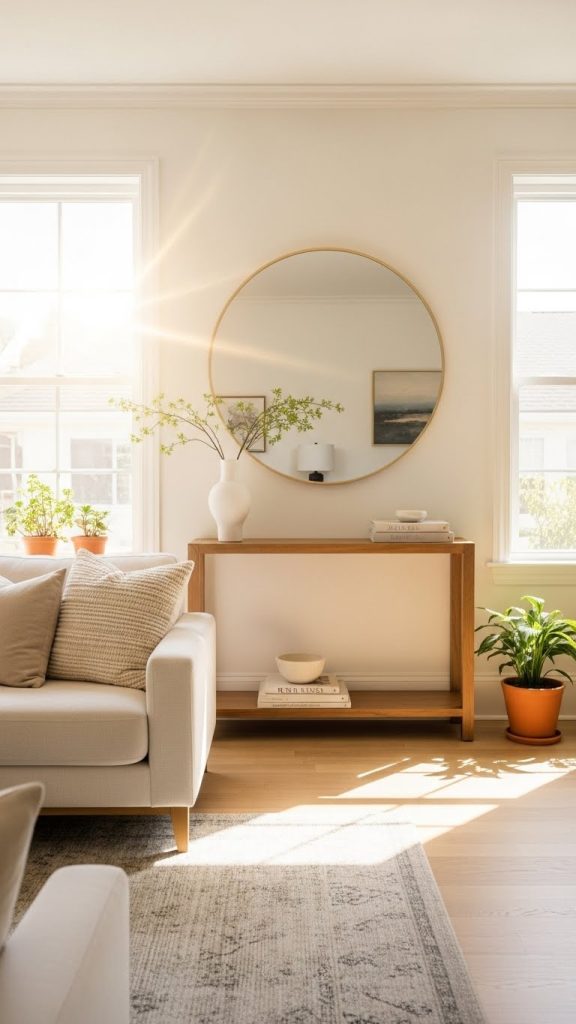
Mirrors are powerful tools in interior design because they expand space visually and reflect light. When used thoughtfully, they add elegance and depth to living room walls.
Design Characteristics
Mirrors may include:
- Oversized floor-to-ceiling mirrors
- Round sculptural mirrors
- Antique or vintage framed mirrors
- Wall-to-wall mirrored panels
- Geometric or mosaic mirror arrangements
Aesthetic Advantages
- Enlarges the perceived space
- Brightens the room by reflecting natural or artificial light
- Adds glamor, especially with metallic frames
- Serves as a strong focal point
Styling Strategies
- Place mirrors opposite windows for maximum light reflection.
- Use tall mirrors behind sofas or consoles for elegance.
- Consider pairing mirrors with sconces to create balance.
- Avoid placing mirrors opposite cluttered areas—they will double the mess visually.
Mirrors work especially well in small or dark living rooms that need openness and brightness.
5. Floating Shelves for Functional and Stylish Displays
Floating shelves blend storage and décor. They allow you to display objects while maintaining a clean visual line.
Design Characteristics
- Invisible brackets for a “floating” effect
- Wood, glass, stone, or metal materials
- Simple straight designs or artistic curved variations
- Single long shelves or multi-shelf arrangements
Aesthetic Advantages
- Creates versatile décor opportunities
- Allows seasonal styling updates
- Provides depth and layering
- Works with minimalist, modern, and rustic designs
Styling and Practical Tips
- Use groups of three objects for balance.
- Mix books, plants, candles, and sculptures.
- Leave negative space between items for a curated look.
- Match shelf material to other elements in the room (wood tone, metal finish).
- Install shelves at varying heights to create movement.
Floating shelves are ideal for people who enjoy changing décor periodically.

6. Statement Lighting and Wall Sconces
Lighting is not only functional—it is decorative. Wall-mounted lighting enhances mood and elevates the entire wall composition.
Design Characteristics
Types of wall lighting include:
- Sculptural sconces
- Linear LED wall lights
- Gilded vintage-inspired fixtures
- Modern geometric sconces
- Backlit panels
Lighting serves as a decorative object while illuminating the space.
Aesthetic Advantages
- Creates atmospheric ambience
- Highlights art, textures, or architectural features
- Adds sculptural elegance
- Introduces metallic tones such as brass or matte black
Styling Strategies
- Pair sconces with mirrors or large art pieces.
- Use adjustable sconces over reading corners.
- Install symmetrical sconces for balanced layouts.
- Consider dimmable modern LED strips behind panels or shelves.
When strategically placed, lighting turns walls into living architectural features.

7. Large Wall Clocks as Functional Art
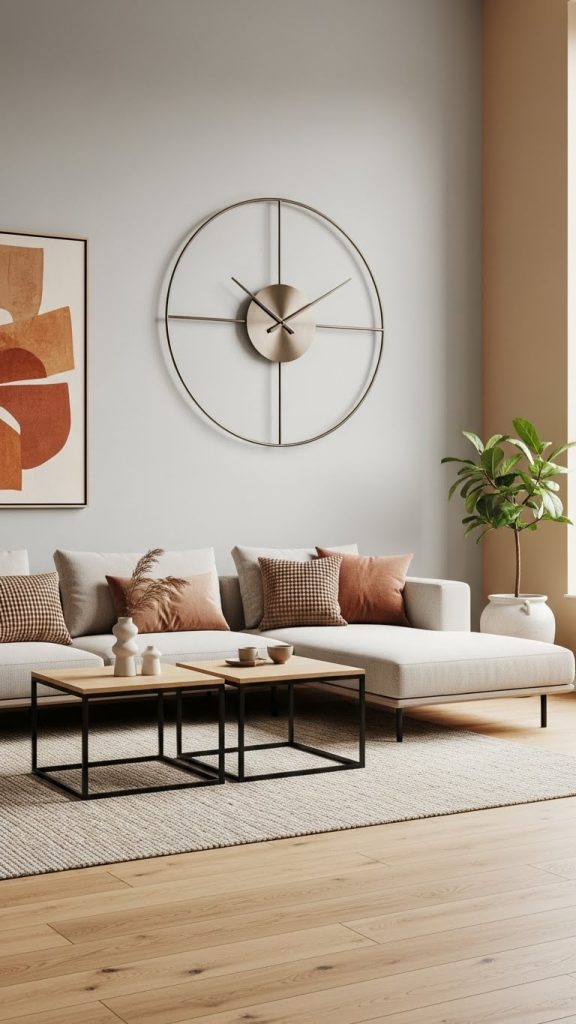
A large decorative clock can be both functional and artistic. Modern wall clocks are designed as statement pieces that anchor the living room visually.
Design Characteristics
- Oversized minimalist clocks
- Metal framework designs
- Wooden rustic clocks
- Contemporary abstract shapes
- Mechanical exposed-gear clocks
Aesthetic Advantages
- Serves as a strong focal point
- Blends functionality with décor
- Works well above fireplaces or sofas
- Adds rhythm and personality
Styling Tips
- Choose a clock proportional to wall size—too small will look insignificant.
- Match the clock finish with room accents (e.g., brass clock with brass décor).
- Keep surrounding décor simple to allow the clock to shine.
- Use silent movement clocks to avoid noise distraction.
Clocks suit modern, industrial, rustic, and transitional interiors.
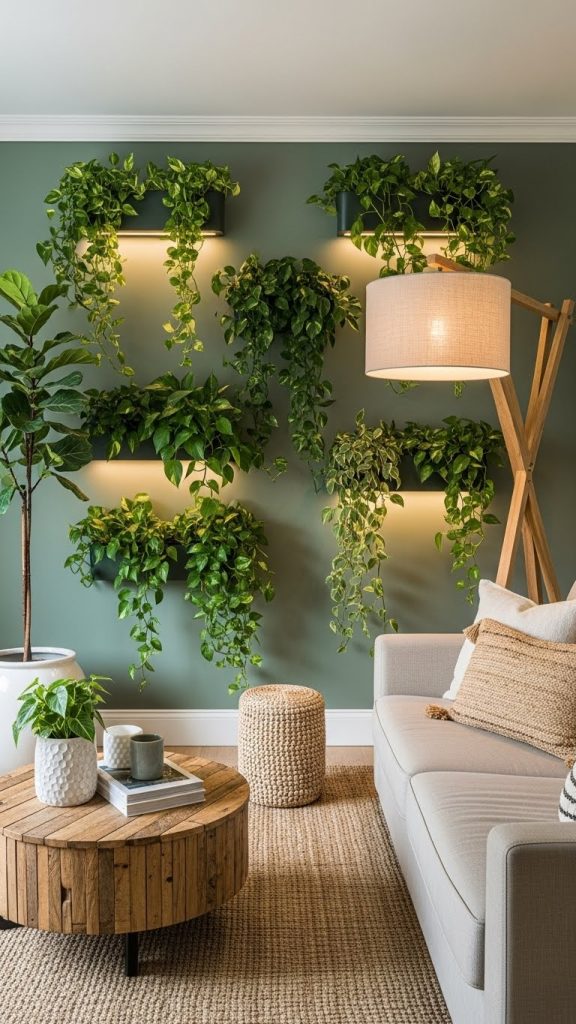
8. Green Walls and Botanical Installations
Nature-inspired design is increasingly popular, and living room walls can come alive with greenery. Green walls soften interiors and bring organic calm into modern homes.
Design Characteristics
- Living plant walls with irrigation systems
- Modular preserved moss panels
- Artificial green wall installations
- Wall-mounted planters and pocket planters
- Floating shelves filled with cascading plants
Aesthetic Advantages
- Adds freshness and texture
- Enhances mental well-being
- Introduces natural color without overwhelming the room
- Works beautifully with organic modern or bohemian themes
Styling and Care Tips
- Choose low-maintenance plants like pothos, ivy, or philodendron.
- Use preserved moss for a maintenance-free natural look.
- Incorporate lighting—green walls look stunning with warm spotlights.
- Avoid overcrowding; balance greenery with neutral walls.
Botanical walls create a serene, nature-centered living environment.
9. Tapestries, Textiles, and Fabric Art
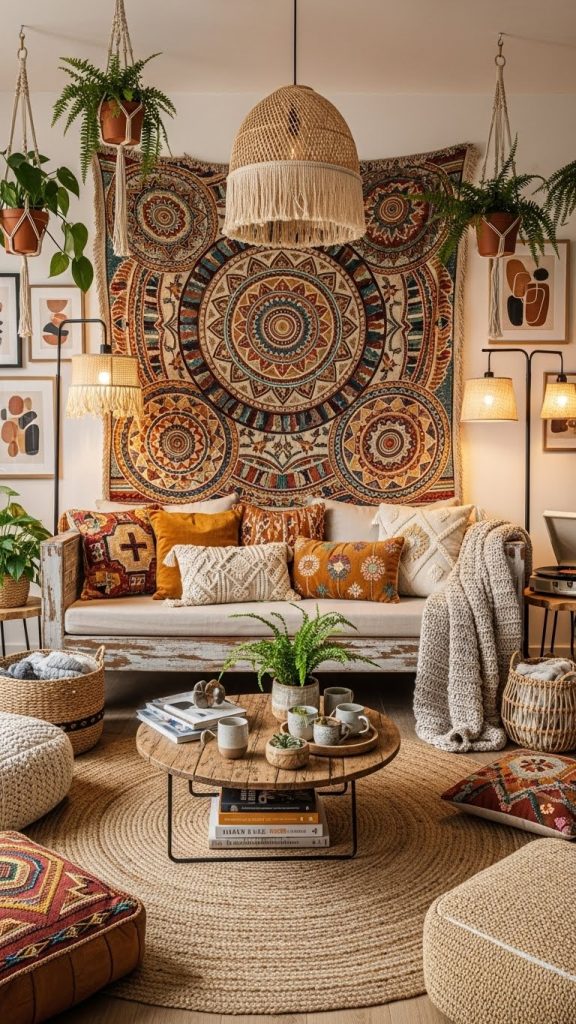
Textile-based wall décor adds warmth, softness, and cultural richness. Unlike framed art, fabric installs bring tactile interest and a handcrafted feel.
Design Characteristics
- Woven tapestries
- Macramé wall hangings
- Embroidered panels
- Ethnic or tribal fabric art
- Large modern fabric sculptures
Aesthetic Advantages
- Introduces texture and bohemian charm
- Adds cultural depth and storytelling
- Softens harsh architectural lines
- Helps with acoustic dampening
Styling Strategies
- Hang a large tapestry behind a sofa to act as a visual anchor.
- Choose fabrics that complement your color palette.
- Combine with neutral walls to allow patterns to stand out.
- Use proper rods or framing to keep fabrics stretched and clean.
Fabric art works exceptionally well in boho, eclectic, modern rustic, and contemporary homes.
10. Custom Built-Ins and Architectural Shelving
Custom built-ins are one of the most luxurious ways to decorate living-room walls. They offer both storage and visual prestige.
Design Characteristics
Built-ins may include:
- Floor-to-ceiling shelving
- Integrated cabinetry
- Fireplace wall units
- TV walls with floating shelves
- Arched or niche designs
Materials vary from solid wood and veneer to stone, glass, and metal.
Aesthetic Advantages
- Provides maximum storage without clutter
- Creates a customized, high-end architectural look
- Enhances property value
- Allows curated styling through shelving displays
Styling and Layout Tips
- Use lighting inside shelves to highlight décor pieces.
- Mix books horizontally and vertically for rhythm.
- Add plants, ceramics, frames, and sculptures.
- Keep the palette consistent for cohesion.
Built-ins are ideal when you want your wall décor to feel intentional and permanent.

Conclusion
Living-room wall décor is essential in shaping the emotional and aesthetic experience of the space. The walls present an opportunity to express personality, anchor design themes, and introduce layered depth through art, texture, lighting, and architectural elements. Whether it’s oversized artwork that commands attention, a personalized gallery wall filled with memories, or a serene green installation that brings life indoors, each approach has the power to transform the room into a thoughtfully curated environment.
The ten ideas presented here demonstrate the versatility and significance of wall décor. Some techniques—like feature walls, custom built-ins, or mirrors—fundamentally alter spatial perception. Others—like textiles, gallery walls, or shelves—add expressive detail and character. The key to achieving a beautifully decorated living-room wall lies in balancing creativity with intention, ensuring every piece contributes to the overall harmony of the space.