10 Studio Apartment Arrangement Ideas
Living in a studio apartment presents both challenges and opportunities. On one hand, you’re working with a single open room where your living, sleeping, working, and dining areas coexist. On the other hand, this blank canvas gives you the freedom to create a personalized space that reflects your lifestyle and maximizes every square foot.
The art of arranging a studio apartment is all about balance—balancing functionality with aesthetics, comfort with efficiency, and openness with definition. The way you arrange your furniture, divide zones, and utilize storage will determine whether your studio feels spacious and stylish or cramped and chaotic.
The good news? With smart strategies, thoughtful design, and creative furniture placement, even the smallest studio can feel like a complete home. In this article, we’ll explore 10 arrangement ideas for studio apartments, each offering practical solutions and inspiring setups to make the most of your compact living space.
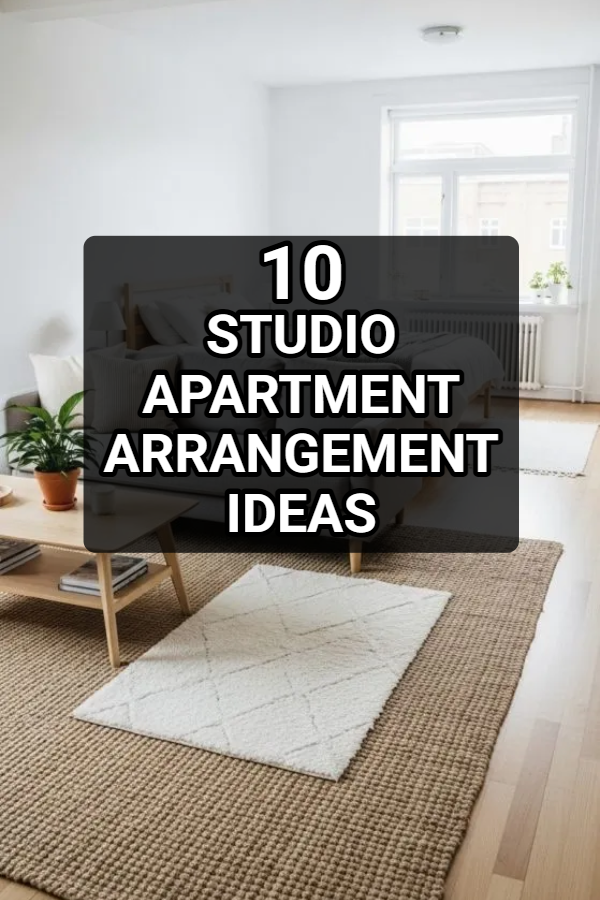
1. Open Concept with Furniture Zoning
One of the most common arrangements for studio apartments is the open concept design. Since walls are limited, the key is to let furniture define each zone.
For example, placing the back of a sofa toward the bed instantly creates separation between the sleeping and living areas. Rugs can further reinforce boundaries, with one under the bed and another under the seating area.
This arrangement maintains airflow and light while ensuring that each function of your home—resting, lounging, and entertaining—has its own distinct space. It’s perfect for those who enjoy a free-flowing, uncluttered vibe.

2. Sleeping Nook Arrangement
For those who value a bit more privacy, creating a sleeping nook is an excellent arrangement. The idea is to tuck the bed into a corner or carve out a dedicated area for it within the studio.
A bookcase, folding screen, or curtain can act as a partition to create a bedroom-like feel. Some people also use tall plants or a fabric canopy for a softer division.
The rest of the room is then reserved for the living and dining spaces. This arrangement is ideal for anyone who wants their bed somewhat hidden from immediate view, especially when entertaining guests.

3. Lofted Bed Arrangement
If your studio apartment has high ceilings, a loft bed arrangement is one of the most efficient ways to maximize vertical space. By elevating the bed on a loft, the area below can be used as a desk zone, lounge, or additional storage.
Lofted beds give the illusion of a separate bedroom without taking up floor space. They’re particularly practical for students, creatives, or professionals who need both a workspace and a cozy sleeping area.
Pairing the loft with ladder lighting, under-bed shelving, or a small reading nook underneath makes this arrangement stylish as well as functional.

4. Murphy Bed and Foldable Furniture Arrangement
For smaller studios, flexibility is key. The Murphy bed arrangement is a timeless solution, allowing you to fold the bed into the wall during the day.
When paired with other foldable or transformable furniture, such as a wall-mounted dining table or stackable chairs, this setup keeps the floor open and adaptable.
This arrangement is perfect for those who want their studio to look and function like a living room during the day and transform into a bedroom at night. It’s also excellent for entertaining since space can be cleared quickly.

5. L-Shaped Arrangement
The L-shaped arrangement uses furniture placement to create distinct functional zones, often by positioning the bed and sofa at right angles to one another.
For example, a bed along one wall and a sofa perpendicular to it can create a natural boundary while leaving the central space open. Adding an L-shaped sectional sofa also helps create a cozy corner for lounging.
This layout works particularly well in rectangular or elongated studios, where visual balance and flow are essential. It gives each zone its own identity without requiring partitions.

6. Divider-Based Arrangement
Room dividers are a favorite tool in studio apartments. They give structure to the open space without building permanent walls.
Dividers can take many forms: folding screens, open shelving units, curtains, sliding panels, or even strategically placed wardrobes. Each option provides privacy while maintaining flexibility.
A divider-based arrangement allows you to separate your “bedroom” from your “living room” in a stylish and functional way. Open shelving dividers are especially useful because they add storage while keeping the space airy.

7. Corner Kitchen and Dining Arrangement
Kitchens in studio apartments often blend into the main space, but arranging them into a defined corner can create flow and efficiency.
An L-shaped or U-shaped kitchenette maximizes counter space while keeping cooking separate from sleeping and lounging areas. A small dining table or bar counter placed adjacent to the kitchen defines the eating zone.
This arrangement helps prevent the studio from feeling like one giant multipurpose room. Instead, it creates natural divisions that mimic the feel of a larger apartment.

8. Minimalist Arrangement
Sometimes, less is more. The minimalist arrangement strips the studio down to only what is necessary, using sleek, functional furniture and clean lines.
Think low platform beds, compact sofas, floating shelves, and multipurpose tables. Neutral tones and hidden storage reduce visual clutter, making the apartment feel larger and calmer.
This arrangement is particularly well-suited for small studios where overcrowding is a risk. It’s also ideal for those who prefer a serene, clutter-free lifestyle.

9. Work-from-Home Arrangement
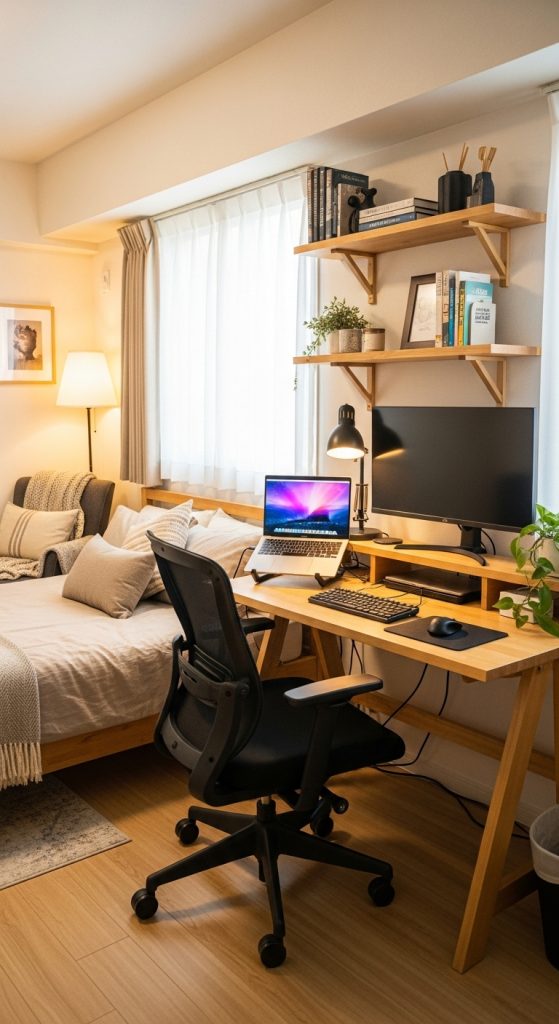
With remote work becoming more common, creating a dedicated workspace in a studio is essential. A work-from-home arrangement prioritizes the inclusion of a desk or office nook.
The workspace can be set up in a corner, under a lofted bed, or beside a window for natural light. Adding a bookshelf or wall-mounted storage keeps the zone organized and distinct from the rest of the apartment.
This arrangement ensures that work and relaxation are clearly defined, helping maintain productivity without sacrificing comfort.
10. Creative Zoning Arrangement
The creative zoning arrangement uses design details like rugs, lighting, plants, and furniture placement to define different zones in a studio.
For instance, a pendant light above a dining table, a patterned rug under the bed, and tall plants separating the sofa from the bed create visual divisions without the need for walls.
This arrangement is flexible, stylish, and highly customizable. It’s perfect for those who like to refresh their apartment frequently, as zones can be rearranged easily depending on mood or lifestyle needs.

Conclusion
Arranging a studio apartment is a creative challenge that requires a thoughtful balance of style, comfort, and practicality. From open flow designs that maximize airiness to divider-based setups that provide privacy, there are countless ways to adapt your apartment to your lifestyle.
The 10 studio apartment arrangement ideas covered here show that with smart furniture placement, multifunctional pieces, and creative zoning, even the smallest studio can feel spacious, organized, and welcoming.
Ultimately, the arrangement you choose should reflect your needs—whether that’s a productive work zone, a cozy sleeping nook, or a flexible space for entertaining. With the right approach, your studio apartment can feel like a complete home, blending efficiency with personal style.