10 Playroom Organization and Storage Ideas
A playroom is often the heart of a home’s activity, creativity, and laughter. But as much as children love to play, their toys, books, art supplies, and games can quickly take over a room. Without proper organization, even the most playful space can become chaotic and overwhelming. That’s where smart playroom organization and storage solutions come into play.
Organized playrooms not only make cleaning up easier but also encourage children to take responsibility for their space, foster independence, and make playtime more enjoyable. With thoughtful storage solutions, you can create a room that is functional, aesthetically pleasing, and inspiring. From clever shelving systems to multi-purpose furniture, there are countless ways to keep toys accessible yet tidy.
In this guide, we’ll explore 10 effective playroom organization and storage ideas that balance functionality, style, and fun. These strategies work for small spaces, large rooms, and everything in between, ensuring that your child’s playroom remains a joyful haven rather than a cluttered mess.

1. Open Shelving Units
Open shelving units are perfect for organizing toys, books, and craft supplies in a playroom. They provide easy access to items, allowing children to grab what they need without assistance.
- Design Tip: Use low, child-height shelves so kids can reach everything safely.
- Storage Idea: Color-coded bins or baskets can be placed on the shelves to separate toys by type (e.g., blocks, dolls, art supplies).
- Benefit: Open shelving encourages kids to stay organized and simplifies cleanup, as each toy has a designated space.
Open shelving also allows for creative displays, such as showcasing favorite books or art pieces, making the playroom feel lively and personalized.

2. Storage Bins and Baskets
Baskets and bins are versatile, affordable, and easy to use for a playroom of any size. They can be stored on shelves, under tables, or in cubbies, keeping toys neat while remaining accessible.
- Tip: Label each bin with words or pictures so children know where each item belongs.
- Material: Consider fabric bins for soft toys and plastic or wooden bins for sturdier items.
- Design Twist: Choose colorful or patterned bins to add visual interest to the room while keeping it organized.
This method is ideal for families who want quick and efficient cleanup, especially before mealtimes or guests arrive.

3. Toy Chest with Dividers
A classic toy chest remains a favorite for organizing larger toys and bulkier items. Adding dividers inside the chest helps separate items and prevents it from becoming a chaotic pile.
- Tip: Use adjustable dividers to accommodate changing toy sizes over time.
- Safety Consideration: Opt for chests with a slow-close lid to prevent little fingers from being pinched.
- Aesthetic: Wooden chests with bright painted designs or decals can double as playful decor.
Toy chests are particularly effective for storing items that aren’t used daily, like seasonal toys or dress-up costumes.

4. Wall-Mounted Storage Solutions
Utilizing wall space is a game-changer for small playrooms. Wall-mounted shelves, cubbies, or hanging organizers keep the floor clear and maximize vertical space.
- Creative Idea: Install a pegboard to hang baskets, small toys, and art supplies.
- Interactive Element: Add hooks at child height for dress-up clothes or backpacks.
- Style Tip: Coordinate colors with the room’s theme to create a cohesive look.
Wall storage not only keeps things organized but also adds visual interest, turning the wall into both a functional and decorative feature.

5. Multi-Purpose Furniture
Furniture that doubles as storage is a smart solution for playrooms where space is limited. Benches, ottomans, and tables with built-in compartments can hide toys while providing seating or surfaces for play.
- Example: A window seat with under-seat storage bins is perfect for books and stuffed animals.
- Flexibility: Cube storage furniture can hold bins, act as a display unit, and even serve as a mini play stage.
- Design Tip: Choose durable, easy-to-clean surfaces for furniture used frequently by children.
Multi-purpose furniture maximizes efficiency, combining practicality with style, and ensures every inch of space works for the room.

6. Rolling Carts and Trolleys
Rolling storage carts are versatile, portable, and great for organizing craft supplies, LEGO bricks, or small toys.
- Mobility: Carts can be moved around the room or even taken to another area for play or cleanup.
- Customization: Use stackable trays, labeled bins, or color-coded layers for quick identification.
- Extra Tip: Choose carts with locking wheels to prevent tipping while kids play.
Rolling carts are especially useful for children who like to work on different projects in various areas of the playroom.

7. Clear Storage Containers
Transparent bins and boxes help children see the contents at a glance, reducing the time spent searching for a specific toy.
- Organizing Tip: Separate items by category: action figures, building blocks, dolls, or puzzles.
- Stacking Advantage: Clear containers can be stacked safely to conserve space.
- Labeling: Even with transparency, labels enhance organizational skills and teach children where things belong.
Clear storage containers create a clean, visually uncluttered look while promoting independence in kids.

8. Hanging Pocket Organizers
Hanging organizers with pockets are ideal for walls, doors, or closet spaces. They can store small toys, art supplies, or even dress-up accessories in a compact manner.
- Tip: Assign a pocket per category of items for easy sorting.
- Educational Twist: Use them to display flashcards, counting objects, or small learning tools.
- Space Saver: Perfect for small rooms where floor space is limited.
This solution keeps items off the floor and teaches kids the habit of placing toys back in designated spots.

9. Rotating Toy Library System
A rotating toy system helps prevent clutter while keeping playtime fresh and engaging. Store some toys out of reach and rotate them weekly or monthly.
- Benefit: Maintains novelty, reduces overstimulation, and keeps the room tidy.
- Implementation: Use bins labeled with rotation schedules or color-coded tags.
- Extra Tip: Incorporate seasonal or holiday-themed toys for variety.
This system encourages mindful play, reduces waste, and gives children the excitement of “new” toys regularly.

10. Custom Built-In Cabinets
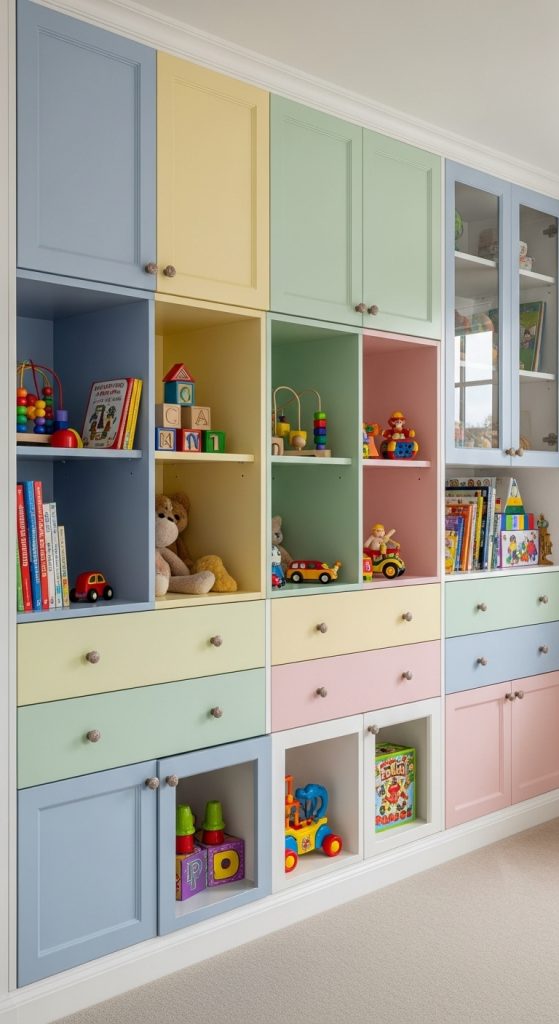
For larger playrooms or long-term solutions, custom-built cabinets offer extensive storage while keeping everything neatly hidden. They can include cubbies, drawers, pull-out baskets, and closed cabinets for bulkier toys.
- Design Flexibility: Customize compartments to suit specific needs—art supplies, books, puzzles, or games.
- Aesthetic: Built-ins can be painted to match the room’s theme or left in natural wood for a timeless look.
- Practical Tip: Include open shelving for display items and closed cabinets for clutter-free storage.
Built-in cabinets make the playroom feel organized, spacious, and visually cohesive, while providing long-term storage solutions that grow with your children.
Tips for Maintaining an Organized Playroom
- Declutter Regularly: Remove toys that are broken or no longer used.
- Involve Children: Teach kids to put items back in their designated spaces.
- Create Zones: Separate areas for reading, crafting, building, and imaginative play.
- Label Everything: Visual cues help children identify where items belong.
- Rotate Toys: Keep the room exciting while preventing overcrowding.
- Prioritize Accessibility: Ensure frequently used toys are at child height.
- Aesthetic Balance: Choose storage solutions that blend functionality with the room’s theme or color palette.
Conclusion
A well-organized playroom transforms a chaotic space into a fun, functional, and inviting environment for children. By implementing a combination of open shelving, storage bins, multi-purpose furniture, and interactive systems like rotating toys or hanging organizers, you can create a clutter-free area that encourages creativity, independence, and joyful play.
With these 10 playroom organization and storage ideas, every toy, game, or craft supply has a place, making cleanup easy and teaching children valuable organizational skills. A tidy playroom isn’t just visually pleasing—it supports learning, imaginative play, and a sense of ownership over their space, ensuring every child can enjoy a magical and stress-free environment.