10 Tiny Home Office Ideas in the Bedroom
As remote work, freelancing, and hybrid schedules become increasingly common, the need for a functional home office has extended beyond dedicated rooms. For many people, especially those living in apartments or smaller homes, the bedroom has become the most practical place to create a workspace. While combining a bedroom and a home office can seem challenging, thoughtful design can transform even the smallest corner into a productive and visually harmonious work zone.
A tiny home office in the bedroom must strike a delicate balance. The bedroom is meant for rest, relaxation, and personal comfort, while a workspace demands focus, organization, and mental clarity. Poorly planned layouts can blur these boundaries, leading to clutter, distraction, and disrupted sleep. However, when designed intentionally, a bedroom office can feel discreet, efficient, and seamlessly integrated into the space.
The key lies in smart furniture choices, vertical storage, subtle zoning, and a calming aesthetic that supports both work and rest. Tiny home offices do not need to dominate the bedroom. In fact, the most successful designs are often the most understated—spaces that can be “closed” visually or mentally at the end of the workday.
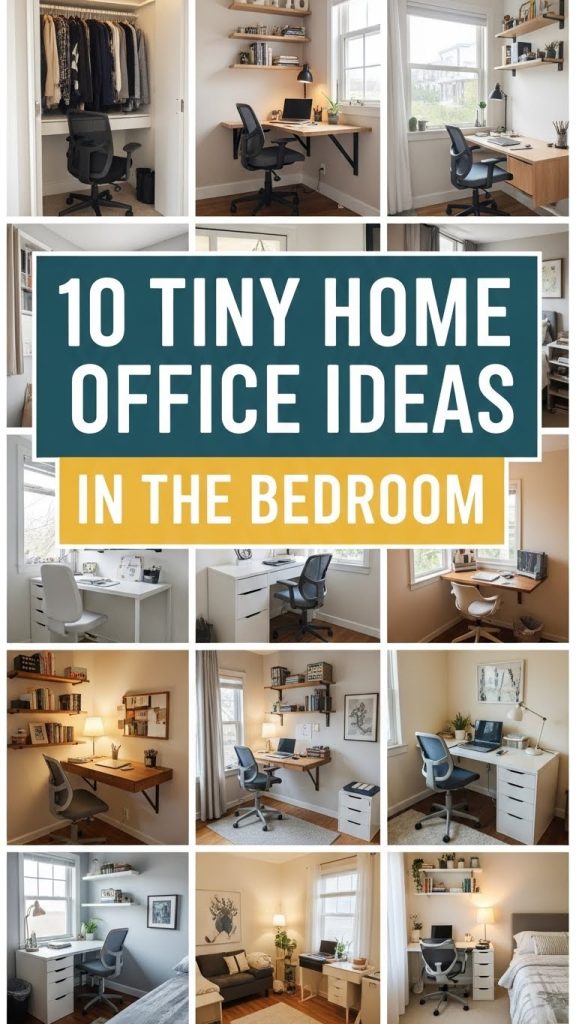
This article explores 10 tiny home office ideas within the bedroom, each explained in depth with design strategies, layout tips, and functional considerations. Whether you have a studio apartment or a compact bedroom, these ideas will help you create a workspace that is practical, comfortable, and respectful of the bedroom’s restful purpose.
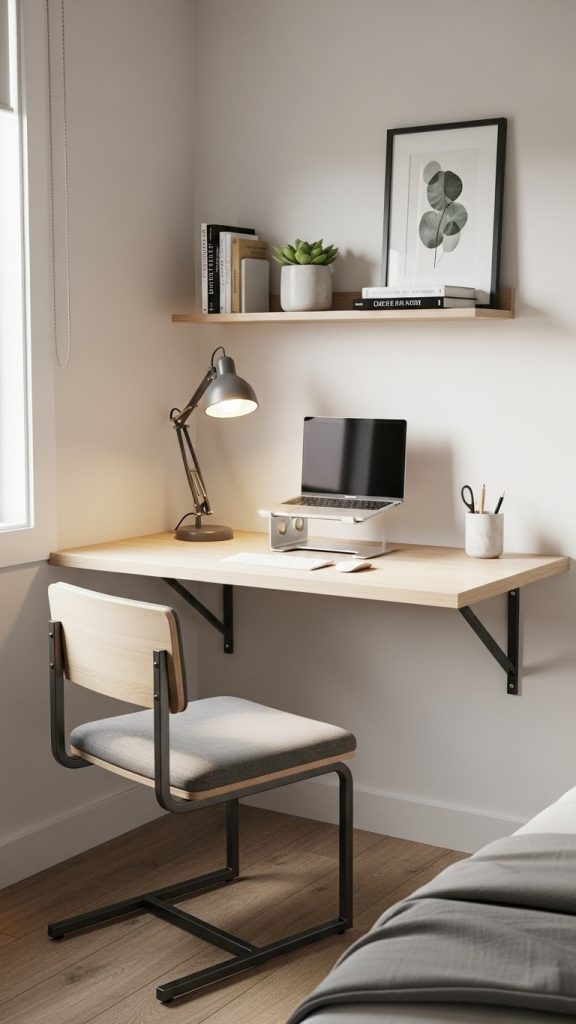
1. Wall-Mounted Desk for Minimal Footprint
A wall-mounted desk is one of the most effective solutions for a tiny home office in a bedroom. By eliminating legs and bulky supports, it keeps the floor visually open and reduces physical clutter.
This type of desk can be mounted along an empty wall, near a window, or at the foot of the bed. Its slim profile allows it to function as a workspace during the day and visually disappear into the room when not in use.
Pairing the desk with a lightweight chair that can be tucked underneath or moved elsewhere helps maintain flexibility. Floating shelves above the desk can provide storage without encroaching on floor space.
A wall-mounted desk is ideal for laptop-based work and suits minimalist or modern bedroom interiors where simplicity is essential.
2. Built-In Desk Nook Within Bedroom Layout
A built-in desk nook creates a sense of intentional design, even in small bedrooms. This approach uses architectural elements—such as alcoves, recesses, or unused corners—to house the workspace.
By integrating the desk into the room’s structure, the office feels planned rather than improvised. Built-in desks often include shelving or cabinetry, allowing work items to be stored neatly out of sight.
This design works particularly well in bedrooms with awkward layouts or unused wall recesses. The desk can be visually framed by shelves, creating a clear boundary between work and rest.
A built-in desk nook enhances organization and helps maintain a calm bedroom atmosphere.

3. Window-Facing Desk for Natural Light and Focus
Positioning a tiny home office near a window is both practical and psychologically beneficial. Natural light improves focus, reduces eye strain, and enhances overall well-being.
A compact desk placed beneath or beside a window creates a bright and uplifting workspace without consuming much room. The view outside provides visual relief during long work sessions.
To maintain balance, window treatments such as sheer curtains or light blinds can soften daylight and ensure privacy. Storage should be minimal to avoid blocking light.
This setup is ideal for bedrooms that receive good daylight and for people who work during daytime hours.

4. Fold-Down or Murphy-Style Desk
A fold-down desk is an excellent solution for bedrooms where space is extremely limited. This design allows the workspace to appear only when needed and disappear completely afterward.
Fold-down desks are mounted to the wall and can be closed to resemble cabinetry or shelving. When folded away, they help restore the bedroom’s primary function as a place of rest.
Inside the fold-down unit, small compartments or shelves can store essentials like notebooks, chargers, or stationery. This keeps the workspace organized and easy to reset.
This design is perfect for those who want a clear separation between work time and personal time.

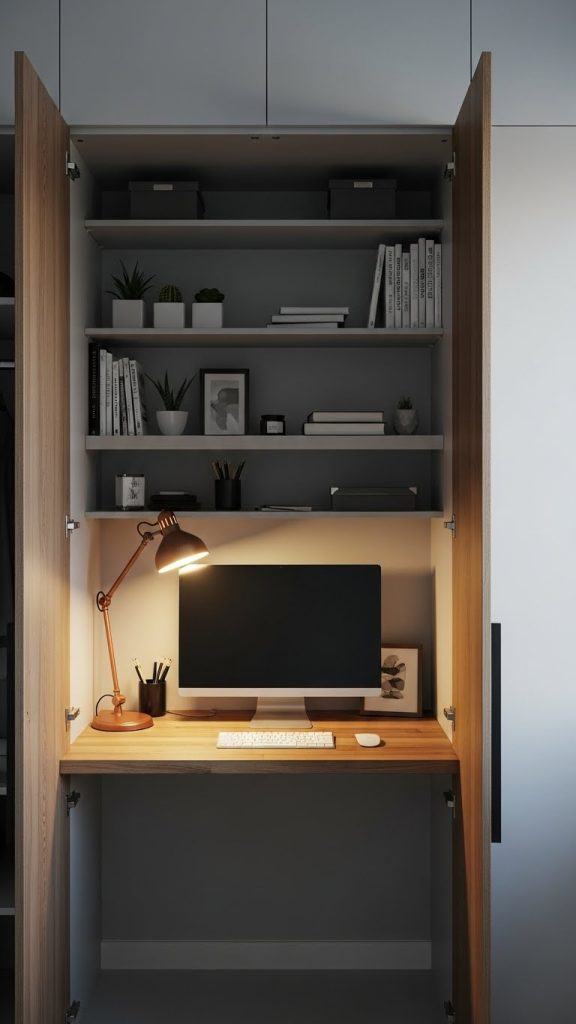
5. Desk Integrated into Wardrobe or Closet Area
In bedrooms with limited wall space, the wardrobe or closet area can be repurposed to accommodate a tiny home office. This approach transforms underused storage zones into functional workspaces.
A shallow desk can be built into a wardrobe unit or closet opening. Shelves above the desk store work items, while doors allow the space to be closed when not in use.
This setup creates a strong visual boundary between work and sleep. Closing the doors at the end of the day helps signal a mental shift away from work.
This idea works especially well for bedrooms where maintaining a restful atmosphere is a priority.
6. Floating Shelf Desk for Ultra-Compact Rooms
A floating shelf desk is an ultra-minimal solution for very small bedrooms. Essentially a deeper wall-mounted shelf, it provides just enough surface for a laptop and notebook.
This approach prioritizes visual lightness and simplicity. The shelf can be installed at a comfortable height and paired with a compact chair or stool.
Because storage is limited, this setup encourages minimalism—only essential items are kept at the desk. Additional storage can be placed elsewhere in the room.
A floating shelf desk is ideal for occasional work or study without overwhelming the bedroom.

7. Desk as a Dual-Purpose Furniture Piece
In tiny bedrooms, furniture often needs to serve more than one function. A desk can double as a vanity, bedside table, or console, reducing the need for additional pieces.
For example, a slim desk placed beside the bed can act as both a nightstand and a workspace. During the day, it functions as an office; at night, it holds bedside essentials.
Choosing furniture with simple lines and neutral finishes helps it blend seamlessly into the bedroom. Storage drawers keep work items hidden when not in use.
This approach supports efficiency while maintaining visual harmony.

8. Vertical Storage to Keep the Desk Area Clear
In a tiny bedroom office, vertical storage is essential. When floor space is limited, walls become valuable real estate for organization.
Floating shelves, wall-mounted cabinets, pegboards, or narrow bookcases can store work supplies without crowding the desk. Keeping the desktop clear helps reduce visual stress.
Vertical storage also helps define the workspace zone, especially when combined with subtle design cues such as lighting or color.
This strategy keeps the office functional while preserving the bedroom’s calm and uncluttered feel.

9. Soft Zoning with Rugs, Lighting, or Screens
Even in a single-room setup, subtle zoning can help separate the home office from the sleeping area. This improves focus during work hours and relaxation afterward.
A small rug under the desk, a dedicated desk lamp, or a folding screen can visually distinguish the workspace. These elements signal a shift in function without requiring walls.
Soft zoning maintains openness while reinforcing boundaries. It also allows the bedroom to feel intentional rather than chaotic.
This approach is especially useful for people who work full-time from their bedroom.

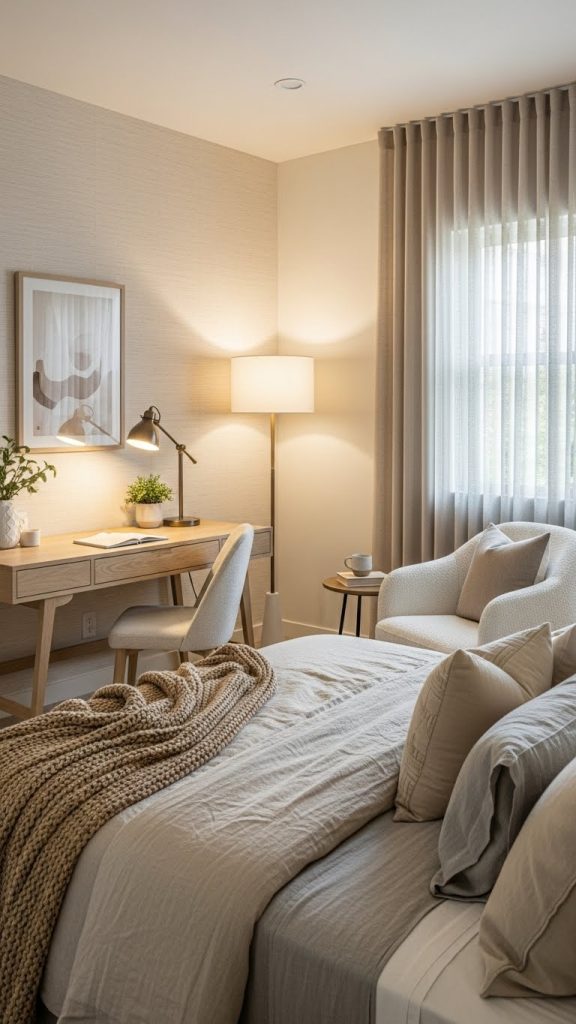
10. Calm, Neutral Design to Support Rest and Productivity
The overall design approach of a bedroom office should support both productivity and rest. A calm, neutral palette helps achieve this balance.
Soft whites, warm beiges, light greys, and muted earth tones create a soothing backdrop that reduces visual stimulation. Natural materials such as wood and linen add warmth.
Clutter should be managed carefully, with storage solutions that allow work items to be hidden at the end of the day. Lighting should be layered, with task lighting for work and softer lighting for evenings.
A calm design ensures the bedroom remains a place of rest—even with a workspace present.
Conclusion
Creating a tiny home office in a bedroom is less about finding extra space and more about using space intentionally. With thoughtful design, even the smallest bedroom can support both productivity and rest without compromise.
The ten ideas explored in this guide—from wall-mounted desks and fold-down solutions to built-in nooks and vertical storage—demonstrate that function does not require excess. By prioritizing simplicity, flexibility, and visual calm, a bedroom office can feel seamless rather than intrusive.
Ultimately, a well-designed bedroom workspace supports a balanced lifestyle—one where work has its place, rest remains protected, and the home continues to feel like a sanctuary.