10 Minimalist Bedroom Decor Ideas
Minimalism in interior design is not about emptiness or lack—it is about intention. In the bedroom, minimalist décor focuses on creating a space that feels calm, organized, and deeply restful by removing excess and highlighting what truly matters. As modern life becomes increasingly busy and overstimulating, the minimalist bedroom has gained popularity as a sanctuary for both the body and mind.

A minimalist bedroom is defined by clean lines, uncluttered surfaces, thoughtful furniture placement, and a restrained color palette. Every element serves a purpose, whether functional or emotional. Rather than filling the room with decorative items, minimalism emphasizes quality over quantity—choosing fewer, better pieces that contribute to comfort and visual harmony.
This approach does not mean sacrificing warmth or personality. On the contrary, minimalist bedrooms often feel more inviting because they eliminate visual noise and create space for relaxation. Soft textures, natural materials, and subtle contrasts add depth while maintaining simplicity.
This article explores 10 minimalist bedroom décor ideas, each explained in detail with practical insights into layout, color, materials, and styling. Whether you are designing a small apartment bedroom or a spacious master suite, these ideas will help you achieve a serene, modern, and timeless bedroom environment.
1. Neutral Color Palette as the Foundation
A neutral color palette is the cornerstone of minimalist bedroom décor. Whites, off-whites, beiges, greys, and soft earth tones create a calm visual foundation that allows the room to feel open and balanced.
Neutral colors reduce visual stimulation, helping the mind relax. In a bedroom, this is especially important, as strong or contrasting colors can be energizing rather than restful. Soft neutrals reflect light gently, enhancing the sense of space and clarity.
To avoid a flat or monotonous look, variations within the same color family can be layered across walls, bedding, and furniture. Texture becomes more important than color, allowing subtle differences to create depth.
A neutral foundation also offers flexibility, making it easier to update the room over time without major changes.
2. Clean Lines and Simple Furniture
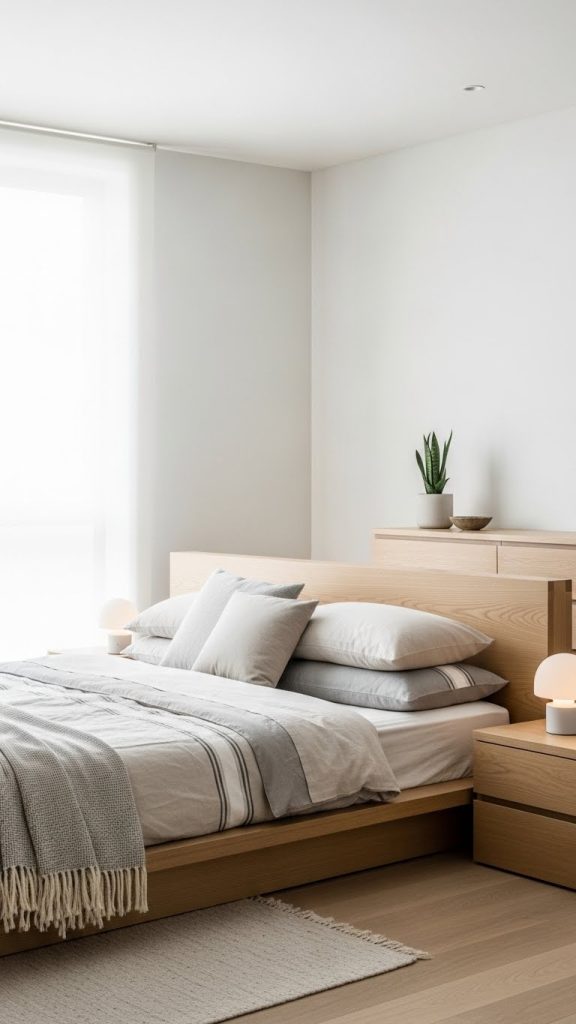
Minimalist décor prioritizes furniture with clean lines and simple forms. Ornate details, heavy carvings, or overly decorative shapes are avoided in favor of sleek, functional designs.
Beds, nightstands, and wardrobes often feature straight edges, smooth surfaces, and understated finishes. This creates visual order and reinforces the sense of calm.
Furniture should be proportionate to the room, leaving enough open space to move freely. Oversized or unnecessary pieces disrupt the minimalist balance.
Choosing well-designed furniture that combines beauty and function ensures the bedroom remains both practical and visually serene.
3. Decluttered Surfaces and Hidden Storage
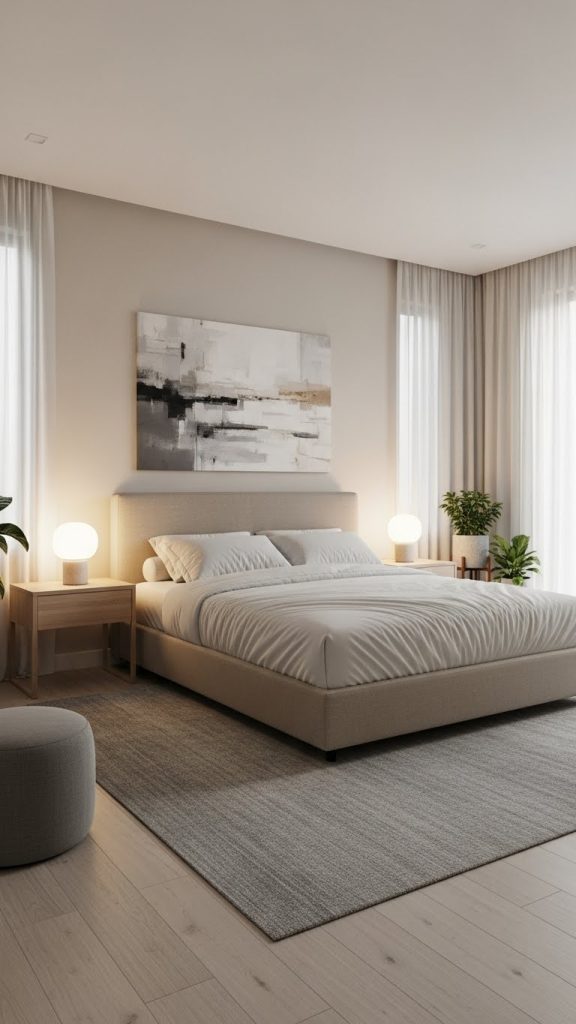
One of the most important principles of minimalist bedroom décor is decluttering. Clear surfaces help reduce mental stress and create a peaceful environment.
Nightstands, dressers, and shelves should hold only essential items. Everything else should be stored out of sight using smart storage solutions such as built-in wardrobes, under-bed storage, or concealed drawers.
Hidden storage maintains a clean appearance while supporting everyday functionality. It allows the bedroom to remain tidy with minimal effort.
A decluttered space feels lighter, calmer, and more conducive to rest.
4. Quality Over Quantity in Décor
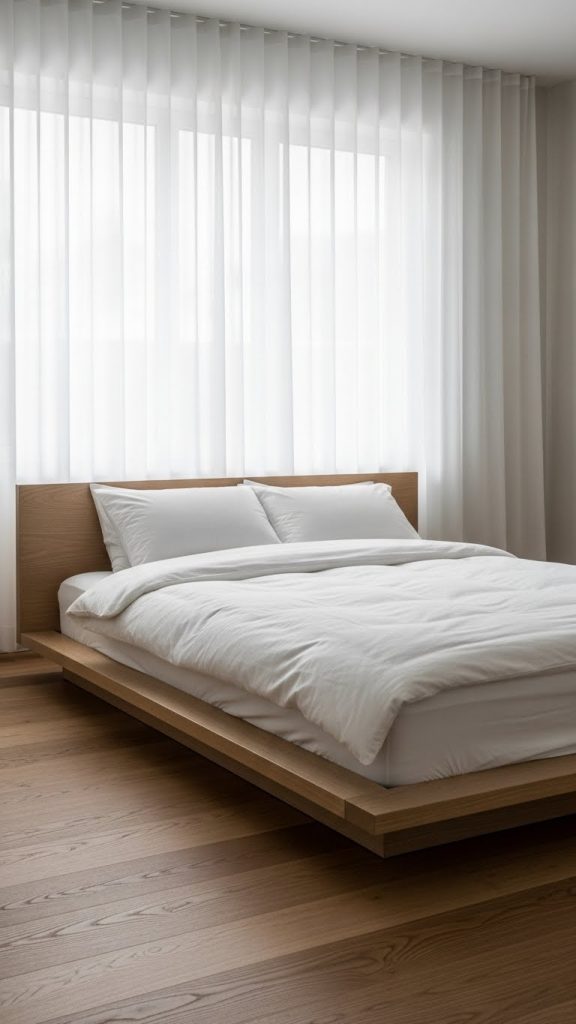
In a minimalist bedroom, décor is intentional and limited. Rather than multiple decorative items, one or two meaningful pieces are chosen to enhance the space.
This might include a single artwork, a sculptural lamp, or a carefully selected vase. Each item should contribute to the overall mood without overwhelming the room.
Focusing on quality materials and craftsmanship ensures that even minimal décor feels refined and purposeful.
This approach reinforces the minimalist philosophy of simplicity and mindfulness.
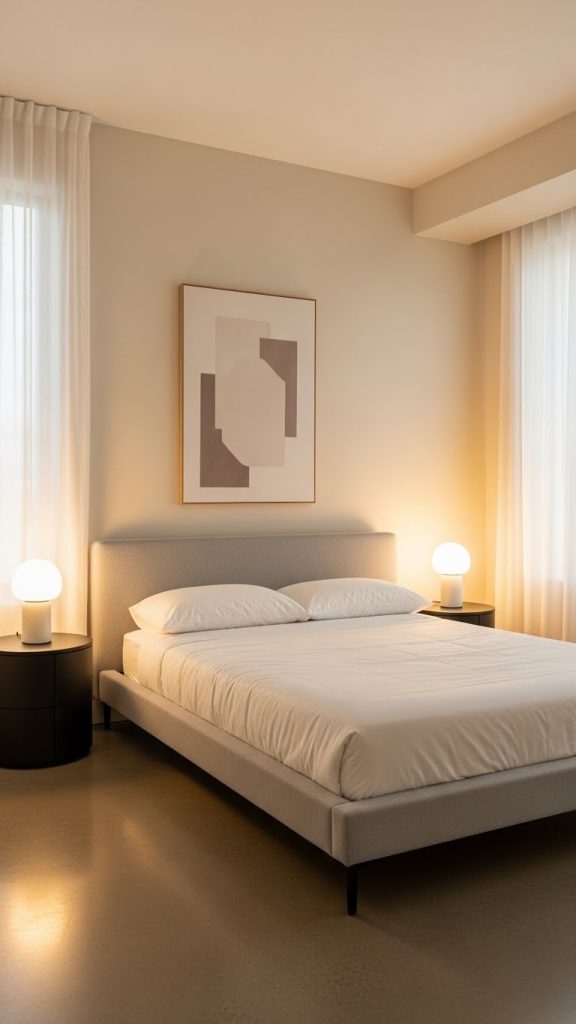
5. Soft Textures for Comfort and Warmth
While minimalism emphasizes simplicity, comfort remains essential—especially in the bedroom. Soft textures add warmth and prevent the space from feeling cold or sterile.
Layered bedding, linen sheets, wool throws, and textured rugs introduce tactile richness without clutter. These elements enhance comfort while maintaining a clean aesthetic.
Using neutral or muted tones ensures that textures blend harmoniously into the overall design.
Soft textures are key to creating a minimalist bedroom that feels welcoming and livable.
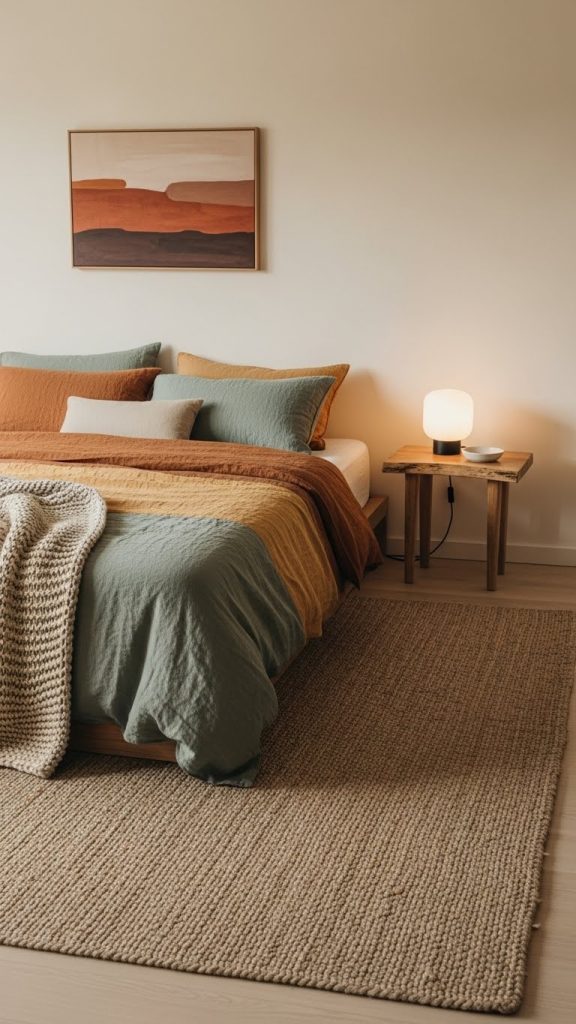
6. Thoughtful Lighting Design
Lighting plays a critical role in minimalist bedroom décor. Rather than relying solely on overhead lighting, a layered approach is preferred.
Bedside lamps, wall sconces, or subtle floor lamps provide focused and ambient light. Warm light temperatures enhance relaxation and create a cozy atmosphere.
Minimalist light fixtures often feature simple shapes and neutral finishes, blending seamlessly with the room.
Good lighting supports both functionality and mood, reinforcing the calm nature of the space.
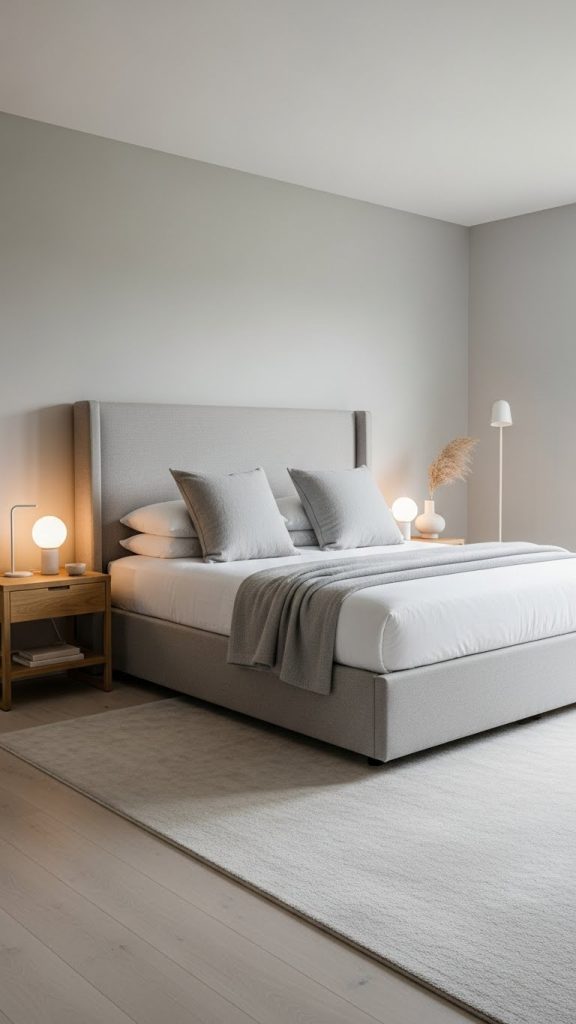
7. Limited Color Accents for Balance
While neutrals dominate minimalist bedrooms, limited color accents can add interest and balance. These accents should be subtle and restrained.
Muted tones such as soft blue, sage green, or warm taupe can be introduced through cushions, throws, or artwork. The goal is to enhance the space without drawing too much attention.
By keeping accent colors minimal, the bedroom maintains its calm and cohesive appearance.
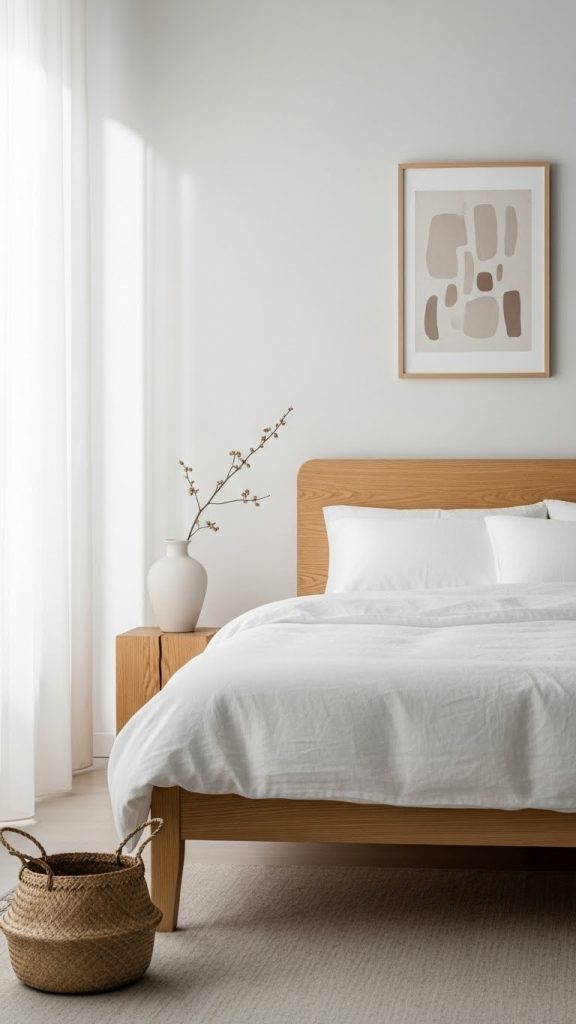
This strategy prevents monotony while preserving simplicity.
8. Natural Materials for Organic Warmth
Natural materials are a perfect complement to minimalist décor. Wood, cotton, linen, stone, and wool introduce warmth and authenticity into the bedroom.
Light wood furniture or flooring adds organic texture, balancing the clean lines of minimalist design. Natural fabrics feel comfortable and breathable, enhancing sleep quality.
These materials age beautifully and add timeless appeal to the space.
Their presence connects the bedroom to nature, promoting a sense of calm and grounding.
9. Open Space and Intentional Layout
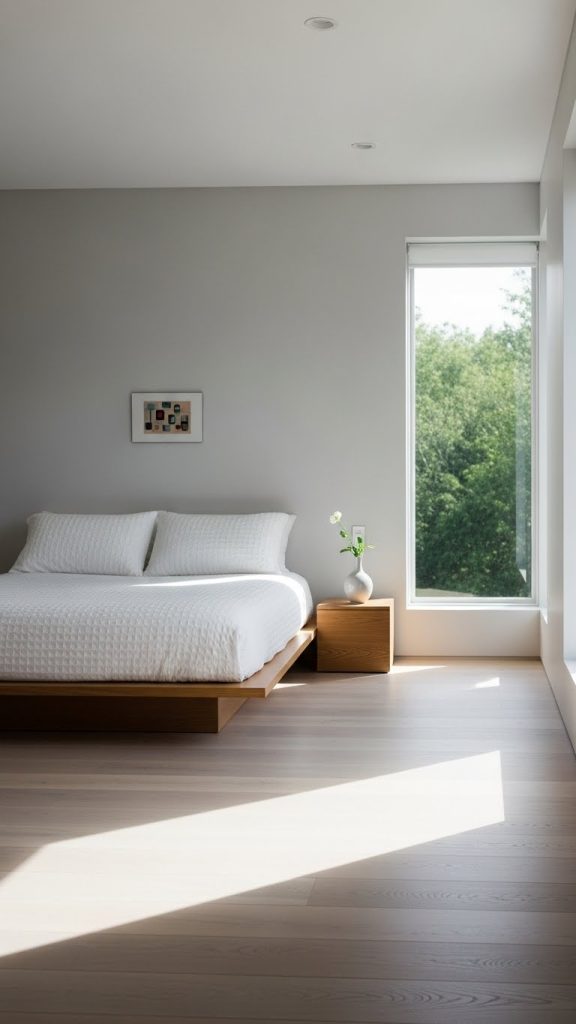
A minimalist bedroom values open space as much as furniture. Leaving areas intentionally empty allows the room to breathe and enhances visual clarity.
Furniture placement should feel balanced and logical, supporting easy movement and relaxation. Avoid pushing too many items against walls or filling every corner.
An intentional layout emphasizes function and flow, making the bedroom feel spacious and organized.
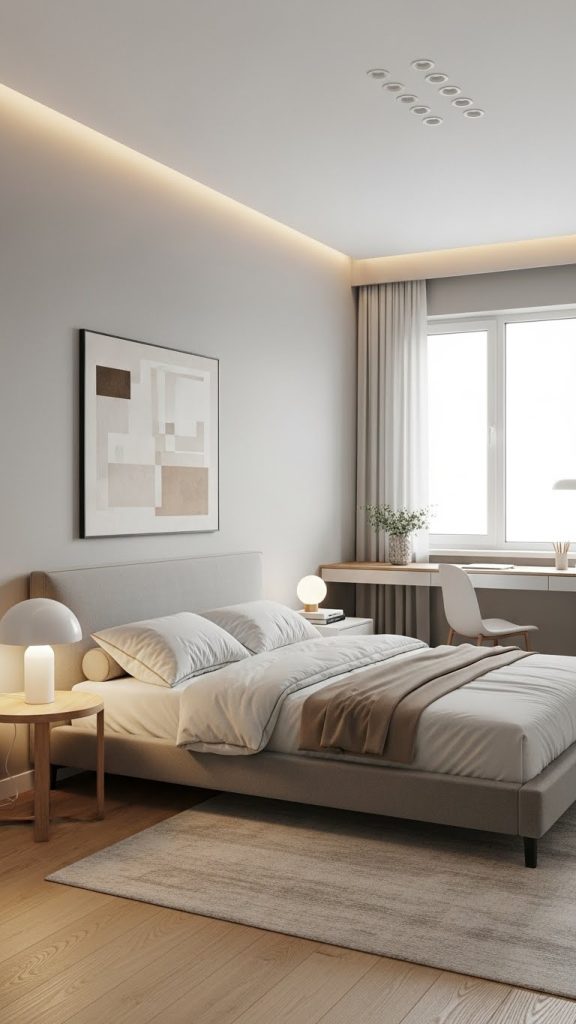
Open space contributes significantly to the peaceful nature of minimalist décor.
10. Calm, Personal Touches
Minimalist décor does not exclude personality. Instead, it encourages meaningful personal touches that align with the overall aesthetic.
This might include a favorite book, a framed photograph, or a personal object that brings comfort. The key is restraint—each item should have purpose and significance.
Personal touches make the bedroom feel lived-in and emotionally comforting without disrupting simplicity.
This final layer completes the minimalist bedroom, making it both serene and personal.
Conclusion
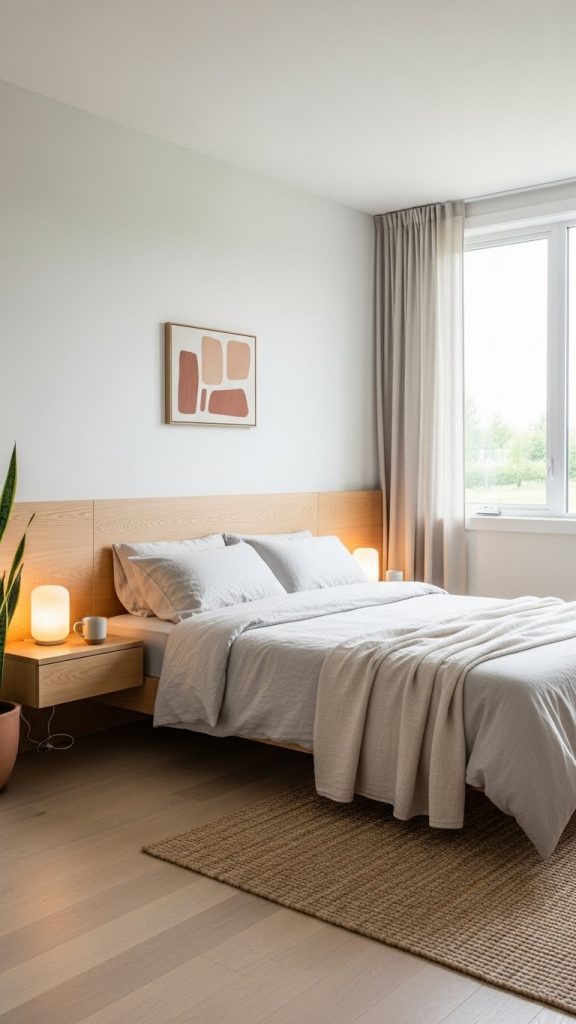
Minimalist bedroom décor is about creating a space that supports rest, clarity, and well-being. By focusing on simplicity, functionality, and thoughtful design, minimalism transforms the bedroom into a calm and restorative retreat.
The ten ideas explored in this guide demonstrate that minimalism is not about emptiness but about intention. Neutral colors, clean lines, natural materials, and meaningful décor come together to create a timeless and peaceful environment.
Whether you embrace minimalism fully or incorporate select elements, this approach offers lasting benefits—both visually and emotionally—making the bedroom a true place of rest and renewal.