
10 Cozy Home Ideas
A cozy home is not defined by size, cost, or trends—it is defined by how it makes you feel. Cozy homes offer comfort, warmth, and a sense of safety. They invite you to slow down, relax, and feel grounded after long, demanding days. In a fast-paced world filled with digital noise and constant stimulation, the home has become a sanctuary. People no longer want spaces that merely look beautiful; they want homes that feel good to live in.

Coziness is created through thoughtful choices: warm lighting instead of harsh brightness, soft textures instead of cold surfaces, layered elements instead of emptiness, and personal touches instead of generic décor. A cozy home embraces imperfection, prioritizes comfort, and reflects the personality of the people who live in it. It is welcoming, lived-in, and emotionally nurturing.
This guide explores 10 cozy home ideas, each focusing on a different design principle that contributes to warmth and comfort. These ideas can be applied to homes of any size or style—modern apartments, cottages, family houses, or minimalist spaces. Whether you are redesigning an entire home or simply want to make small changes, these concepts will help you create a space that feels deeply comforting and truly yours.
1. Warm and Inviting Color Palettes
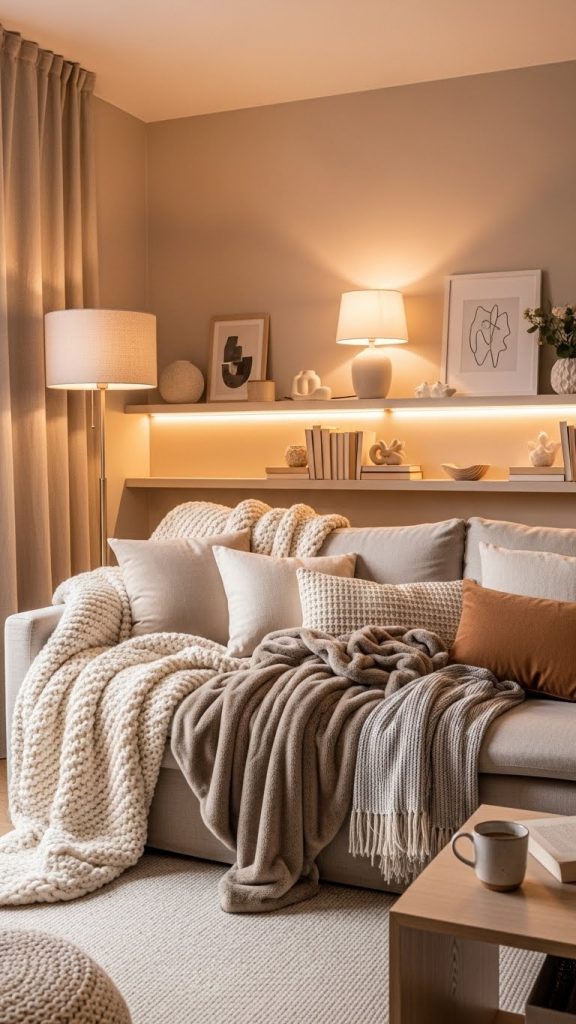
Color is one of the most powerful tools in creating a cozy home. Warm, muted tones naturally make spaces feel more intimate and calming, while harsh or overly bright colors can feel cold and overstimulating.
Cozy homes often use colors inspired by nature. Soft creams, warm whites, beige, taupe, greige, muted browns, terracotta, sage green, dusty blue, and warm charcoal all contribute to a grounded atmosphere. These colors reflect light gently and avoid the starkness of pure white or the intensity of bold hues.
Using warm colors on walls immediately softens a space. Even neutral homes benefit from subtle warmth—adding a hint of cream instead of stark white, or choosing earthy undertones rather than cool gray. Accent colors can be layered through textiles, artwork, and décor to add depth without overwhelming the senses.
A warm color palette creates emotional comfort. It visually lowers the energy of a room, encouraging rest, conversation, and relaxation.
2. Layered Lighting for Soft Ambience
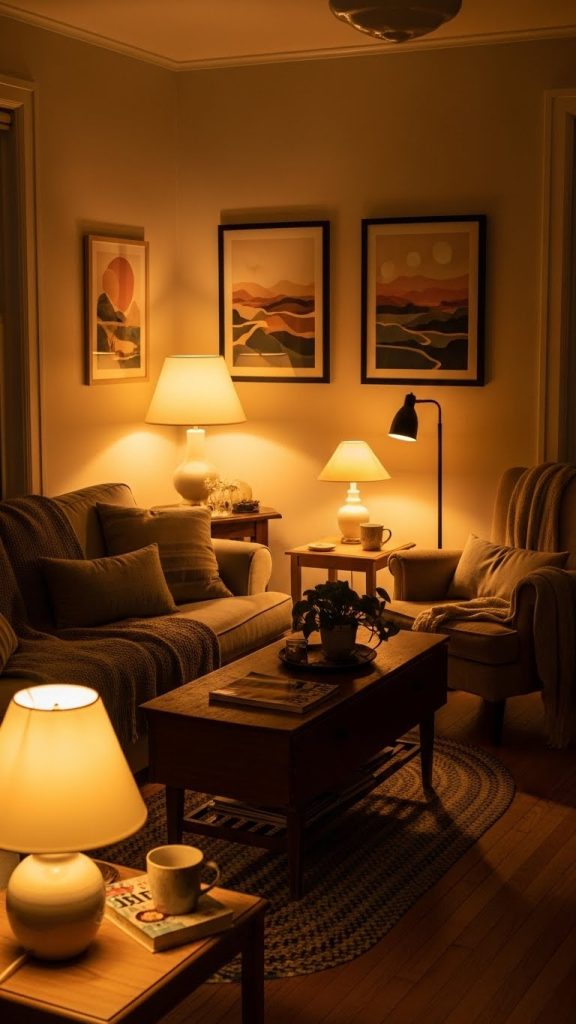
Lighting is essential to coziness. One bright overhead light can make even the most beautiful room feel cold and uninviting. Cozy homes rely on layered lighting, which combines multiple soft light sources at different heights.
Table lamps, floor lamps, wall sconces, string lights, and candles all contribute to a warm glow. The goal is to create pockets of light rather than flooding the entire room with brightness. Warm light temperatures (between 2700K and 3000K) are crucial; cool white lighting instantly removes coziness.
In the evening, turning off overhead lights and relying on lamps transforms the atmosphere. Shadows become softer, textures become more visible, and the room feels calmer. Candles—real or LED—add flicker and movement that naturally relaxes the mind.
Layered lighting makes a home feel intimate and safe, especially during evenings and colder months.
3. Soft Textiles and Fabric Layers
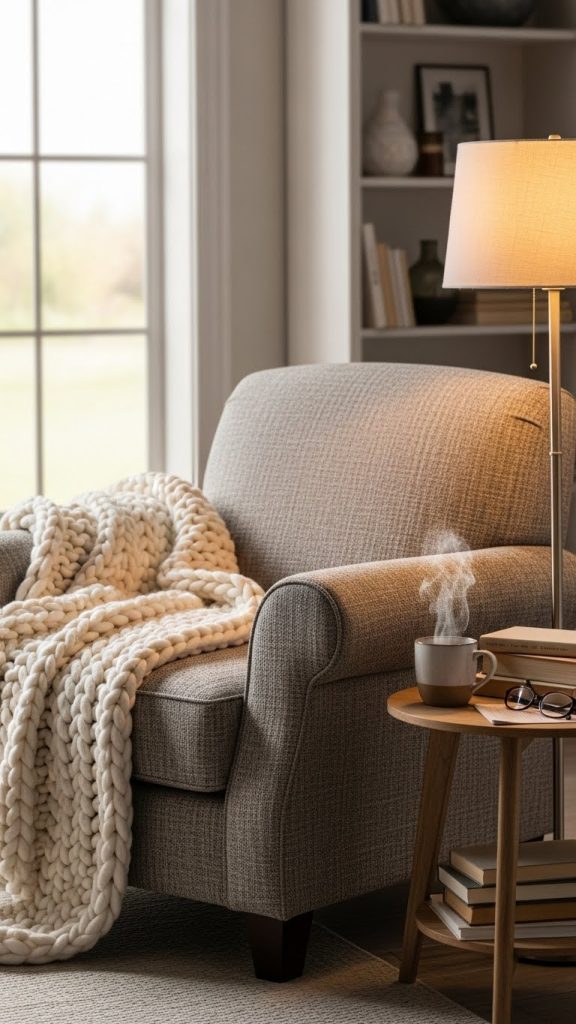
Nothing creates coziness faster than soft textures. Fabrics add warmth, comfort, and visual softness to interiors dominated by hard surfaces like walls, floors, and furniture.
Cozy homes are layered with textiles: throw blankets on sofas, plush cushions, area rugs, curtains, and upholstered furniture. Materials such as wool, cotton, linen, fleece, velvet, and boucle bring tactile comfort. Layering different textures—even in the same color family—adds richness and depth.
Rugs are especially important. A rug instantly warms a space, both visually and physically. Even small rooms benefit from a well-placed rug that defines the area and adds softness underfoot.
Textiles invite touch and relaxation. They make spaces feel lived-in rather than staged, which is central to coziness.
4. Natural Materials for Warmth and Balance
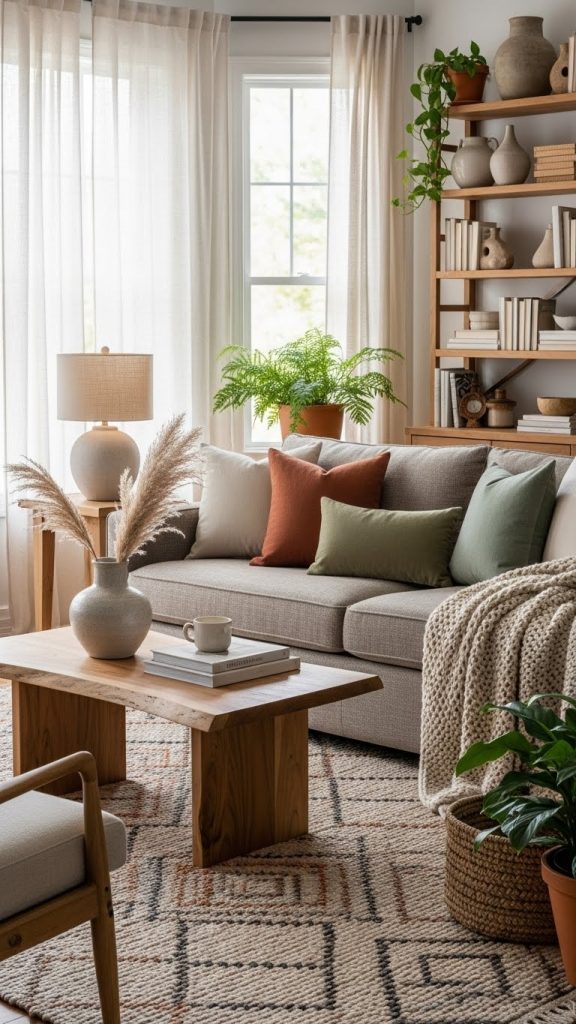
Natural materials bring an organic sense of calm and authenticity into the home. Wood, stone, clay, leather, wool, rattan, and linen all contribute to a grounded, cozy environment.
Wood is especially powerful. Wooden furniture, floors, beams, shelves, and décor add warmth and visual texture. Even light wood tones soften modern spaces, while darker woods create a sense of depth and richness.
Natural materials age gracefully. Scratches, patina, and imperfections add character rather than detract from beauty. This aligns perfectly with cozy living, which embraces comfort over perfection.
By incorporating natural elements, the home feels connected to the outdoors, which naturally reduces stress and increases well-being.
5. Comfortable, Inviting Furniture
Cozy homes prioritize comfort over appearance. Furniture should invite you to sit, lounge, and relax—not just look good in photos.
Deep sofas, soft cushions, supportive armchairs, and upholstered seating are essential. Furniture with rounded edges often feels more inviting than sharp, angular designs. Low seating can also enhance coziness by creating a grounded feeling.
Comfortable furniture encourages people to stay longer, relax more deeply, and truly use the space. A cozy home is one where you want to curl up with a book, stretch out for a nap, or gather with loved ones.
Choosing fewer, more comfortable pieces is often more effective than overcrowding a room with furniture.
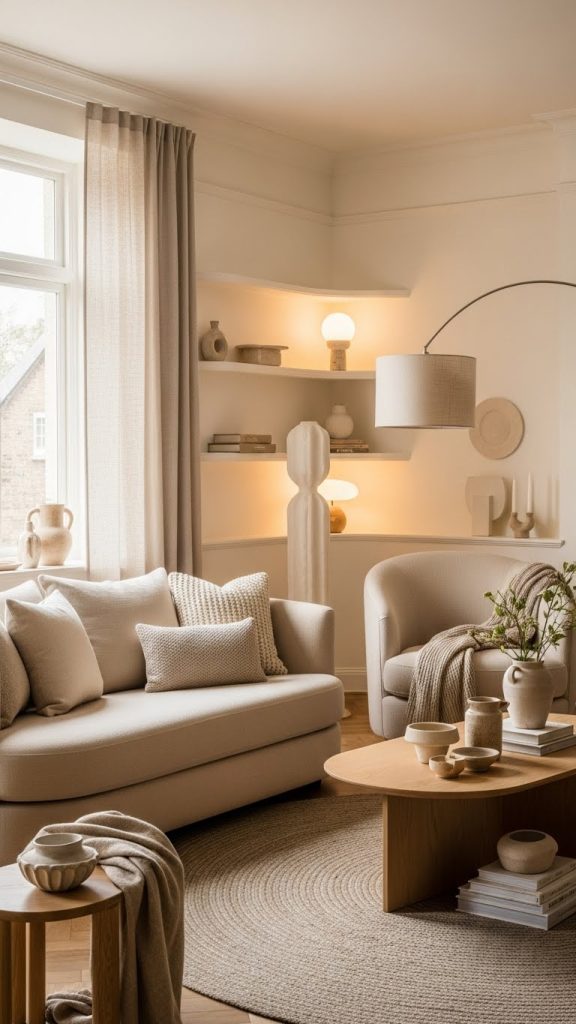
6. Personal Touches and Meaningful Décor
Coziness comes from personality. Homes feel warm when they reflect the lives, memories, and stories of the people who live in them.
Personal décor includes photographs, artwork, books, travel souvenirs, handmade items, family heirlooms, and meaningful objects. These elements create emotional warmth and make the home feel unique rather than generic.
A cozy home does not need perfect styling. Slightly mismatched frames, worn book spines, and collected objects add authenticity. The key is intention—choosing items that bring comfort, joy, or nostalgia.
Personal touches turn a house into a home by creating emotional connection and familiarity.

7. Thoughtful Use of Space and Flow
Coziness is not about filling every corner. It’s about creating spaces that feel balanced and easy to move through. A cluttered home can feel stressful, while an empty home can feel cold. Cozy homes find a comfortable middle ground.
Furniture placement should encourage conversation and relaxation. Seating arranged to face each other feels warmer than furniture pushed against walls. Creating small “zones” within a room—like a reading corner or window seat—adds intimacy.
Negative space is important. Leaving breathing room between furniture and décor prevents visual overwhelm and allows the space to feel calm and welcoming.
A cozy layout supports how people naturally live and move through the home.
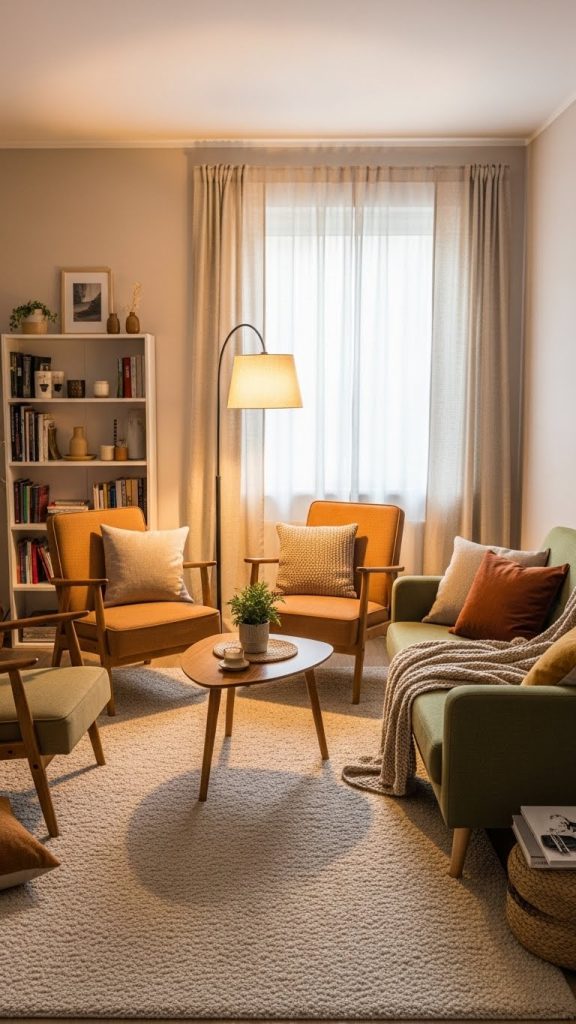
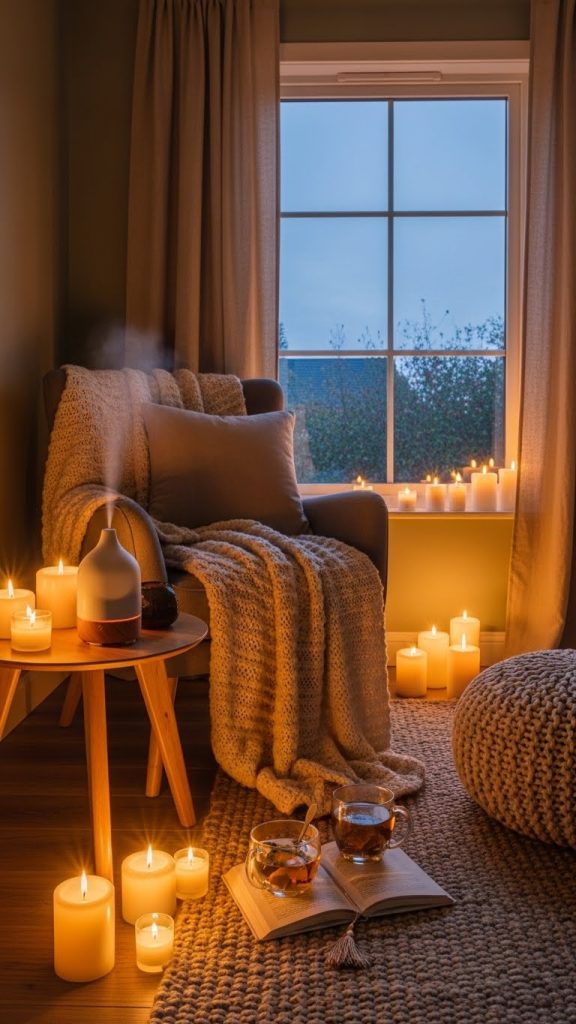
8. Scents and Sensory Comfort
Coziness is not just visual—it engages all the senses. Scent plays a powerful role in how a home feels.
Warm, comforting scents such as vanilla, cinnamon, sandalwood, cedarwood, lavender, amber, or baked goods instantly create a sense of home. Candles, essential oil diffusers, incense, or simmer pots can be used to add gentle fragrance.
Natural scents associated with cleanliness, wood, or nature also enhance comfort. Avoid overly strong artificial fragrances; subtlety is key.
When scent is paired with warm lighting and soft textures, the home becomes a multi-sensory retreat.
9. Embracing Imperfection and Lived-In Beauty
A cozy home is not perfect—and that is its strength. Perfectly styled spaces often feel sterile or intimidating. Cozy homes feel forgiving, relaxed, and human.
Wrinkled linen, well-used furniture, chipped pottery, and worn floors all contribute to warmth. These elements tell a story of life being lived rather than a space being preserved.
Embracing imperfection removes pressure and allows the home to evolve naturally. It encourages comfort over constant maintenance and makes guests feel welcome rather than cautious.
Coziness thrives where there is ease, not rigidity.
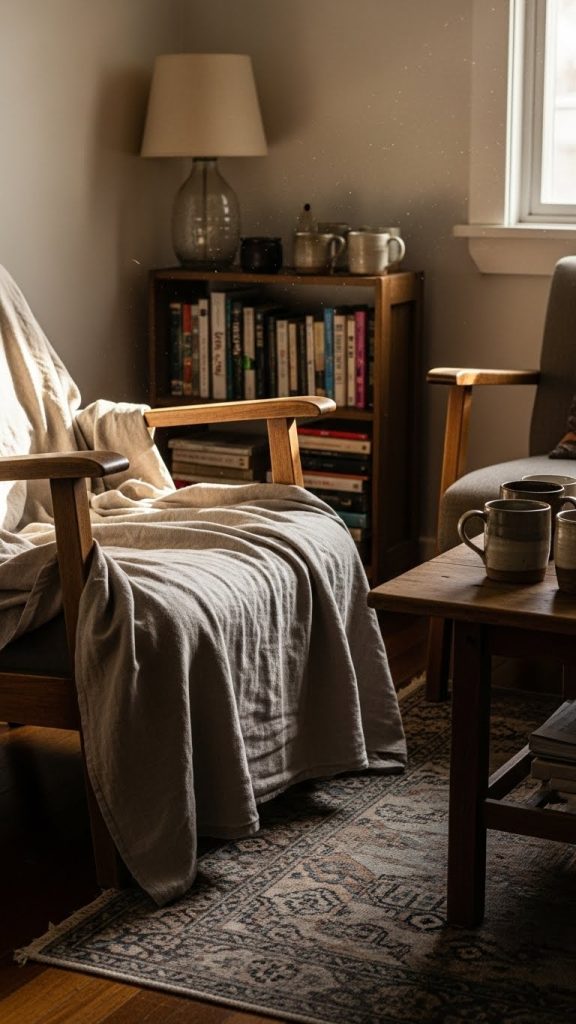
10. Creating Cozy Rituals and Everyday Moments
Finally, coziness is not only about design—it’s about how you live in your space. Daily rituals transform a home into a comforting sanctuary.
Simple habits like lighting a candle in the evening, making tea in your favorite mug, reading before bed, playing soft music, or enjoying slow breakfasts all enhance the cozy feeling of a home.
These rituals anchor you emotionally and create a sense of rhythm and safety. Over time, the home becomes associated with calm and restoration.
A cozy home supports your lifestyle, not just your aesthetic.

Conclusion
A cozy home is a place where comfort, warmth, and authenticity come together. It is not about trends or perfection but about intentional choices that support relaxation, connection, and well-being. Through warm colors, layered lighting, soft textiles, natural materials, comfortable furniture, personal décor, balanced layouts, sensory comfort, and meaningful rituals, any home can become a sanctuary.
The 10 cozy home ideas explored in this guide demonstrate that coziness is both a design philosophy and a way of living. It invites you to slow down, be present, and create a space that truly feels like home.