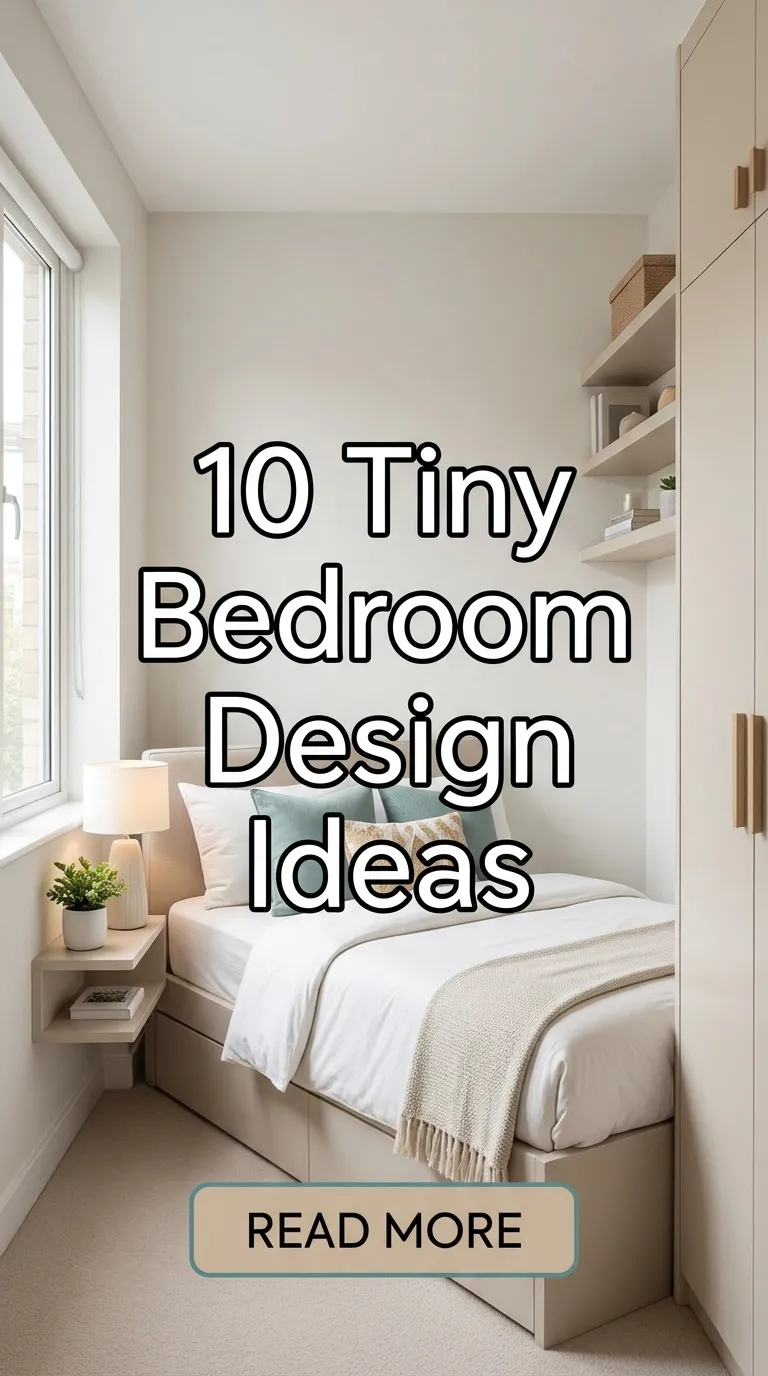
10 Tiny Bedroom Design Ideas

Designing a tiny bedroom often feels like a challenging balance between comfort, storage, and style. The smaller the space, the more intentional every choice needs to be. Tiny bedrooms can easily feel cramped, cluttered, or visually overwhelming if not planned with clarity and purpose. Yet, with the right design ideas, even the smallest room can become a restful sanctuary, a cozy retreat, and a beautifully curated space that reflects personal taste.
The advantage of working with a tiny bedroom is that the design naturally encourages creativity. You are required to think vertically, use forgotten corners, and transform simple furniture into multi-functional solutions. Every detail, from the color palette to the type of lighting, affects how large and inviting the room feels. The goal is not just to save space but to elevate the room so that it feels both functional and serene.
This guide explores ten thoughtful tiny bedroom design ideas that blend practicality with aesthetics. Each idea focuses on transforming limited square footage into a space that feels open, warm, and beautifully intentional. From smart storage tricks to clever layout strategies, these concepts can help you reimagine what your small bedroom can become. With the right approach, even modest rooms can feel spacious and deeply relaxing.
1. Vertical Storage Walls
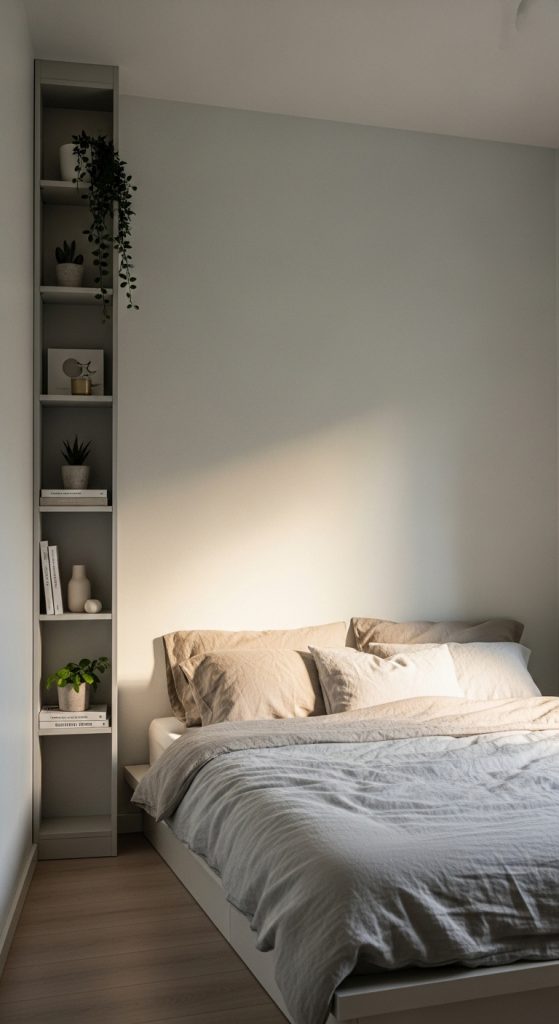
In a tiny bedroom, floor space is precious. Instead of crowding the room with bulky dressers and cabinets, vertical storage makes use of the height of the room. Installing tall shelving units, wall-mounted organizers, or floor-to-ceiling bookcases adds significant storage without reducing the open floor area.
Vertical storage also creates visual structure. When designed in a consistent color palette, it brings a clean and organized look to the room. Using baskets, labeled boxes, or modular organizers makes the storage more efficient. Open shelves help visually elongate the room, while closed cabinets keep items tucked away and minimal.
Another trick is to mount shelving above the bed or doorframe, areas that are often unused. With careful styling and consistent tones, vertical storage becomes both practical and visually appealing, turning the height of the room into a major advantage.
2. Multi-Functional Furniture
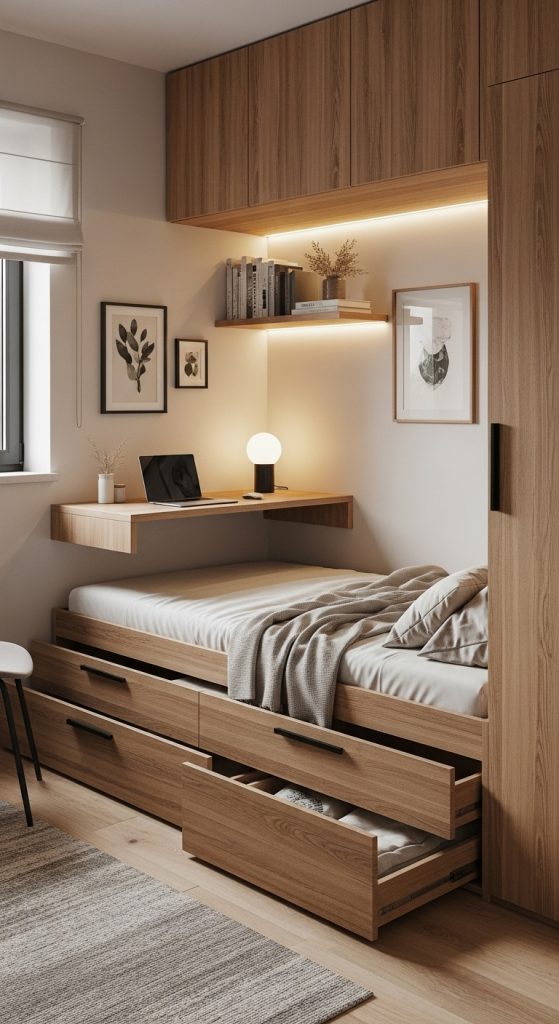
Multi-functional furniture plays a central role in tiny bedrooms. Pieces like storage beds, fold-out desks, under-bed drawers, or bedside tables with built-in shelves help save space while reducing clutter. Every furniture item should ideally serve more than one purpose.
A popular option is a bed with built-in storage compartments or deep pull-out drawers. It eliminates the need for an additional dresser. A folding desk attached to the wall works perfectly for small bedrooms used as study or workspaces.
Another idea is a compact bench with storage inside, placed at the foot of the bed. This provides extra seating while serving as storage for linens or seasonal items.
The more tasks one piece of furniture can perform, the more open and efficient the room becomes. Choosing minimal, well-designed pieces helps the room feel harmonious rather than crowded.
3. Light Color Palettes
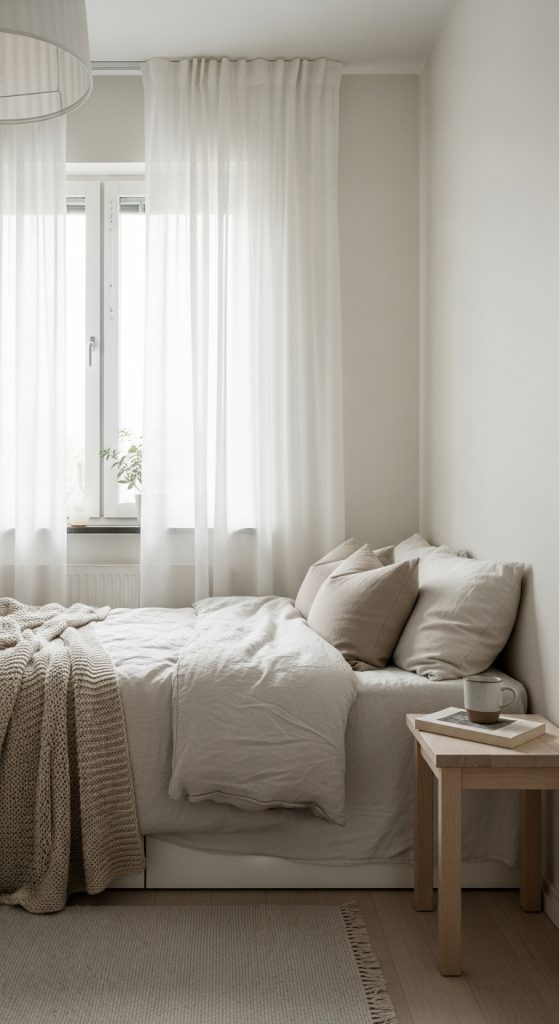
Color plays a powerful role in shaping the mood and apparent size of a tiny bedroom. Light colors help reflect natural and artificial light, making the room appear larger, cleaner, and more open. Soft whites, beiges, warm grays, and pastel tones are ideal foundations.
A monochromatic palette creates visual calm, ensuring the room does not feel busy. Even if you want some contrast, keeping the tones within the same color family helps maintain cohesion. Instead of bold, heavy patterns, gentle textures like linen bedding, soft wool throws, or subtle painted finishes add depth without overwhelming the eye.
Light walls paired with natural wooden accents bring warmth while maintaining a spacious feel. The right palette can transform even the smallest bedroom into a serene retreat.
4. Low-Profile Furniture
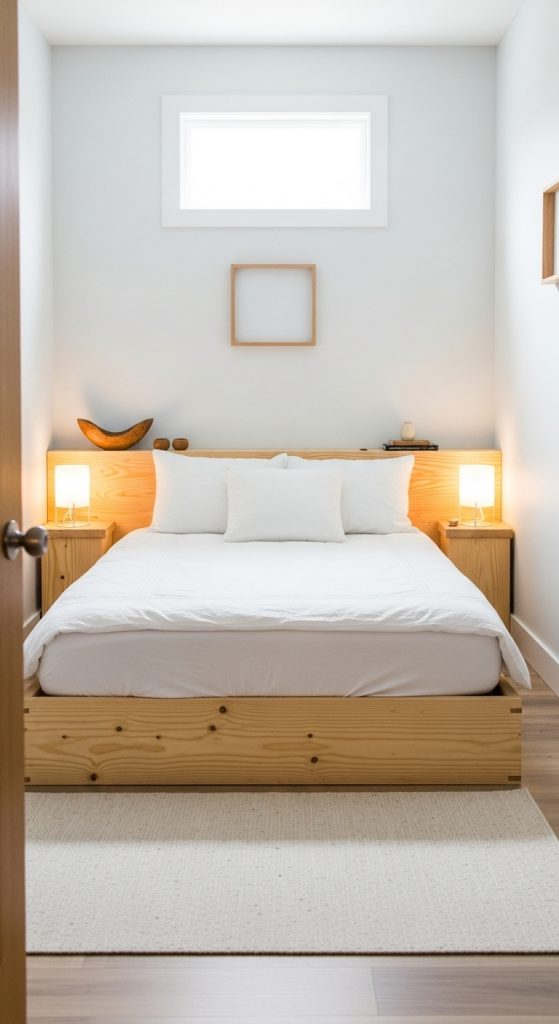
Low-profile furniture keeps the eye level lower and creates an illusion of height in the room. Beds with low frames, floor cushions, short nightstands, or slim platform designs help the room feel more open. When the furniture stays low, the walls appear taller, making the room feel larger.
Choosing beds with thin frames or tucked-away legs makes the space feel visually lighter. Similarly, selecting compact nightstands or floating ones frees up the floor area, adding airiness to the room.
This design style often works beautifully with minimalist or Scandinavian-inspired interiors. The lack of bulky vertical furniture enhances simplicity and openness, turning a tiny bedroom into a more expansive-feeling space.
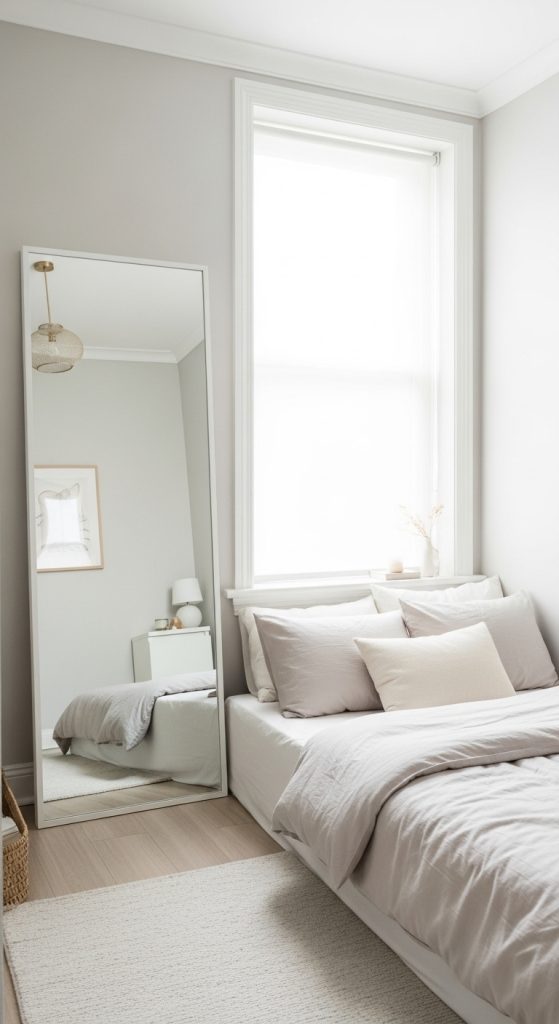
5. Mirrors and Reflective Surfaces
Mirrors are one of the most powerful tools for expanding a tiny bedroom visually. A large mirror on one wall can instantly double the perceived depth of the room. Placing mirrors across from windows enhances natural light, making the room brighter.
In addition to traditional mirrors, reflective surfaces like glass lamps, polished metals on decor pieces, or glossy furniture fronts bounce light throughout the room, adding dimension.
Using a floor-length mirror leaned against a wall is a simple way to add height and elegance. Mirrored closet doors serve the dual purpose of reflection and function. When used intentionally, reflective elements make a small bedroom feel airy, bright, and open.
6. Built-in Storage and Custom Furniture
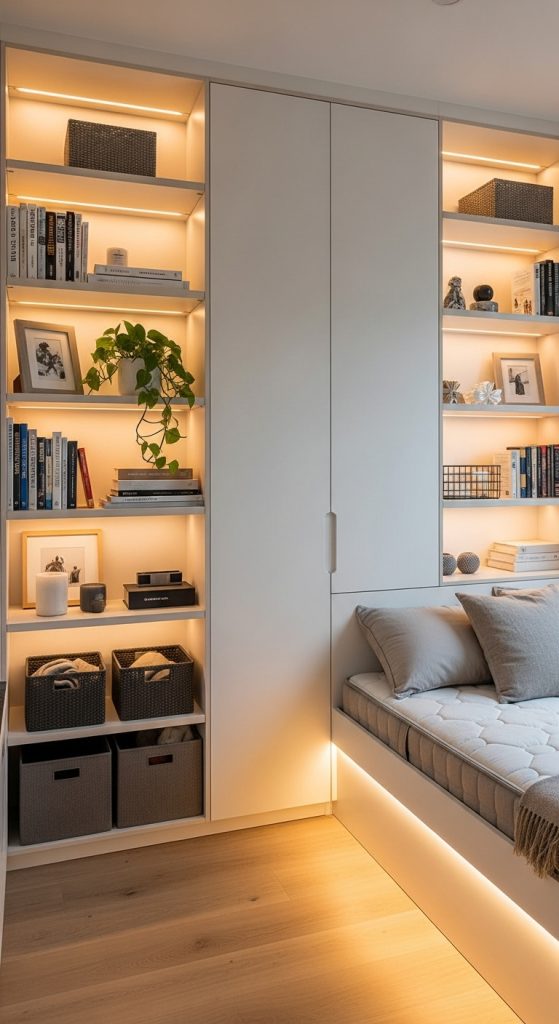
Custom built-ins maximize every inch of a tiny bedroom. Designing shelving that fits the exact measurements or creating a fitted wardrobe ensures that no space goes to waste.
Built-in beds with storage beneath or built-in ledges around the headboard create seamless, clean lines. A built-in closet around the doorway or window frame adds discreet storage without crowding the room.
Custom furniture also ensures the room stays uncluttered. Instead of multiple small pieces, one integrated built-in unit can store clothing, books, accessories, and personal items, creating a streamlined look. Although custom pieces require investment, they offer long-term efficiency and a polished appearance.
7. Window-Focused Layouts
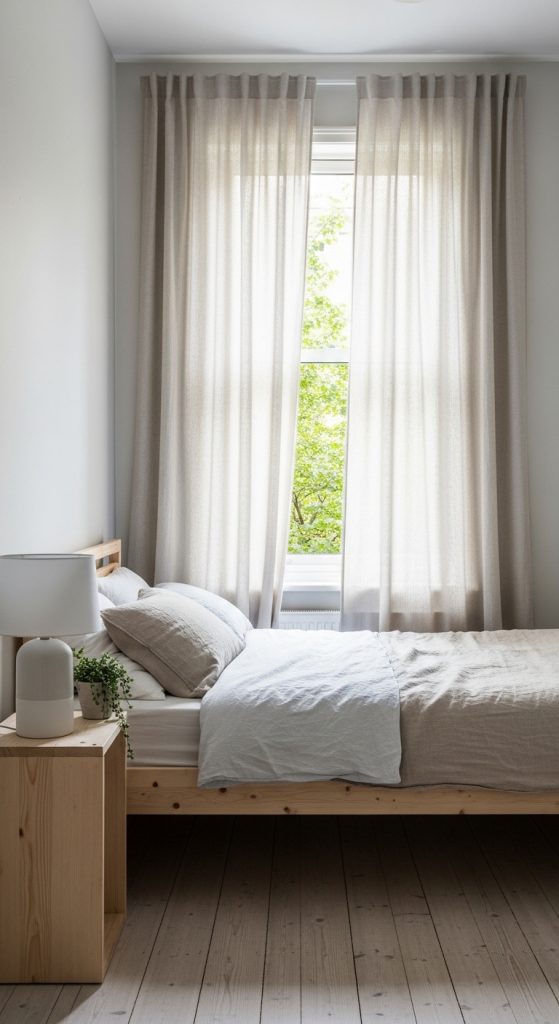
In tiny bedrooms, the natural light source is essential. Designing the room around the window can dramatically improve brightness and mood. Placing the bed near the window allows the light to fill the room gradually and creates a peaceful morning atmosphere.
Keeping window coverings light and airy helps maximise brightness. Sheer curtains, linen drapes, or blinds in neutral tones maintain privacy while allowing soft light to filter through.
Another benefit is using the natural view as part of the room’s design. A small room feels larger when your eyes are drawn outward. A window-facing layout also allows the rest of the bedroom space to be more flexible and open.
8. Creative Bed Placement
Tiny bedrooms often require unconventional bed placement. While centering the bed is ideal in larger rooms, small rooms benefit from placing the bed in corners or against walls to free more usable space.
Corner beds create cozy nooks and open up the center of the room. A bed positioned under a window can also be visually effective, especially when paired with low-profile designs. In extremely small rooms, a floating bed shelf or built-in sleeping platform saves space and adds a contemporary touch.
Strategically placing the bed ensures good flow and avoids making the room feel cramped. A thoughtful layout can make a tiny bedroom feel organized, comfortable, and spacious.
9. Layered Lighting
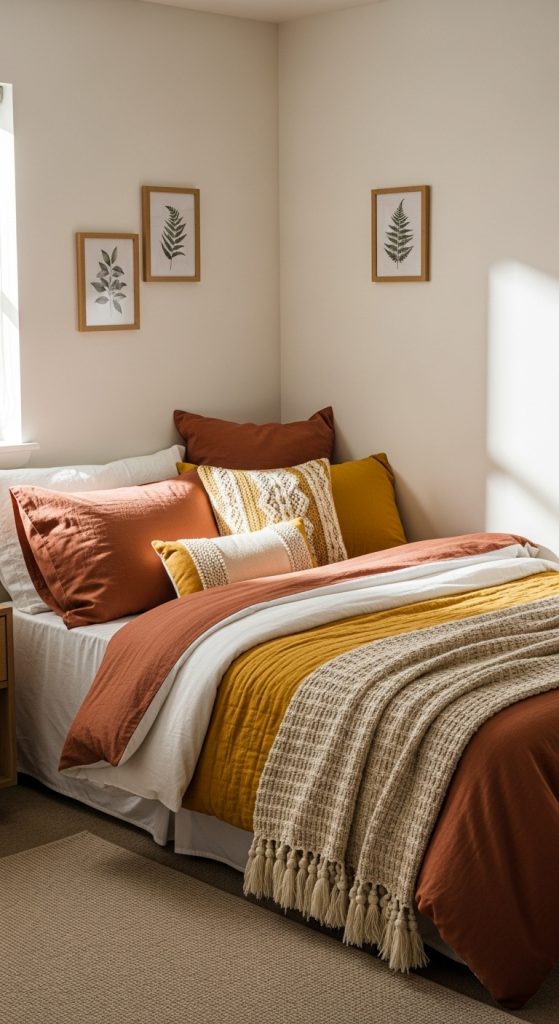
Lighting dramatically influences the atmosphere of a tiny bedroom. Instead of relying on a single overhead light, layered lighting creates a warm, soft, and inviting environment.
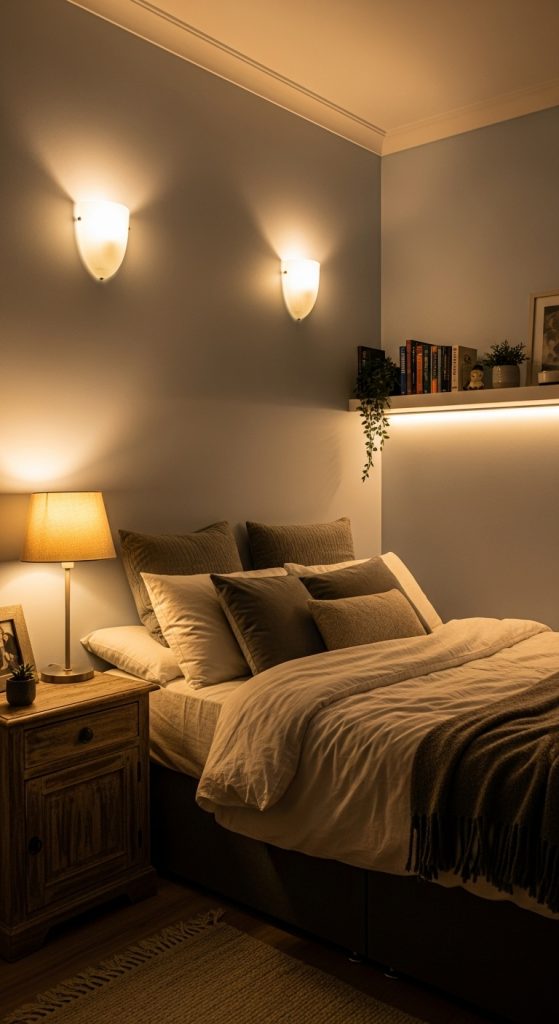
Task lighting, ambient lighting, wall-mounted sconces, string lights, bedside lamps, and directional spotlights add dimension and comfort. Using warm-toned bulbs enhances the coziness of the room and makes the space feel relaxing.
Wall-mounted lights save valuable surface space on nightstands. Under-shelf or behind-headboard lighting creates a gentle glow that feels luxurious. Good lighting can also highlight architectural features or textured materials, enriching the room without adding clutter.
10. Minimalist Styling and Decluttered Surfaces
One of the most effective ways to elevate a tiny bedroom is through disciplined minimalism. Reducing visual noise helps the room feel cleaner, more open, and more soothing.
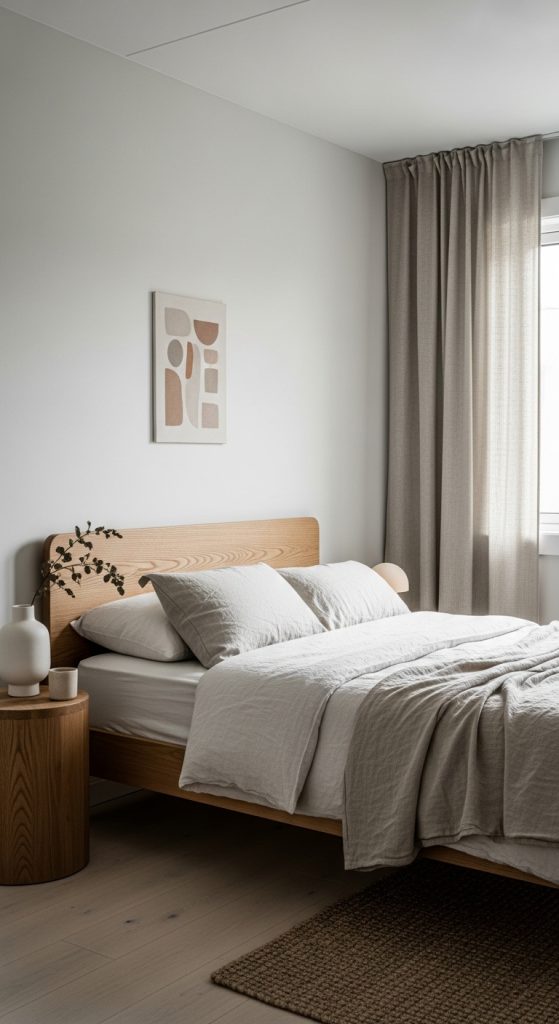
Instead of filling every corner with decor, choose a few meaningful pieces that bring warmth and personality. Consistent textures like linen, cotton, or wood create harmony. Closed storage for personal items keeps surfaces tidy.
A clutter-free tiny bedroom feels restful. This approach emphasizes quality over quantity. With fewer objects and carefully selected materials, the room becomes a calm retreat where rest and clarity take priority.
Conclusion
Designing a tiny bedroom requires thoughtful planning and creative solutions, but the results can be deeply rewarding. Space limitations encourage smarter choices, cleaner layouts, and more intentional styling. Whether through vertical storage, cohesive color palettes, multi-functional furniture, or layered lighting, each idea contributes to a bedroom that feels organized, warm, and inviting.
A tiny bedroom does not need to be restrictive. With the right design strategies, it can become a peaceful, efficient, and aesthetically pleasing sanctuary. These ideas prove that small spaces can hold incredible potential when approached with care and creativity.