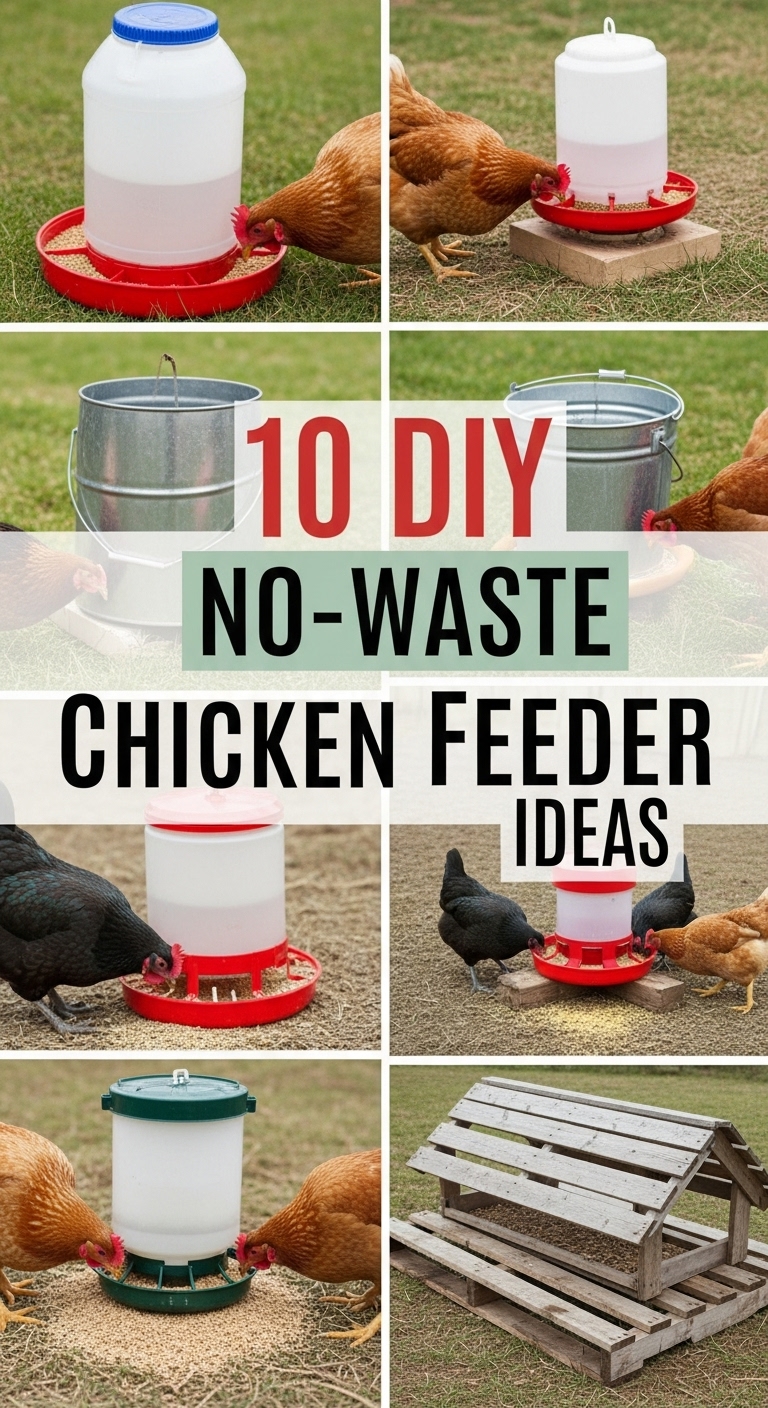
10 DIY No-Waste Chicken Feeder Ideas
DIY no-waste chicken feeders provide a practical solution. These feeders are designed to minimize spillage, reduce waste, and make feeding more efficient. By using recycled materials, repurposed containers, or creative upcycling techniques, you can craft feeders that are eco-friendly, functional, and cost-effective.
In this article, we’ll explore 10 DIY no-waste chicken feeder ideas that are easy to build, sustainable, and practical. Each idea focuses on reducing food loss, simplifying feeding, and ensuring that your chickens get the most out of their meals while keeping your coop tidy. Whether you are a beginner or an experienced poultry keeper, these feeders will help create a more efficient and environmentally friendly feeding system.

1. PVC Pipe Gravity Feeder
A PVC pipe gravity feeder is one of the most popular DIY chicken feeder designs due to its simplicity and efficiency. It uses gravity to dispense feed slowly, ensuring that food is only available in small amounts as chickens consume it.
- Materials Needed: PVC pipe, end caps, a small trough or tray, drill.
- Construction Tips: Drill feeding holes along the bottom of the pipe, large enough for chickens to access feed without spilling. Attach a tray underneath to catch stray grains.
- Benefits: Keeps feed dry, minimizes spillage, and can hold several days’ worth of food. PVC feeders are easy to clean and durable, making them a long-lasting solution.
This type of feeder works especially well for larger flocks and can be mounted on a wall or suspended from the ceiling of the coop to prevent tipping.

2. Hanging Bucket Feeder
A hanging bucket feeder repurposes a simple bucket into a no-waste feeder. By suspending it from the ceiling or a sturdy hook, chickens have access to feed without trampling it underfoot.
- Materials Needed: Plastic bucket, metal hooks, chains or rope, tray for bottom catch.
- Construction Tips: Cut small access holes near the bottom of the bucket for chickens to peck. Hang it at an appropriate height to reduce spillage and prevent overcrowding around the feeder.
- Benefits: Reduces contamination and food waste while being easy to refill. Hanging feeders also save floor space and prevent rodents from reaching the feed.
Adding a small perch near the holes allows chickens to comfortably reach the food without spilling, further enhancing efficiency.

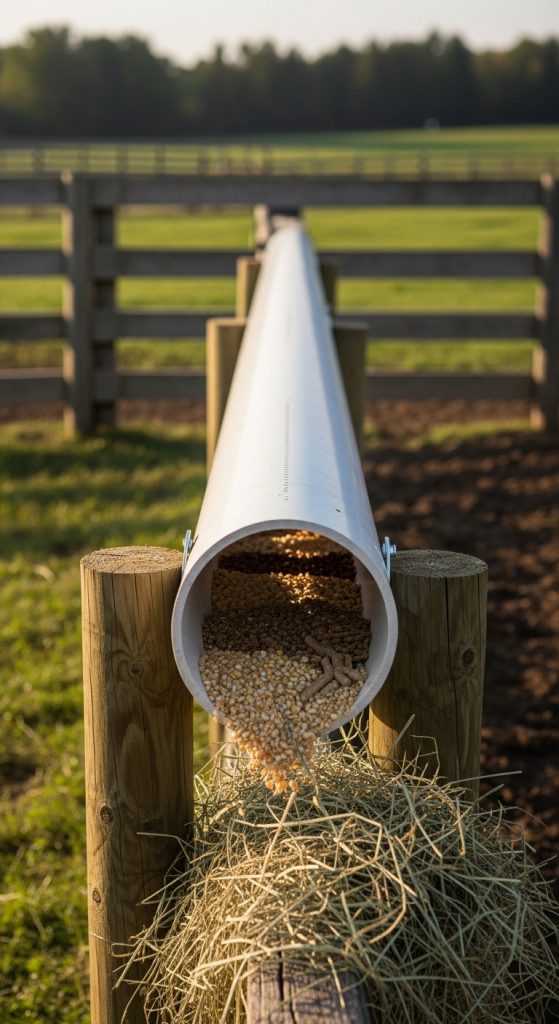
3. PVC Trough Feeder
For chickens that prefer pecking along a trough, a PVC trough feeder is a no-waste design that guides food along a confined space.
- Materials Needed: Large PVC pipe or gutter, end caps, screws, small platform.
- Construction Tips: Cut the pipe lengthwise to form a trough. Secure it to a stable platform or wall at chicken height. Ensure the edges are smooth to avoid injuries.
- Benefits: Trough feeders distribute feed evenly and reduce scattering. They are ideal for small to medium flocks and can be scaled for larger groups.
This feeder is especially effective when using crumbles or pellets, keeping feed contained and reducing clean-up time.
4. Upcycled Milk Jug Feeder
Transforming an empty milk jug into a chicken feeder is a simple and sustainable DIY idea. This upcycling project reduces plastic waste while providing an effective feeding solution.
- Materials Needed: Large plastic milk jug, scissors or utility knife, permanent marker, optional tray for catching spillage.
- Construction Tips: Cut small feeding holes around the bottom of the jug. Fill with feed and place upside-down or lay horizontally depending on the size of your flock.
- Benefits: Lightweight, portable, and easy to refill. This solution also prevents food from getting wet and minimizes waste, while giving new life to a common household item.
Milk jug feeders are perfect for small backyard flocks and can be easily moved outside for free-ranging chickens.

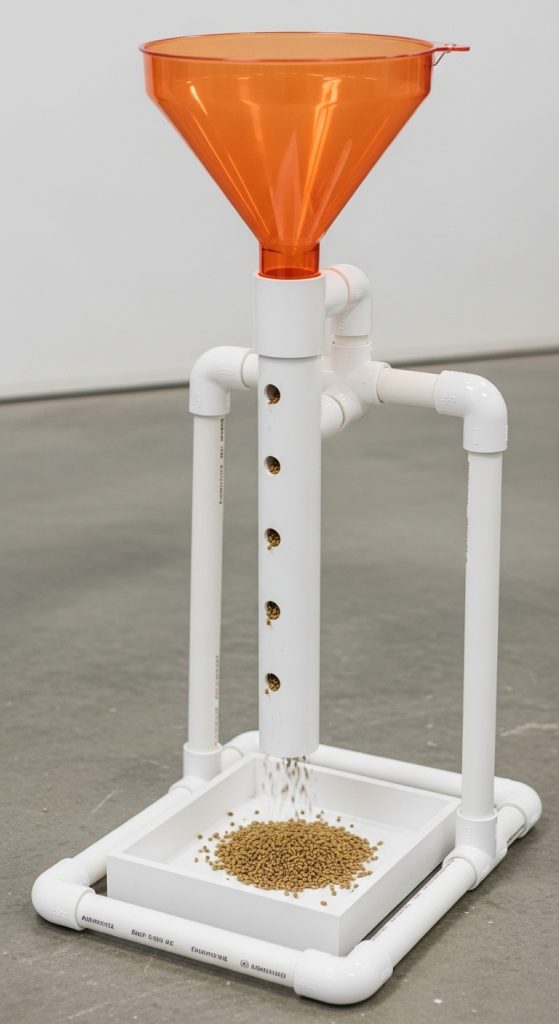
5. PVC Funnel Feeder
A funnel feeder uses gravity to deliver food into a confined space at the base, preventing spillage and waste. This is ideal for keeping feed dry and contained.
- Materials Needed: Large funnel, PVC pipe or container, tray for bottom catch, drill for access holes.
- Construction Tips: Attach the funnel to a container or pipe leading into a feeding trough. Cut small holes at the bottom to allow a controlled amount of feed to drop into the tray.
- Benefits: Reduces contamination, minimizes feed loss, and is easy to refill. Funnel feeders are particularly suitable for pellet feed and provide a slow, steady feed supply.
This design is also scalable for larger flocks and can be adapted for hanging or stationary setups.
6. Wooden Slat Feeder
A wooden slat feeder uses horizontal slats to prevent chickens from scattering feed while pecking. It’s a rustic, low-cost solution that can be customized for different flock sizes.
- Materials Needed: Wooden planks, nails or screws, small tray or platform, saw.
- Construction Tips: Arrange slats across a tray with small gaps for feed to fall through. Secure the structure firmly to prevent tipping. Sand edges to avoid injuries.
- Benefits: Effective for scratch grains or pellet feed. Slats control the portion chickens can access, minimizing waste while giving each bird a chance to eat.
Wooden feeders are durable and easy to modify, allowing you to adjust spacing or size based on the breed and number of chickens.

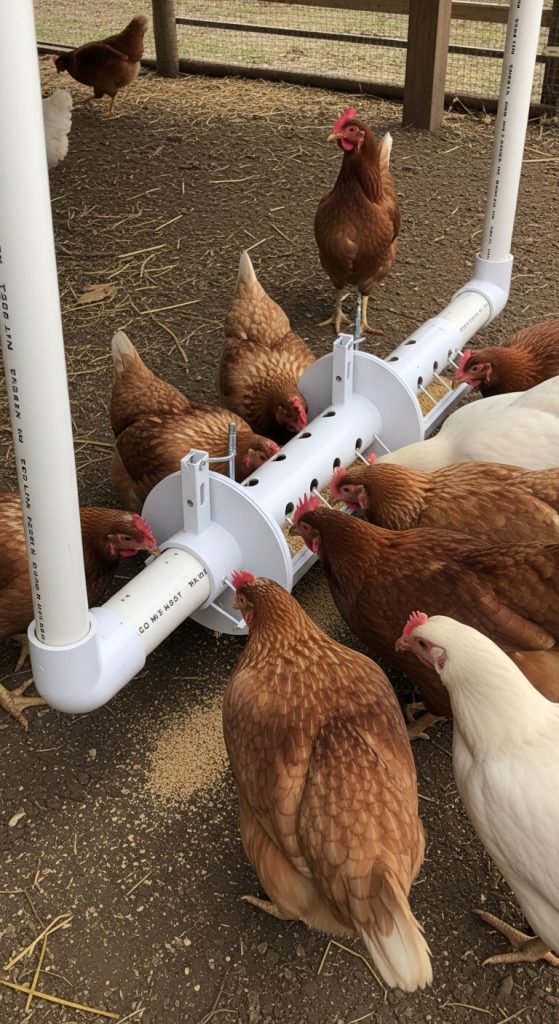
7. PVC Pipe Rotating Feeder
A rotating PVC feeder adds an interactive element while preventing waste. Feed is slowly rotated through openings, reducing spillage and keeping chickens engaged.
- Materials Needed: PVC pipe, rotating mechanism (simple rod or pivot), end caps, tray, drill.
- Construction Tips: Drill small holes for access and mount the pipe on a pivoting rod. Ensure smooth rotation for even feed distribution.
- Benefits: Prevents food from being trampled and scattered. Keeps chickens entertained and active while feeding.
This design works well for active flocks and encourages natural foraging behaviors while keeping feed consumption efficient.
8. Hanging Wire Cage Feeder
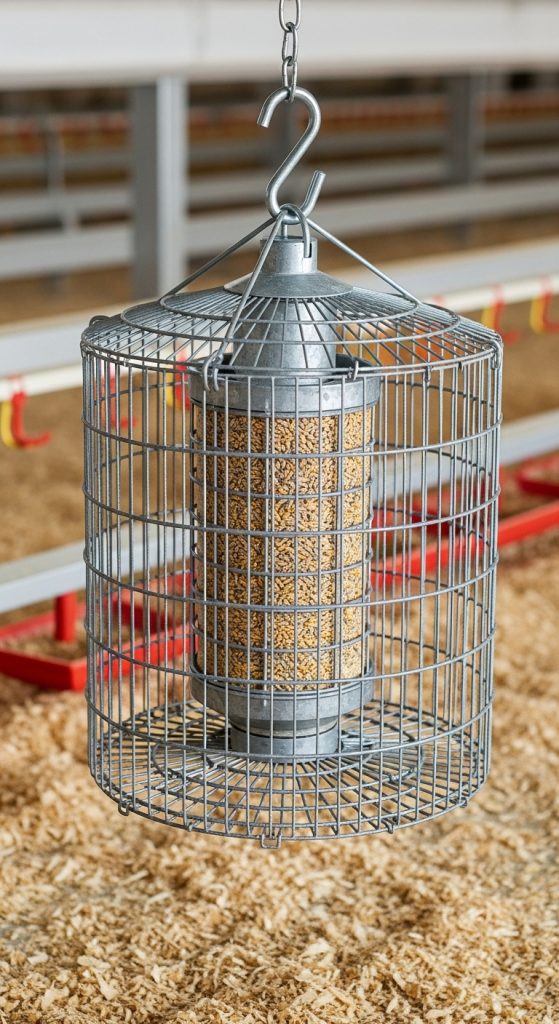
Wire cage feeders are excellent for no-waste feeding of larger chickens or flocks. They allow birds to peck at the feed while preventing them from scratching it out of the feeder.
- Materials Needed: Metal wire mesh, hooks, chains, small tray underneath.
- Construction Tips: Construct a cage around the feed container or tray. Hang it securely at chicken height. Ensure openings are large enough for chickens to access feed but small enough to prevent scattering.
- Benefits: Reduces food waste, deters rodents, and keeps feed clean. Wire cages are particularly effective with granular or pellet feeds.
Caged feeders are also durable, weather-resistant, and can be customized for different flock sizes.
9. Recycled Bottle Feeder
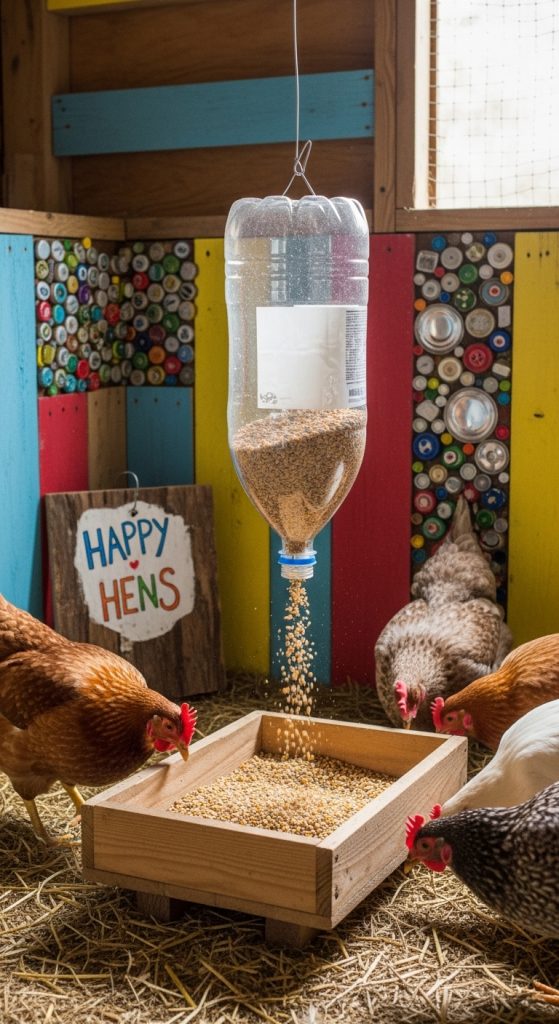
Using large soda or juice bottles is an eco-friendly way to create a no-waste feeder. Bottles can hold feed and release it gradually as chickens eat.
- Materials Needed: Empty plastic bottle, knife or scissors, small tray, optional wooden base.
- Construction Tips: Cut small holes near the bottom and secure the bottle above a tray. Fill the bottle with feed and let gravity dispense the food slowly.
- Benefits: Reduces contamination and waste. Bottles are portable, inexpensive, and recyclable.
This solution works particularly well for small backyard flocks and is a fun, low-cost DIY project.
10. Tiered Hanging Feeder
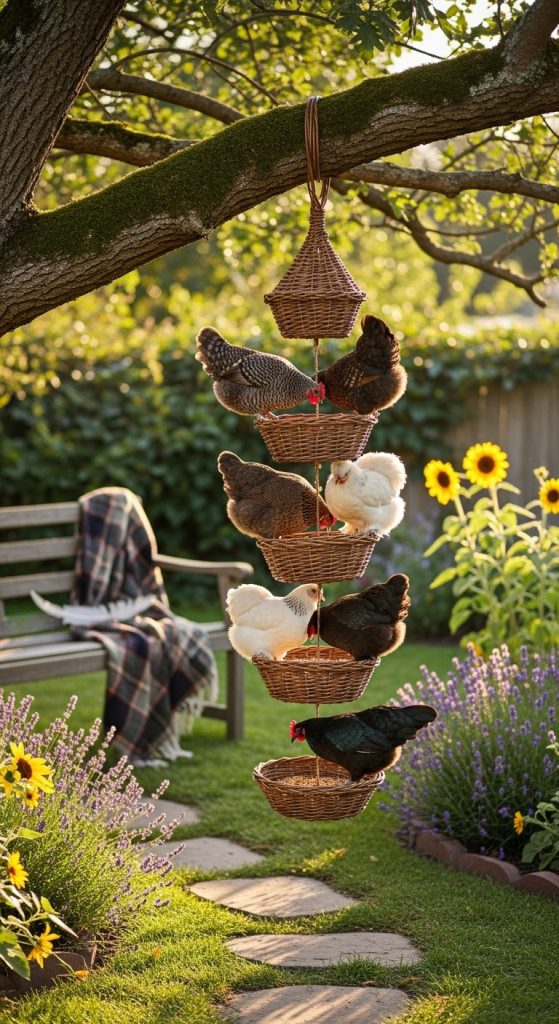
A tiered hanging feeder allows multiple chickens to feed at once while keeping feed contained. Using several levels reduces crowding and waste.
- Materials Needed: Hanging baskets, chains, hooks, small trays for each tier.
- Construction Tips: Stack baskets or trays vertically, ensuring each tier has enough space for chickens to feed comfortably. Suspend securely from a strong ceiling hook.
- Benefits: Efficient for medium to large flocks, reduces fighting, and minimizes feed scattering. Tiered feeders are perfect for maximizing vertical space in smaller coops.
This feeder design encourages social feeding while keeping feed organized and minimizing spillage.
Tips for Minimizing Waste in Chicken Feeders
- Elevate Feeders: Raising feeders off the ground prevents chickens from scratching feed into bedding.
- Use Appropriate Feed Type: Granules, crumbles, or pellets are less likely to be wasted than loose grains.
- Regular Cleaning: Keep feeders dry and clean to prevent mold or contamination.
- Monitor Portions: Fill feeders based on daily consumption to reduce leftover feed.
- Adapt Design to Flock Size: Ensure multiple access points for larger flocks to prevent crowding.
- Protect from Weather: Keep outdoor feeders sheltered to avoid rain or moisture spoiling feed.
Conclusion
Creating a sustainable, no-waste feeding system for your chickens is both practical and environmentally friendly. With these 10 DIY no-waste chicken feeder ideas, you can repurpose household items, use recycled materials, and design efficient feeders that keep feed contained while minimizing spillage and waste.
Whether you choose PVC gravity feeders, hanging bucket designs, or creative bottle feeders, each idea supports a tidy coop, healthy chickens, and reduced feeding costs. By incorporating these solutions, backyard poultry keepers can enhance sustainability, save money, and enjoy a cleaner, more organized feeding routine.
Embracing no-waste feeding not only benefits your flock but also aligns with eco-conscious living, proving that practical DIY solutions can create meaningful, positive impact for your backyard and beyond.