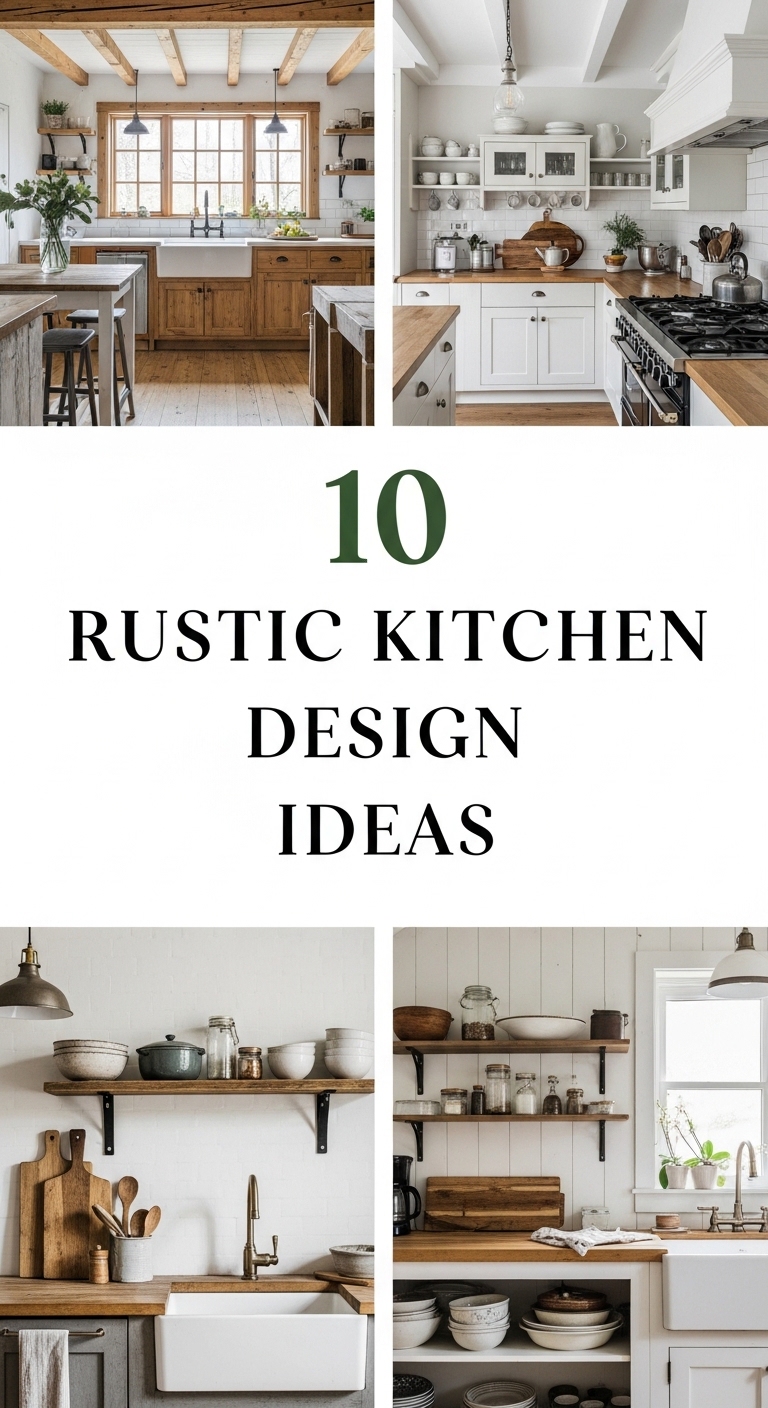
10 Wall Shelf Designs
Wall shelves are among the most adaptable and influential design features in interior spaces. Unlike freestanding furniture, wall-mounted shelving uses vertical real estate, allowing rooms to feel larger, more open, and more intentional. Shelves can be purely functional, purely decorative, or a balanced combination of both. They help organize possessions, elevate favorite objects, and visually structure walls that might otherwise feel empty or flat. Because shelves come in countless shapes, materials, and configurations, choosing the right type can significantly influence a room’s character and functionality.
This guide provides an in-depth exploration of 10 wall-shelf designs, each with detailed descriptions, best-fit environments, advantages, and practical considerations. The goal is not just to provide design inspiration but to help you understand why a particular design works in certain spaces, what materials to consider, how to style them, and how different designs impact spatial flow. Whether you prefer minimalism, industrial accents, maximalist displays, or simple functional storage, these ten shelf styles offer a complete reference for anyone looking to enhance their home’s aesthetic and storage efficiency.

1. Minimalist Floating Shelves
Minimalist floating shelves remain one of the most widely used styles because they blend seamlessly into nearly every interior design philosophy. Their key characteristic is the concealed mounting hardware, which creates the illusion that the shelf simply “floats” from the wall.
Design Characteristics
Floating shelves rely on internal brackets or dowel systems hidden inside the shelf board. The result is a clean silhouette. They come in various thicknesses—thin, modern planks for a sleek look or thick, chunky boards for a bold, architectural presence.
Best Use Cases
- Small spaces where visual clutter should be minimized
- Kitchens for open dish storage
- Bathrooms for skincare organization
- Living rooms for light décor and framed items
Materials and Aesthetic Effects
- Solid wood gives warmth and texture; woods like walnut and oak fit modern or Scandinavian themes.
- MDF with veneer provides an affordable, clean look often used in contemporary interiors.
- Metal shelves add an edgy industrial note when powder-coated.
- Glass floating shelves feel airy and are great for minimalist bathrooms.
Installation Considerations
Floating shelves must be anchored securely, ideally into studs. Heavier décor requires thicker boards and stronger hidden brackets.
Styling Tips
Use negative space generously. Floating shelves look best when not overloaded. Place a combination of plants, a couple of books, and a small sculpture for balanced minimalism.

2. Box-Frame Shelves
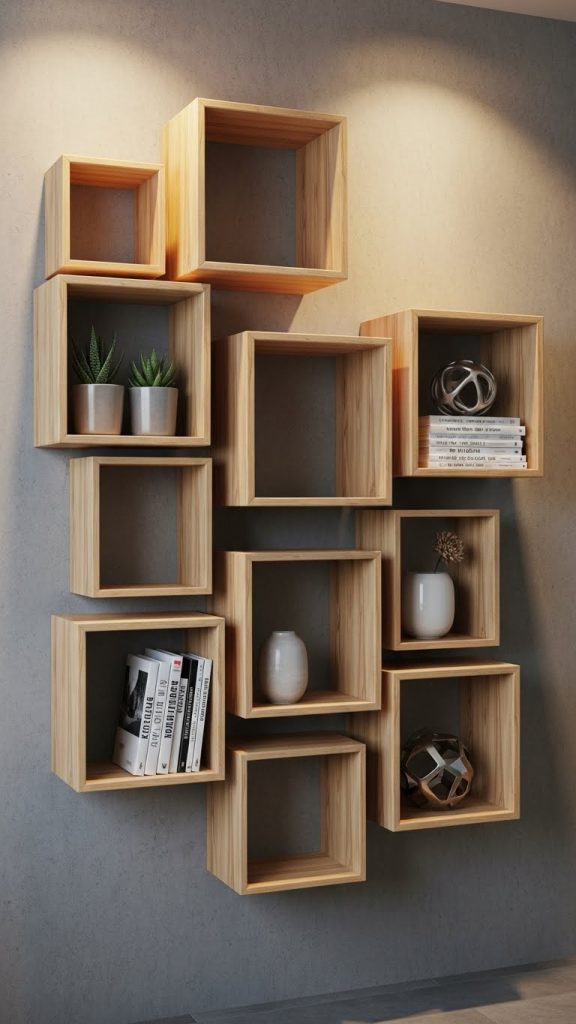
Box-frame shelves (also called cube shelves) add geometric structure and visual rhythm to walls. They function as both storage and decorative frames.
Design Characteristics
Box shelves are essentially cuboid or rectangular hollow boxes. They can be mounted individually or arranged as a clustered system. Their depth and framing create shadow play that adds depth to walls.
Best Use Cases
- Displaying collections such as figurines, ceramics, or memorabilia
- Gallery-style walls with multiple cubes arranged asymmetrically
- Entryways that need storage for keys, accessories, and small décor
- Kid’s rooms where small toys and books need defined compartments
Materials
- Solid wood for a warm, organic look
- Metal frames with wood panels for modern loft aesthetics
- Acrylic boxes for a futuristic, floating-object effect
Advantages
Box shelves naturally keep items contained, reducing visual mess. They also create a graphic design element on walls even when sparsely filled.
Styling Tips
Mix various box sizes to create a dynamic arrangement. Leave some cubes empty to avoid a cluttered appearance.
3. Ladder-Style Wall Shelves
Ladder-style shelves either lean against the wall or fully mount onto it. They introduce vertical movement and a casual, airy aesthetic.
Design Characteristics
These shelves taper vertically—wider at the bottom and narrower at the top—mimicking a traditional ladder. They can be free-standing or mounted at the top for stability.
Best Use Cases
- Bedrooms for books, plants, and accessories
- Bathrooms for towels and baskets
- Corners that need decorative height
- Living rooms with a boho or relaxed vibe
Material Choices
- Natural wood for rustic or coastal interiors
- Metal frames with wooden planks for industrial or contemporary themes
- Bamboo for eco-friendly or tropical design palettes
Advantages
The visual lightness of ladder shelves prevents rooms from feeling heavy. They offer taller storage without the bulk of a heavy cabinet.
Styling Tips
Decorate the lower shelves with functional items and the upper ones with light décor. Too many heavy items at the top can disrupt the design balance.

4. Corner Wall Shelves
Corner shelves maximize unused and often awkward areas. They bring functionality to otherwise wasted spaces.
Design Characteristics
Corner shelf designs include triangular floating shelves, curved units, zig-zag stacked shelves, and even multi-tier corner towers.
Best Use Cases
- Small apartments where every square foot counts
- Bathrooms for toiletries
- Kitchens where counters meet walls
- Reading nooks needing compact book storage
Materials
- Wood for warmth and versatility
- MDF for budget-friendly options
- Glass for an unobtrusive, clean look
- Metal supports with wooden panels for industrial corners
Advantages
Corner shelves fill the vertical voids that are often ignored. They also make tight spaces feel intentional rather than leftover.
Styling Tips
Use 3–5 shelves vertically to create height. Avoid crowding both adjacent walls with décor; let the corner be a focal point.

5. Pegboard Wall Shelves
Pegboard shelves are the most modular and customizable type, perfect for users who like adapting their space often.
Design Characteristics
A pegboard consists of a board with evenly spaced holes. Shelves, pegs, hooks, cups, and racks can be moved around freely.
Best Use Cases
- Home offices for supplies and small electronics
- Craft rooms for tools and materials
- Kids’ rooms since layouts can grow with the child
- Kitchens to store utensils, jars, and mini plants
Material Options
- Birch plywood pegboards for Scandinavian-style interiors
- Painted MDF for colorful modern rooms
- Metal pegboards for an industrial workshop look
Advantages
Pegboards adapt to different needs. They allow unlimited configurations, making them perfect for evolving lifestyles or multi-use rooms.
Styling Tips
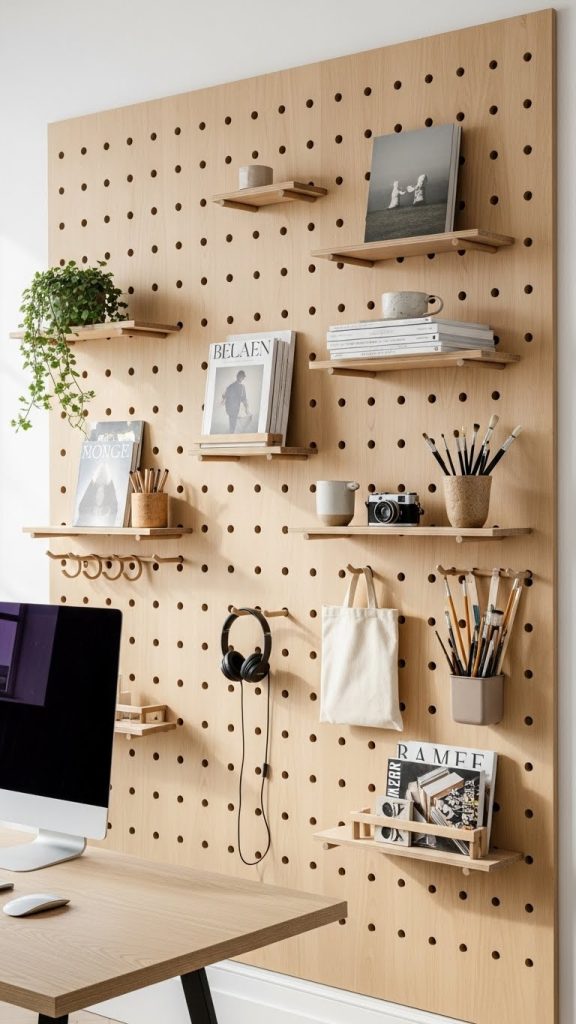
Mix functional and decorative items: a row of small plants, a shelf with books, a hook for headphones, and a peg for accessories.
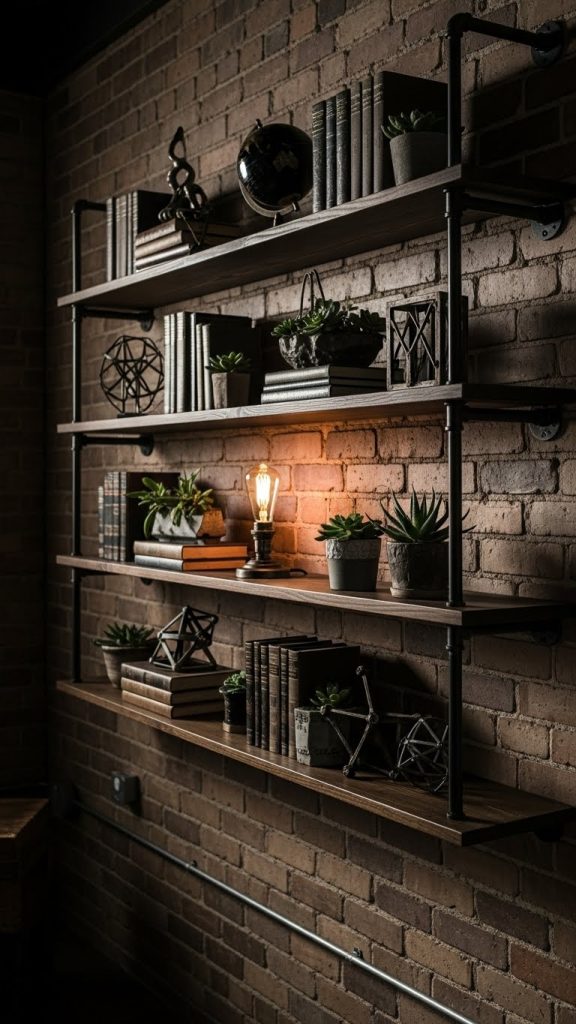
6. Industrial Pipe Shelves
Industrial pipe shelves introduce rugged charm. They combine dark metal pipes with wooden boards to create a bold, loft-style personality.
Design Characteristics
These shelves use metal pipes as visible supports connected with flanges. Wooden planks rest on the pipe brackets. The contrast of metal and wood gives a distinct mechanical feel.
Best Use Cases
- Bars or coffee corners at home
- Offices and studies
- Kitchens with industrial or farmhouse designs
- Living rooms needing a masculine aesthetic
Material Combinations
- Black iron pipes + dark stained wood for traditional industrial looks
- Galvanized pipes + light wood for a softer, Scandinavian-industrial mix
- Reclaimed wood for ethical and rustic appeal
Advantages
Very strong and reliable for heavy loads, such as books or liquor bottles. The exposed hardware also doubles as décor.
Styling Tips
Combine with Edison-bulb fixtures or vintage signage to complete the industrial theme.
7. Geometric Wall Shelves
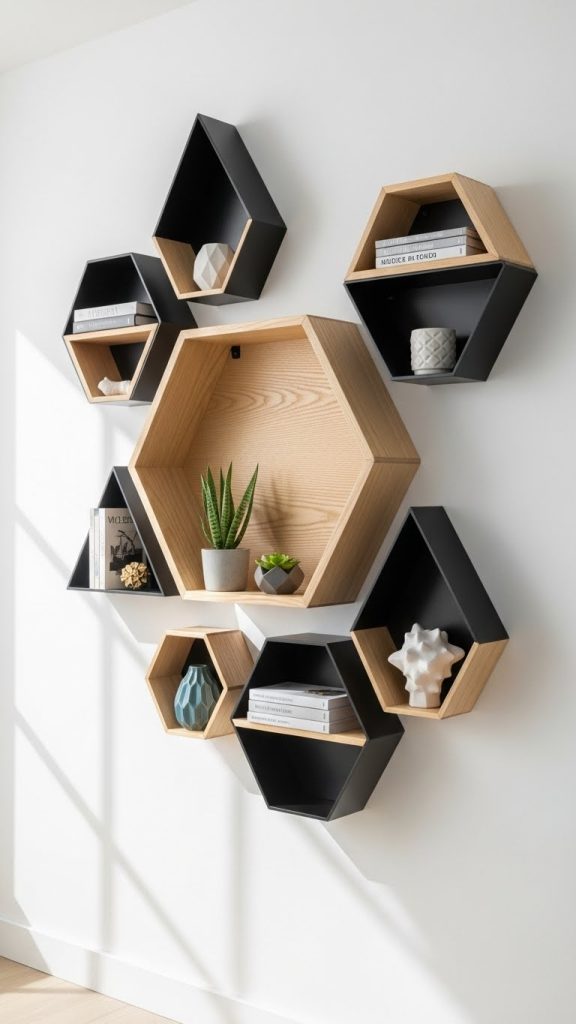
Geometric shelving transforms walls into decorative compositions. Shapes such as hexagons, triangles, circles, and asymmetrical forms add architectural character.
Design Characteristics
Unlike simple horizontal planks, geometric shelves create visual pathways. Hexagon shelves can cluster like honeycombs, triangles can form patterns, and circular shelves can soften squared spaces.
Best Use Cases
- Feature walls in living rooms
- Bedrooms with modern or artistic themes
- Hallways needing interest
- Home offices where creative energy is desired
Material Options
- Metal frames for sleek, angular lines
- Wooden shelves for earthy, comforting tones
- Mixed materials such as metal exoskeleton frames with wooden boards
Advantages
They act as both wall art and shelving. Even when partially filled, their shape adds décor value.
Styling Tips
Avoid clutter. Geometric shelves already command attention—add only a few symbolic pieces (like a plant, a figurine, or a small book stack).
8. Picture-Ledge Shelves
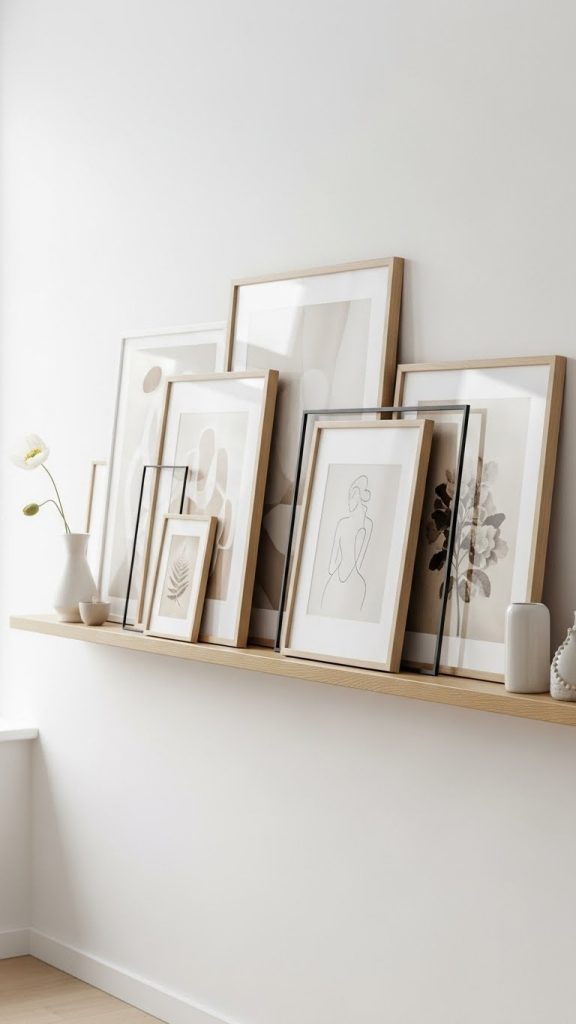
Picture ledges are narrow shelves designed to hold artwork, photos, or slim objects securely thanks to a built-in lip.
Design Characteristics
Unlike deeper shelves, picture ledges are shallow and allow items to be layered by leaning against the wall. This makes rearranging easy without new nail holes.
Best Use Cases
- Gallery walls in living rooms
- Hallways or staircases
- Bedrooms for displaying rotating art
- Children’s rooms for front-facing book displays
Materials
- Wood for warmth and simplicity
- MDF for affordability
- Metal for modern, slim profiles
Advantages
They encourage creativity: you can swap artwork anytime, experiment with layering, and create dynamic compositions.
Styling Tips
Use varying frame heights and textures. Mix artworks, small sculptures, and plants to create depth.
9. Floating Cabinet-Shelves
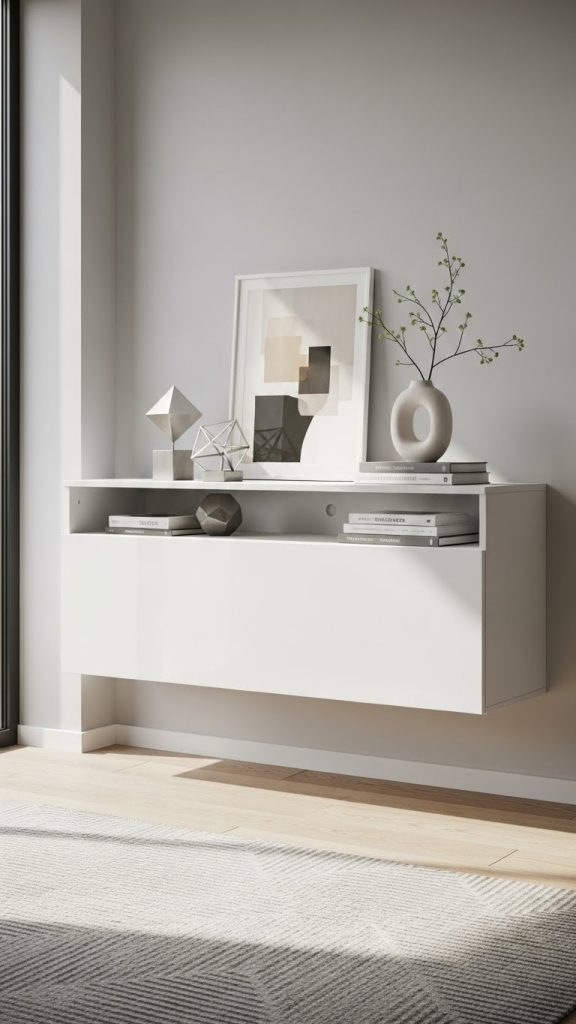
Floating cabinet-shelves combine the openness of shelves with the practicality of closed storage. They resemble wall-mounted consoles or sideboards.
Design Characteristics
These units have enclosed compartments with doors or drawers. The top surface acts as a display shelf, while the bottom stores away clutter.
Best Use Cases
- Living rooms for media equipment
- Bedrooms for folded clothes or accessories
- Dining rooms for tableware
- Entryways for shoes, keys, and bags
Material Options
- Wood veneer for modern warmth
- Solid wood for durability
- Lacquered MDF for sleek, glossy finishes
- Metal-wood hybrids for industrial chic
Advantages
They provide significant storage without touching the floor, which keeps the room visually open. Their clean lines make them ideal for contemporary spaces.
Styling Tips
Keep décor minimal: a few books, a vase, or a sculpture. Let the cabinet’s architecture remain the focal point.
10. Sculptural or Artistic Wall Shelves
These shelves function as three-dimensional wall sculptures. They prioritize artistic presence while still offering usable storage.
Design Characteristics
Sculptural shelves may feature organic curves, wave-patterns, spiral forms, branch-like structures, or abstract geometric shapes. They’re ideal for interiors that embrace contemporary art influences.
Best Use Cases
- Statement walls in living areas
- Entryways where first impressions matter
- Art studios or creative workplaces
- Minimalist rooms needing a bold focal point
Material Options
- Molded wood for flowing, natural forms
- Metal for dramatic, rigid shapes
- Resin or composite materials for fluid modern silhouettes
- Mixed materials to increase visual contrast
Advantages
They transform functional storage into art. Even when empty, sculptural shelves enhance spatial identity.
Styling Tips
Keep the arrangement subtle—too many items may disrupt the form. Place one or two meaningful objects to maintain harmony.

Conclusion
Wall shelves are more than storage—they are tools for defining atmospheres, improving layout efficiency, and expressing personal style. The ten designs outlined here illustrate the full spectrum of wall-shelf possibilities, from the minimalist elegance of floating shelves to the artistic boldness of sculptural shelves. Each design serves different spatial needs and aesthetic goals. Understanding their materials, structural considerations, and styling techniques empowers you to select shelves that complement your lifestyle and transform your home.
Whether your space needs vertical organization, decorative rhythm, or a bold visual statement, the right wall shelf design can elevate it instantly. Treat your walls not as empty surfaces but as opportunities for intentional, beautiful, and functional design.