10 Small Bathroom Interior Design Ideas
Designing a small bathroom can feel like a challenge—but it is also an opportunity. Limited space forces thoughtful decisions, clever planning, and creative solutions. When designed well, a small bathroom can feel just as luxurious, comfortable, and stylish as a large one—sometimes even more so.
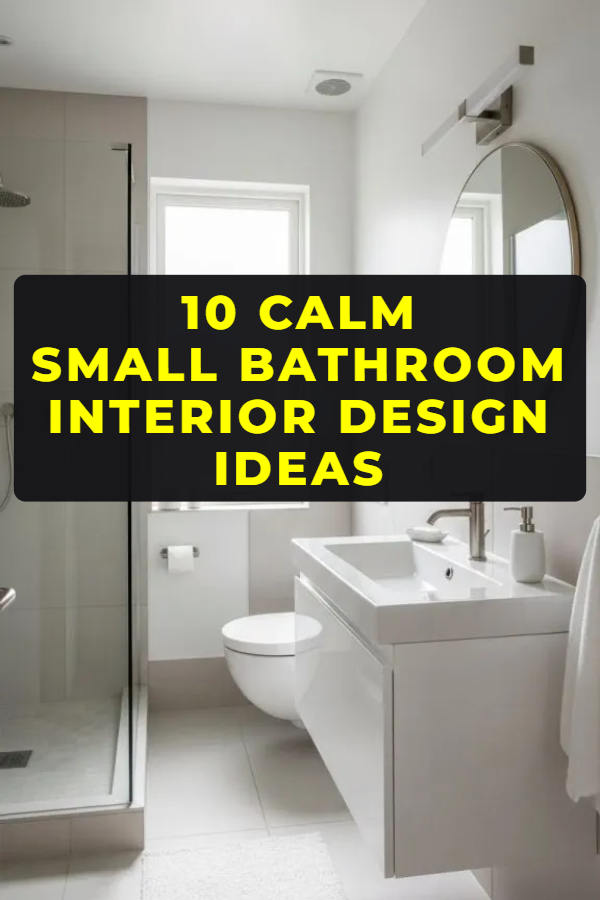
Small bathrooms are common in apartments, older homes, guest bathrooms, and powder rooms. Because these spaces are used daily, their design has a significant impact on comfort and functionality. Poor layouts can make a bathroom feel cramped, dark, and cluttered, while smart design choices can create an environment that feels open, calm, and efficient.
The key to successful small bathroom design lies in space optimization, visual balance, and intentional material selection. Elements such as color, lighting, storage, mirrors, fixtures, and layout all work together to influence how spacious and welcoming the bathroom feels. Even minor changes—like wall-mounted fixtures or lighter finishes—can dramatically improve the experience.
This article explores 10 small bathroom interior design ideas, each explained in depth with practical tips, aesthetic guidance, and real-world considerations. Whether you are renovating a compact bathroom or planning a new one, these ideas will help you maximize space while maintaining style and comfort.
1. Light Color Palette to Visually Expand Space
One of the most effective ways to make a small bathroom feel larger is by using a light color palette. Light colors reflect more light, reducing visual boundaries and creating a sense of openness.
White, off-white, soft beige, pale grey, and pastel tones are excellent choices for walls, tiles, and fixtures. These shades help blur edges and make the room feel airy rather than boxed in.
To avoid a sterile look, introduce subtle texture through tiles, stone finishes, or soft matte surfaces. Light-colored grout also helps maintain a seamless appearance.
This approach is ideal for bathrooms with limited natural light and works as a foundation for almost any design style.
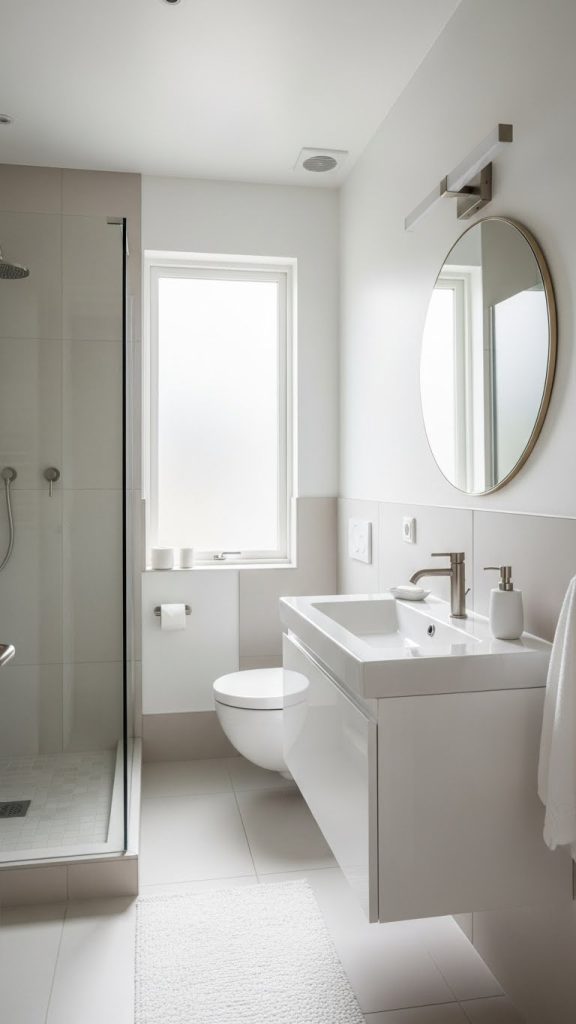
2. Wall-Mounted Fixtures for Floor Space Clarity
Wall-mounted fixtures are a game-changer in small bathrooms. Floating vanities, wall-hung toilets, and wall-mounted faucets free up valuable floor space and reduce visual clutter.
By exposing more of the floor, the bathroom appears larger and cleaner. Wall-mounted vanities also make cleaning easier and allow for better airflow.
Choose slim-profile designs with integrated storage to maintain functionality without bulk. Concealed cisterns for toilets further streamline the look.
This design strategy is perfect for modern and minimalist bathrooms where clean lines are a priority.
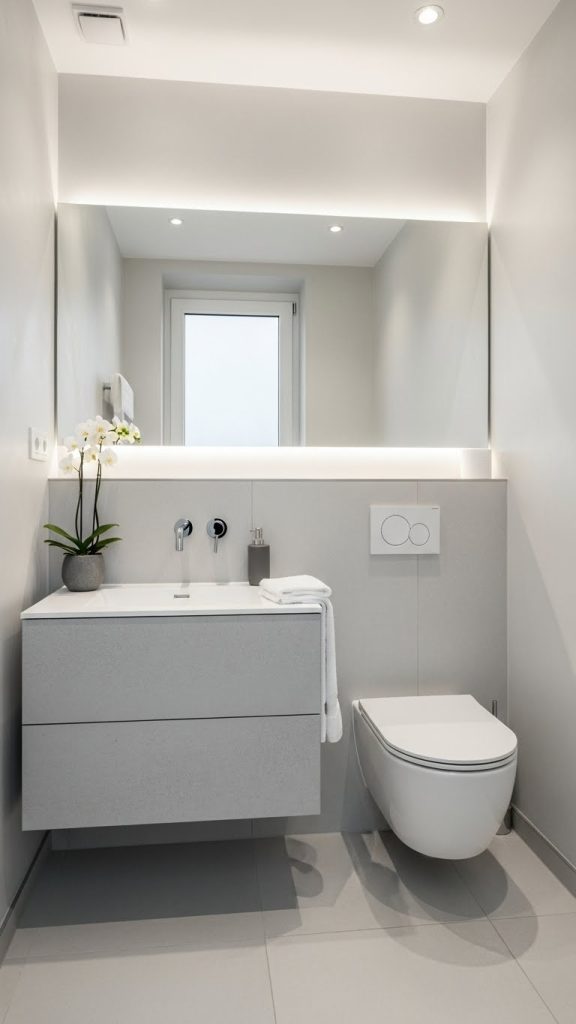
3. Smart Storage Solutions to Reduce Clutter
In small bathrooms, clutter can quickly overwhelm the space. Smart, integrated storage is essential for maintaining a tidy and calm environment.
Use vertical space by installing tall cabinets, recessed shelves, or wall niches. Built-in shelving inside shower walls or above toilets provides storage without taking up floor space.
Vanities with drawers are more efficient than open shelving, as they hide everyday items and reduce visual noise. Drawer organizers help keep everything in place.
Effective storage makes the bathroom feel larger by keeping surfaces clear and organized.
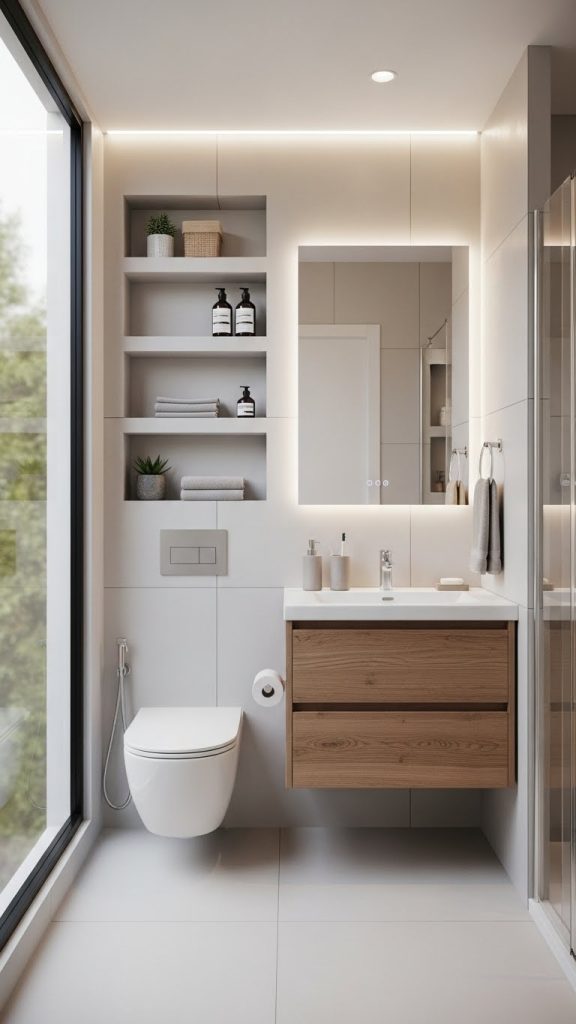
4. Mirrors to Enhance Light and Depth
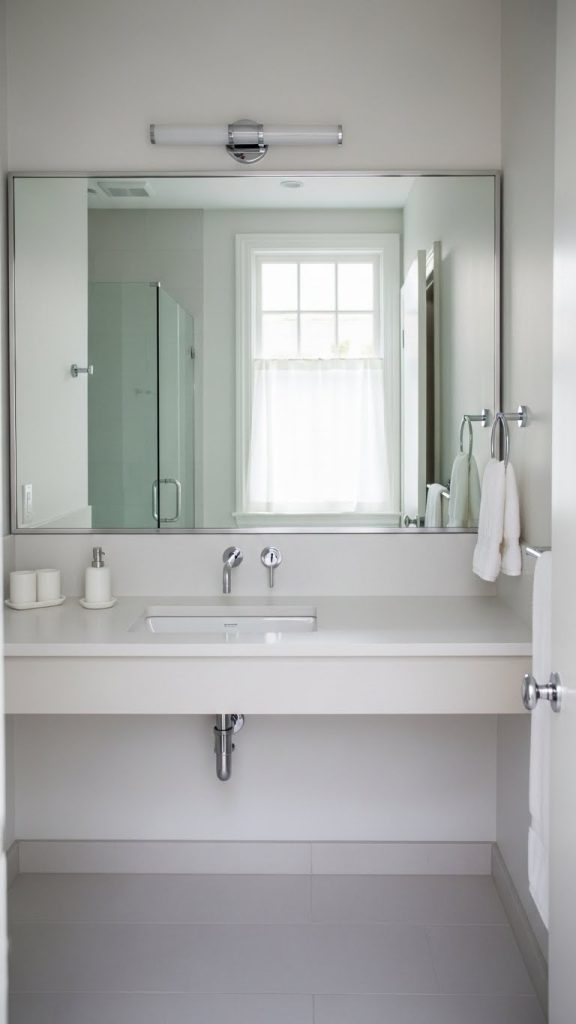
Mirrors are one of the most powerful tools in small bathroom design. They reflect light, create depth, and visually double the size of the room.
A large mirror above the vanity—or even a full-height mirror—can transform the space instantly. Frameless mirrors enhance a modern look, while thin frames add subtle character without bulk.
Position mirrors to reflect natural or artificial light sources for maximum impact. Mirrored cabinets combine reflection with storage, offering both form and function.
This design idea is especially effective in narrow or windowless bathrooms.
5. Glass Shower Enclosures for Openness
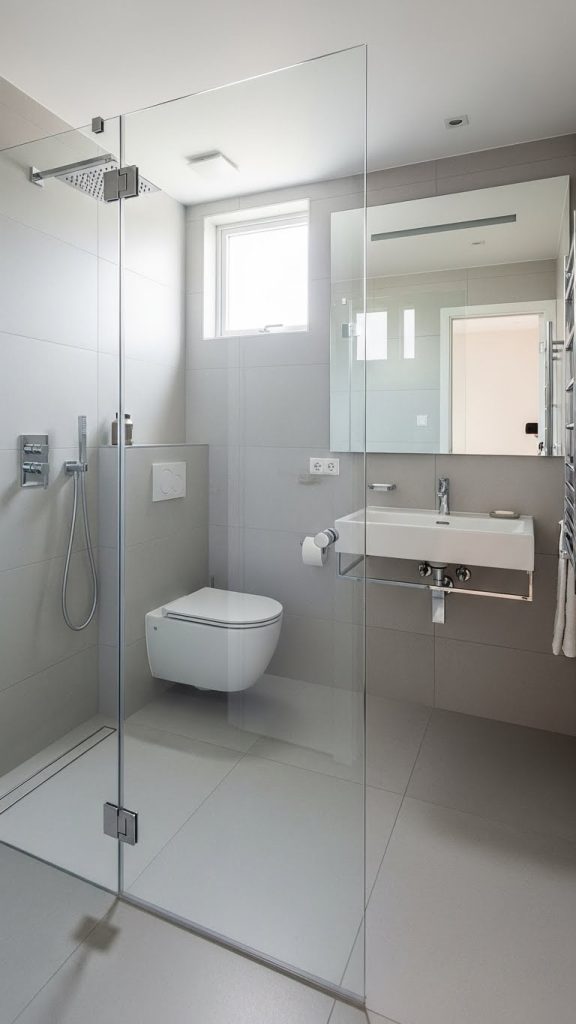
Traditional shower curtains or opaque partitions can make a small bathroom feel closed off. Glass shower enclosures solve this problem by allowing light and sightlines to flow freely.
Clear glass panels create a seamless transition between wet and dry areas, making the room feel larger. Frameless or minimal-frame designs enhance this effect.
If privacy is needed, consider lightly frosted or textured glass that still allows light through.
This approach is ideal for compact bathrooms where every visual break matters.
6. Vertical Tile Layouts to Increase Height Perception
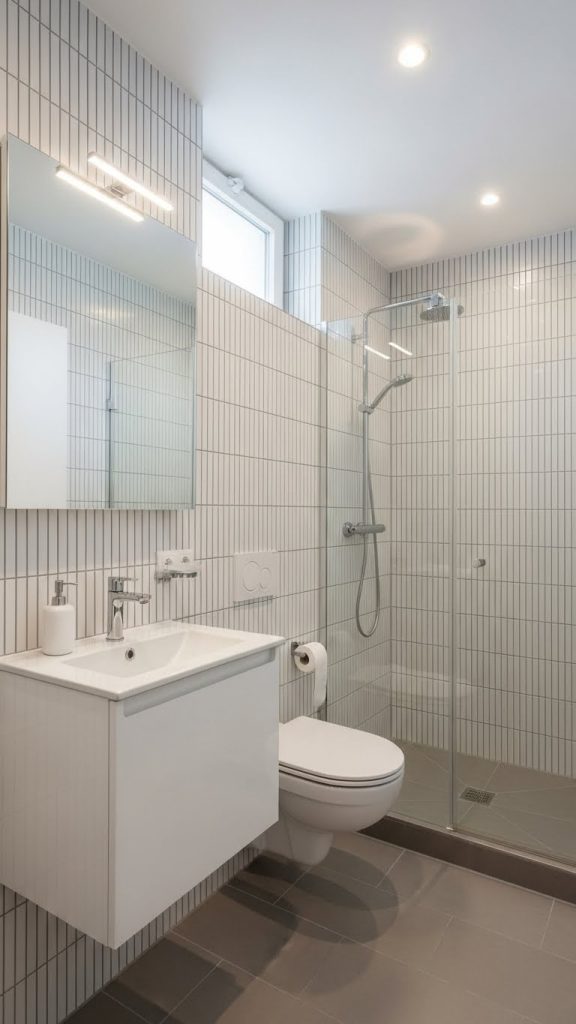
The way tiles are installed can significantly influence how spacious a bathroom feels. Vertical tile layouts draw the eye upward, creating the illusion of higher ceilings.
Using vertically stacked tiles on shower walls or behind the vanity enhances height perception. Large-format tiles with fewer grout lines also help reduce visual clutter.
Light-colored tiles with subtle patterns add interest without overwhelming the space.
This technique works especially well in bathrooms with low ceilings.
7. Compact Fixtures Designed for Small Spaces
Standard bathroom fixtures can feel oversized in small bathrooms. Compact fixtures designed specifically for small spaces help maintain balance and proportion.
Slim sinks, narrow vanities, corner basins, and compact toilets provide full functionality while occupying less space. Shallow-depth cabinets are also useful in tight layouts.
Choosing fixtures with clean, simple designs prevents the bathroom from feeling crowded.
This idea is particularly useful for powder rooms and narrow bathrooms.
8. Consistent Materials for a Seamless Look
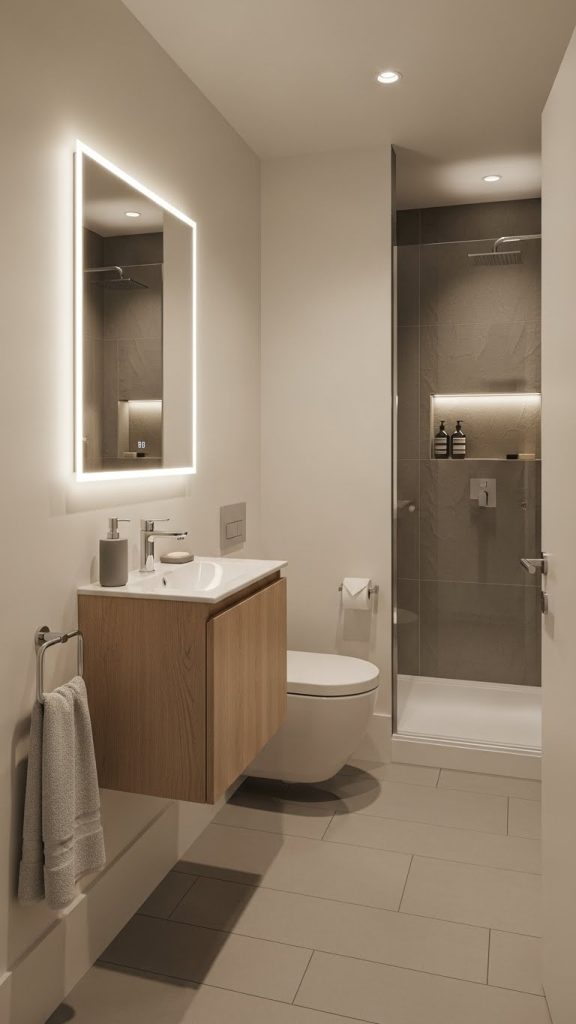
Too many materials in a small bathroom can create visual fragmentation. Using consistent materials helps the space feel unified and larger.
Choose one or two main finishes and repeat them throughout the room—for example, the same tile on floors and walls or matching finishes for fixtures.
Consistency reduces visual interruptions and creates a calming, cohesive aesthetic.
This approach works well in both modern and classic bathroom designs.
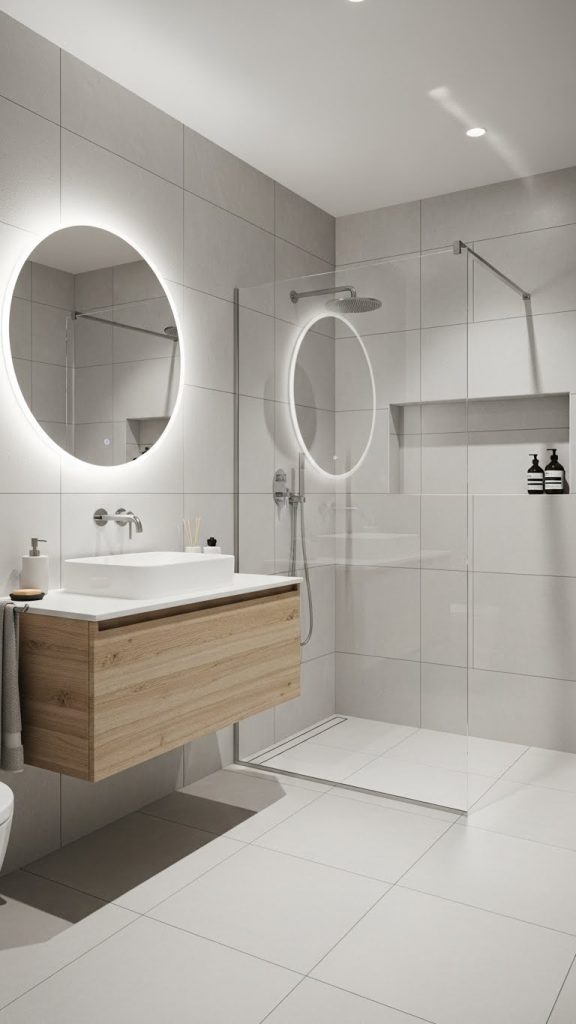
9. Strategic Lighting for Brightness and Comfort
Lighting plays a crucial role in how a small bathroom feels. Poor lighting can make the space feel cramped, while well-planned lighting enhances comfort and openness.
Layered lighting works best. Combine ambient lighting with task lighting around the mirror and accent lighting in niches or shelves.
Warm-white lighting creates a welcoming atmosphere, while neutral-white lighting improves visibility for grooming.
Well-lit bathrooms always feel larger and more inviting.
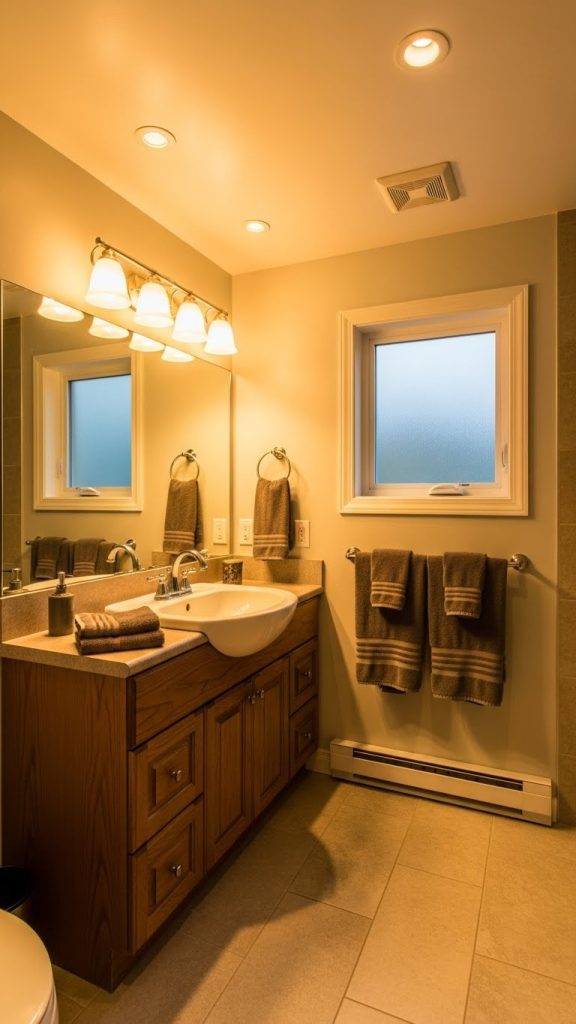
10. Minimalist Design for Visual Calm
Minimalism is especially effective in small bathroom interiors. By reducing unnecessary elements, the space feels calmer and more spacious.
Choose simple fixtures, clean lines, and minimal décor. Avoid overcrowding walls with accessories or decorative items.
Every item should serve a purpose—whether functional or aesthetic. Open space becomes part of the design rather than something to fill.
This philosophy creates a bathroom that feels intentional, modern, and easy to use.
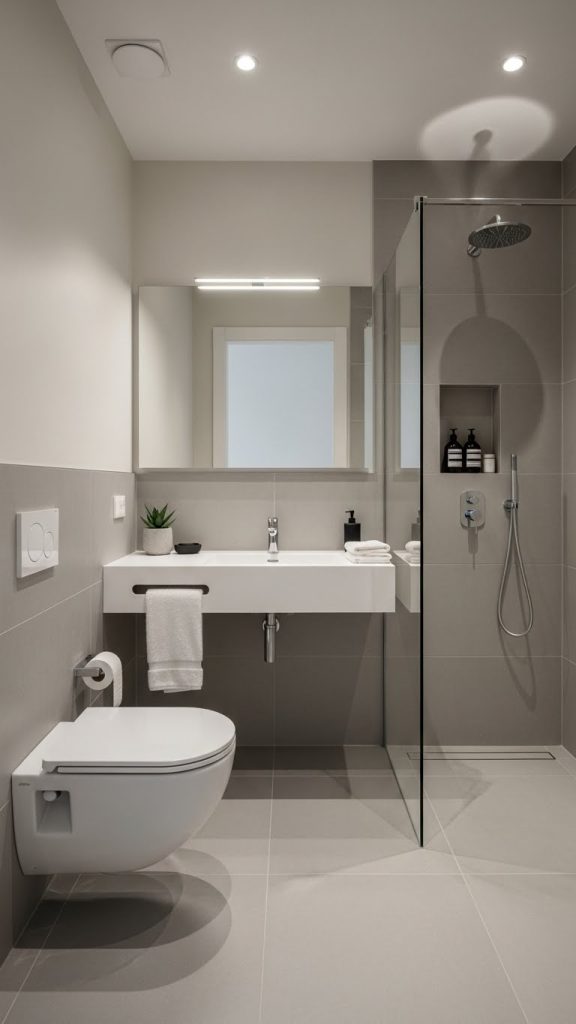
Additional Tips for Small Bathroom Success
- Use sliding or pocket doors instead of swing doors
- Keep countertops as clear as possible
- Choose light-colored flooring for continuity
- Add subtle texture rather than bold patterns
- Maintain balance between function and style
Conclusion
Designing a small bathroom is about making thoughtful choices rather than compromises. With the right approach, compact spaces can feel elegant, efficient, and surprisingly spacious.
The ten small bathroom interior design ideas explored in this guide—from light color palettes and wall-mounted fixtures to smart storage and minimalist layouts—demonstrate how design can transform limitations into strengths.
Ultimately, a well-designed small bathroom supports daily routines with comfort and ease while reflecting personal style. When every element is intentional, even the smallest bathroom can feel like a refined, functional retreat.