 admin
admin
As adults, reading becomes an act of intention rather than obligation. Unlike childhood, when reading often happened anywhere—on floors, beds, or buses—adult reading competes with responsibilities, screens, and constant stimulation. Time fragments. Attention scatters. A dedicated reading nook is not a luxury; it is a quiet rebellion against a world that rarely slows down.
A reading nook for adults is different from casual seating with a book nearby. It is designed to support the body for long periods, protect the mind from interruption, and signal—subtly but clearly—that this is a place for focus and restoration. It does not need to be large or expensive. What matters is that it feels deliberate. When you sit there, your nervous system should recognize the cue: this is where I read, think, and breathe more deeply.

The following ten reading nook ideas are crafted specifically for adults who value comfort, depth, and sustainability. Each one addresses different lifestyles, personalities, and spatial limitations. Whether you live in a small apartment or a spacious home, these ideas can be adapted to create a personal sanctuary for reading that feels grown, grounded, and deeply satisfying.
1. The Classic Armchair Reading Sanctuary
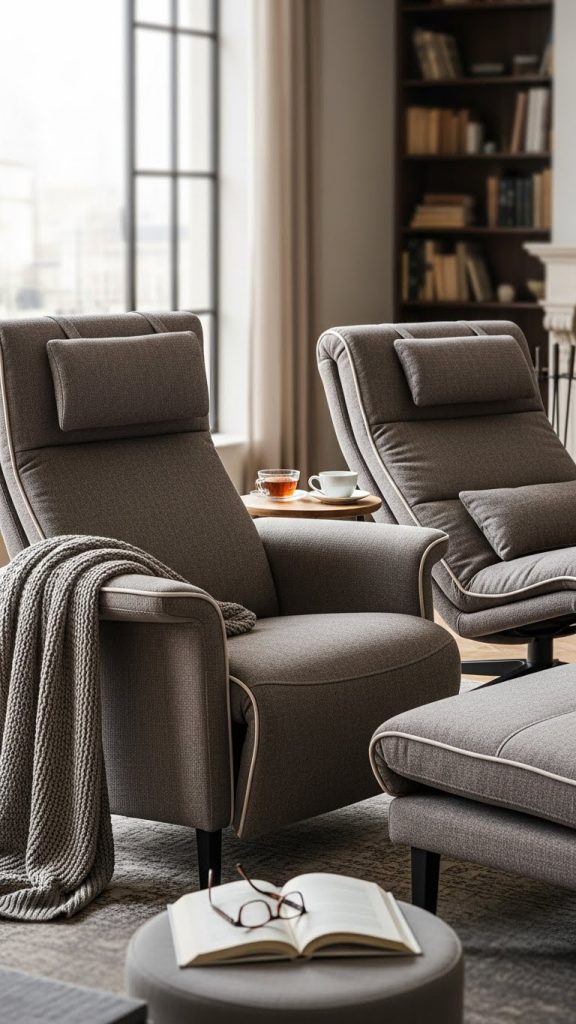
The most timeless reading nook begins with a single exceptional chair. This is not a decorative accent chair but a true reading companion—one that supports the spine, cradles the arms, and allows multiple sitting positions without discomfort.
The armchair sanctuary works best in a quiet corner of a living room or bedroom, slightly removed from foot traffic. Adults tend to read for longer stretches than children, so ergonomics matter. A seat that is too deep strains posture; one that is too upright discourages relaxation. The ideal chair balances structure with softness.
Lighting is critical. A floor or table lamp should cast light directly onto the book without glare or shadow. Warm bulbs reduce eye fatigue and create a sense of intimacy. A small side table keeps essentials close—tea, water, glasses, a notebook—preventing unnecessary movement that breaks concentration.
What makes this nook powerful is its reliability. It becomes the place you return to every day. Over time, the chair molds to your body, and the nook becomes associated with calm and continuity. This is an excellent option for adults who read daily and value routine.

2. The Window-Facing Contemplative Nook
A window-facing reading nook allows the outside world to exist as background rather than distraction. Natural light supports long reading sessions, and shifting weather provides gentle visual rest for the eyes.
This nook can be as simple as placing a chair perpendicular to a window, allowing light to fall across the pages without forcing you to stare outside constantly. Cushions and lumbar support are essential, especially if the window seat is built-in. Adults benefit from layered textiles—firm base cushions paired with softer pillows—to avoid stiffness.
Window nooks are especially effective for reflective reading: essays, literary fiction, poetry, and journaling. The view offers pauses between chapters, moments to think without reaching for a phone. Curtains or blinds allow control over brightness and privacy.
This reading nook appeals to adults who enjoy solitude but do not want to feel closed off. It connects inner thought with the slow rhythm of the world beyond the glass.

3. The Bedroom Corner Reading Retreat
For many adults, the bedroom is the quietest space available. Creating a reading nook here requires careful separation from sleep to avoid associating reading solely with drowsiness.
A bedroom reading nook should sit slightly apart from the bed, ideally facing away from it. This physical orientation helps the brain distinguish between reading and sleeping. Seating can range from a compact armchair to a chaise lounge, depending on space.
Lighting should be softer than in daytime reading areas but brighter than bedside lamps. Wall sconces or adjustable lamps work well, as they free up surface space and keep the nook uncluttered. Color palettes should remain calm—muted neutrals, soft greens, or warm earth tones—to preserve the bedroom’s restful quality.
This nook supports evening rituals. Adults who struggle to unwind benefit from reading here before bed, allowing the mind to transition gradually from activity to rest without screens.

4. The Fireplace-Centered Reading Haven
Fireplaces naturally draw people inward. A reading nook centered around a fireplace leverages warmth, flickering light, and a sense of enclosure to create a deeply comforting experience.
Seating should be positioned close enough to feel the warmth but far enough to read comfortably without glare. Because firelight is atmospheric rather than functional, additional lighting is essential. A directional lamp ensures clarity without overpowering the ambiance.
Textures play a major role in this nook. Thick rugs, wool blankets, and substantial upholstery enhance the sense of shelter. Bookshelves nearby reinforce the connection between warmth and storytelling.
This nook is ideal for colder climates or seasonal reading habits. Adults often associate this space with slower, immersive reading—long novels, classics, or rereads that benefit from time and attention.

5. The Minimalist Focus Nook
Not every adult relaxes through abundance. For some, calm emerges from simplicity. The minimalist reading nook removes visual noise to support deep concentration.
This nook includes only the essentials: a comfortable chair, a well-placed lamp, and a small shelf or stack of books. Neutral colors dominate, and materials are chosen for texture rather than decoration—linen, wood, matte metal.
The absence of clutter reduces cognitive load, making it easier to enter a reading flow. This is particularly beneficial for adults who read for study, professional development, or complex nonfiction.
The minimalist nook often lives in unexpected places: a hallway corner, a home office edge, or a quiet alcove. Its strength lies in its discipline. Nothing here competes with the text.

6. The Library-Wall Immersion Nook
For adults who love books as objects as much as ideas, a library-wall nook offers immersion. Surrounded by shelves, the reader becomes enclosed in knowledge.
This nook integrates seating directly into a wall of books. A chair or bench sits slightly recessed, creating a sense of being held by the shelves. Lighting can be layered: ambient shelf lights combined with a focused reading lamp.
This setup encourages browsing and serendipity. Adults who enjoy switching between books or following intellectual curiosity find this nook especially satisfying. It transforms reading into an exploratory experience.
The library-wall nook also reinforces identity. It visibly prioritizes reading as part of adult life, making books a central feature rather than an afterthought.

7. The Attic or Loft Hideaway
Attics and lofts offer natural separation from daily life. Their architectural quirks—sloped ceilings, exposed beams, unusual angles—create intimacy that suits reading.
Seating should match the scale of the space. Low-profile chairs, floor cushions, or daybeds work well. Shelving can follow rooflines, emphasizing the uniqueness of the nook rather than fighting it.
Lighting must be intentional to avoid shadows and eye strain. Multiple small light sources create warmth without overwhelming the space.
This nook appeals to adults who see reading as escape. Its physical removal from main living areas enhances immersion and imagination.
8. The Indoor–Outdoor Transitional Nook
For adults who feel restored by fresh air, an indoor–outdoor reading nook offers balance. Sunrooms, enclosed balconies, or covered patios can become reading sanctuaries with proper planning.
Comfort is key. Outdoor furniture must still support long reading sessions. Cushions, throws, and rugs soften the space and extend usability across seasons.
Lighting should adapt easily from day to night. Portable lamps or warm string lighting maintain atmosphere without harshness. Plants enhance calm and create a sense of privacy.
This nook supports slower reading rhythms. It is ideal for poetry, nature writing, or rereading favorites while listening to ambient outdoor sounds.

9. The Coffee-and-Books Ritual Nook
For many adults, reading is tied to ritual—especially coffee or tea. This nook integrates a beverage station into the reading experience.
A small cart, shelf, or cabinet holds mugs, a kettle, or a coffee maker. Seating is positioned nearby to minimize disruption. The result is a multisensory space where warmth, aroma, and reading intertwine.
This nook encourages lingering rather than rushing. It transforms reading into a ceremony rather than a task. Weekend mornings and slow afternoons find a natural home here.
Adults who struggle to make time for reading often benefit from this setup, as it pairs reading with an existing habit.

10. The Night Reader’s Shadow Nook
Some adults read best after midnight. A night reading nook is designed for darkness, quiet, and controlled light.
This nook uses blackout curtains or interior placement to eliminate external light. Illumination comes from adjustable, warm-toned lamps focused only on the page. Seating must support long sessions without strain, as nighttime reading often extends unexpectedly.
Textures and sound control matter. Thick fabrics absorb noise, creating a cocoon-like environment. This nook feels almost cave-like—protective and deeply private.
It is ideal for insomniacs, writers, and thinkers who find clarity when the world sleeps.

Conclusion: Reading Nooks as Acts of Self-Respect
A reading nook is more than a design choice. It is a declaration that your inner life deserves space. In adulthood, where time is scarce and attention is contested, creating a place to read is an act of self-respect.
The best reading nook is not defined by size, budget, or trend. It is defined by how often you return to it, how easily your body relaxes there, and how willingly your mind settles into a book. Whether minimalist or layered, hidden or central, your reading nook becomes a quiet partner in your intellectual and emotional life.
When you build a space that welcomes reading, you are not just designing a corner of your home—you are designing a slower, richer way of living.


