10 Peaceful Bedroom Colors Ideas
Color has a profound impact on how we feel within a space, and nowhere is this more important than in the bedroom. As the most personal room in the home, the bedroom should promote rest, relaxation, and emotional balance. A thoughtfully chosen color palette can transform a bedroom into a peaceful retreat that encourages quality sleep and mental calm.

Modern life is filled with stimulation—screens, noise, and constant activity—making it essential that the bedroom offers a visual and psychological escape. Peaceful bedroom colors are not simply about aesthetics; they influence mood, perception of space, and even sleep patterns. Soft, muted hues can lower stress levels, slow the mind, and create a sense of safety and comfort.
While personal preference plays a role in color selection, certain shades are universally associated with tranquility. These colors often appear in nature—sky, water, sand, stone, and foliage—which is why they feel instinctively calming. The most peaceful bedrooms avoid extreme contrasts, overly bright tones, or heavy saturation. Instead, they rely on gentle, balanced colors that work harmoniously with light, texture, and material.
This article explores 10 peaceful bedroom colors, explaining why each shade is calming, how it affects the atmosphere, and how it can be used effectively in bedroom design. Whether you are redesigning a master bedroom, guest room, or small apartment space, these color ideas will help you create an environment that feels restful, soothing, and timeless.
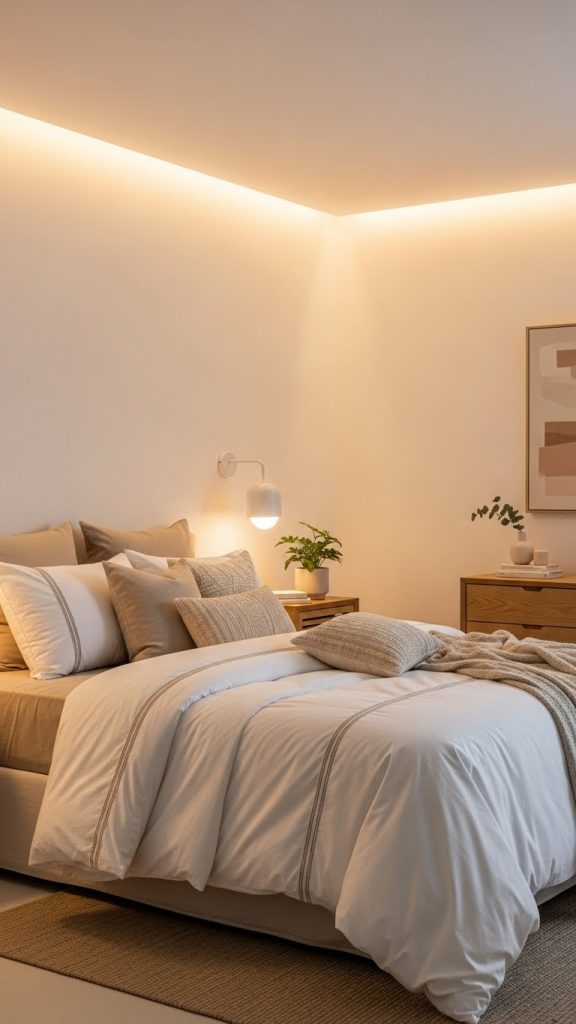
1. Soft White
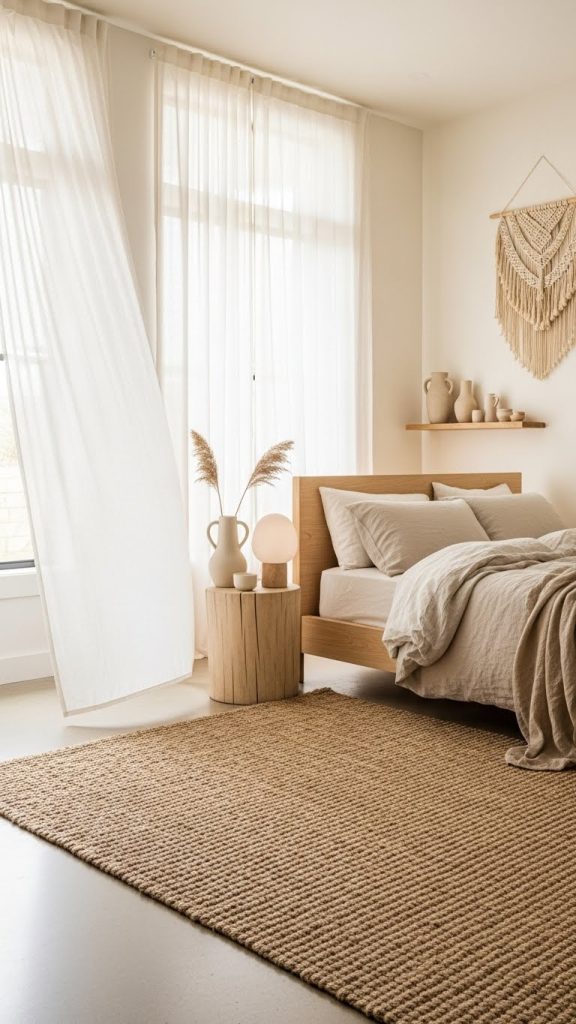
Soft white is one of the most peaceful bedroom colors when chosen correctly. Unlike stark or clinical whites, soft whites have warm or neutral undertones that create a gentle, inviting atmosphere. These whites reflect light beautifully without feeling harsh, making the room feel airy and calm.
A soft white bedroom promotes mental clarity and visual rest. It allows the mind to slow down because there are no strong visual distractions. This makes it an excellent choice for people who feel overwhelmed by bold colors or busy patterns.
Soft white also provides flexibility. It works well with natural materials such as wood, linen, and cotton, which add warmth and texture. When paired with soft lighting and layered textiles, a white bedroom feels serene rather than cold.
This color is ideal for small bedrooms, as it visually expands the space, and for minimalist interiors where simplicity and peace are the main goals.
2. Warm Beige
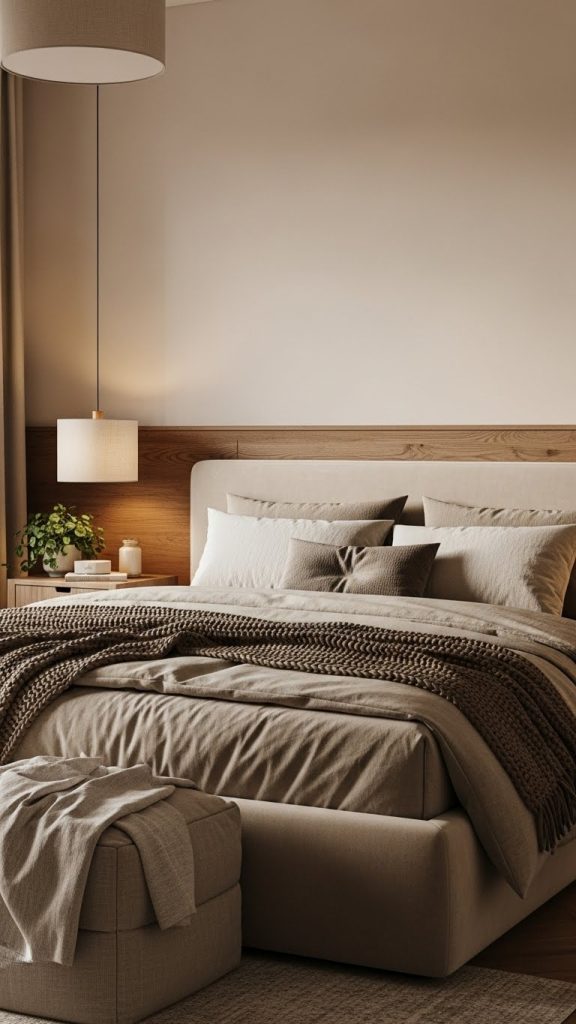
Warm beige is a timeless and deeply comforting color that creates a sense of security and balance. Unlike cooler greys, beige has an earthy quality that feels grounding and soothing.
In a bedroom, warm beige creates a cocoon-like effect that encourages relaxation. It is gentle on the eyes and pairs beautifully with both light and dark furniture. Beige walls combined with soft bedding and natural textures result in a harmonious and calming environment.
This color is especially effective in bedrooms where warmth is desired without darkness. It reflects light softly and maintains a cozy atmosphere throughout the day and night.
Warm beige is perfect for those who want a neutral bedroom that feels welcoming, peaceful, and elegant without being overly modern or stark.
3. Light Grey
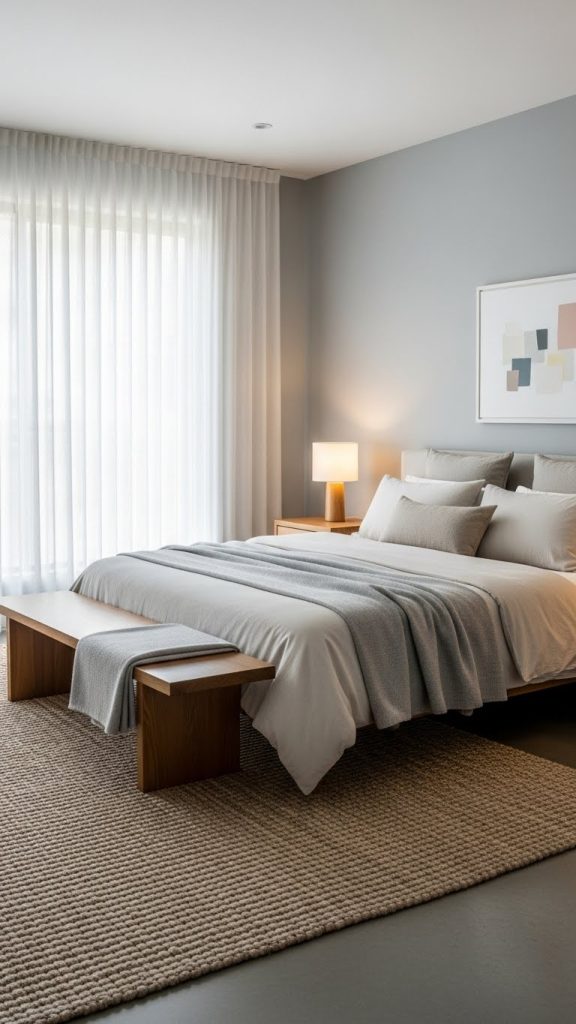
Light grey is a popular peaceful bedroom color when it leans toward warm or neutral undertones. It offers a modern and refined look while maintaining a calm and understated presence.
Grey has a quiet quality that helps reduce visual noise. In the bedroom, light grey creates a soothing backdrop that encourages rest and focus. It works particularly well in contemporary interiors where clean lines and simplicity are valued.
To keep grey from feeling cold, it should be paired with warm lighting, wood accents, and soft textiles. When balanced correctly, light grey becomes a calming and sophisticated choice.
This color is ideal for modern bedrooms, urban homes, and spaces where a subtle, peaceful atmosphere is desired.
4. Soft Blue
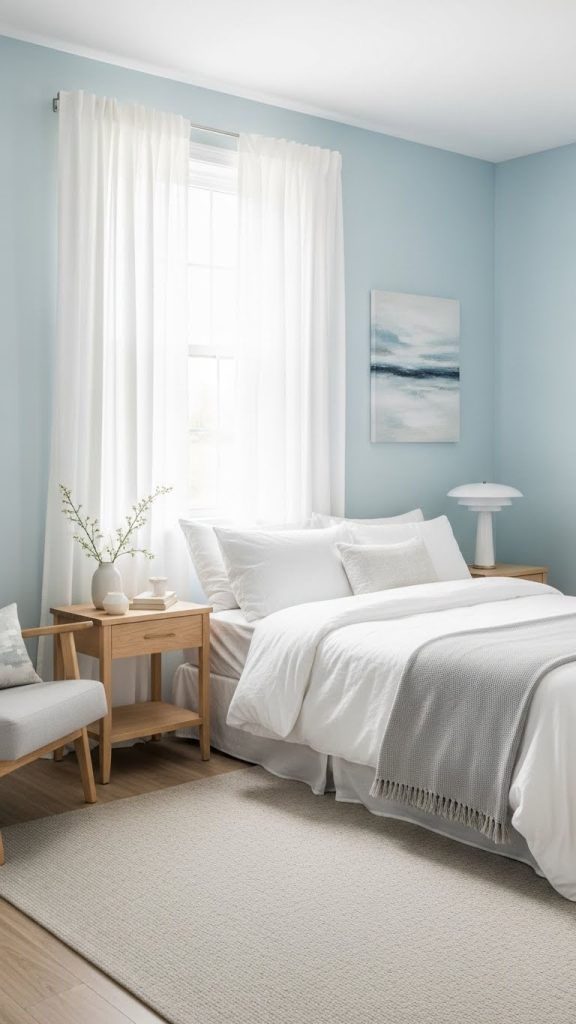
Soft blue is one of the most widely recognized peaceful colors, often associated with the sky and water. Psychologically, blue has been shown to reduce stress and promote calmness, making it an excellent choice for bedrooms.
Light or muted blue shades create a sense of openness and serenity. They slow the heart rate and encourage deeper breathing, which supports restful sleep. Soft blue bedrooms feel fresh, clean, and emotionally balanced.
This color pairs beautifully with white, beige, and light wood tones. It can be used on walls, bedding, or accents without overwhelming the space.
Soft blue is particularly effective in bedrooms where relaxation and sleep quality are top priorities.
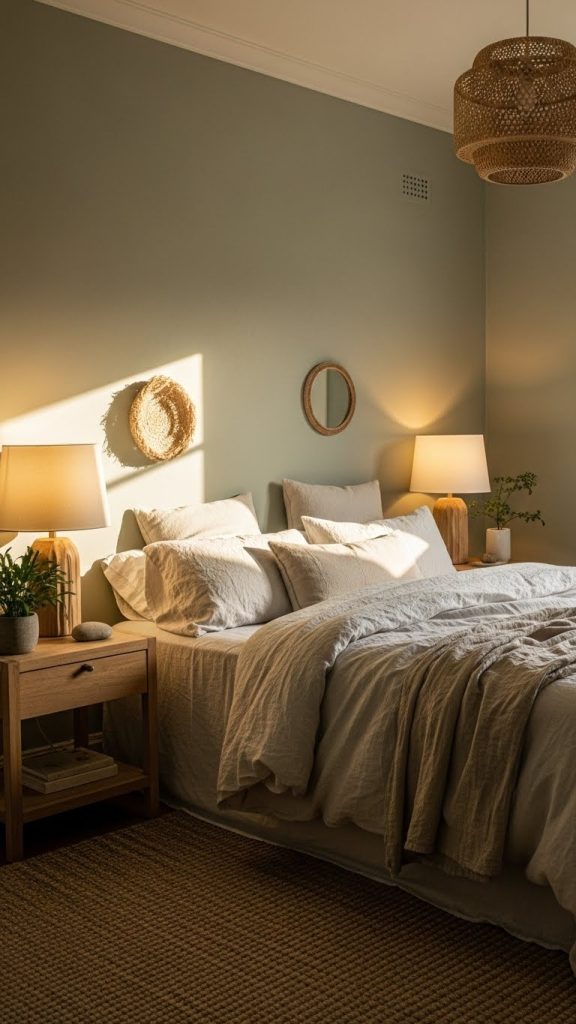
5. Sage Green
Sage green is a gentle, nature-inspired color that brings tranquility into the bedroom. Unlike bright greens, sage has a muted, greyed tone that feels calm and sophisticated.
Green is associated with balance and renewal, and sage green in particular promotes emotional stability. In a bedroom, it creates a peaceful connection to nature, which can help reduce stress and mental fatigue.
Sage green works well with natural materials such as wood, linen, and stone. It pairs beautifully with warm neutrals and soft whites, enhancing its calming effect.
This color is ideal for those who want a peaceful bedroom with a subtle hint of color that still feels grounded and timeless.
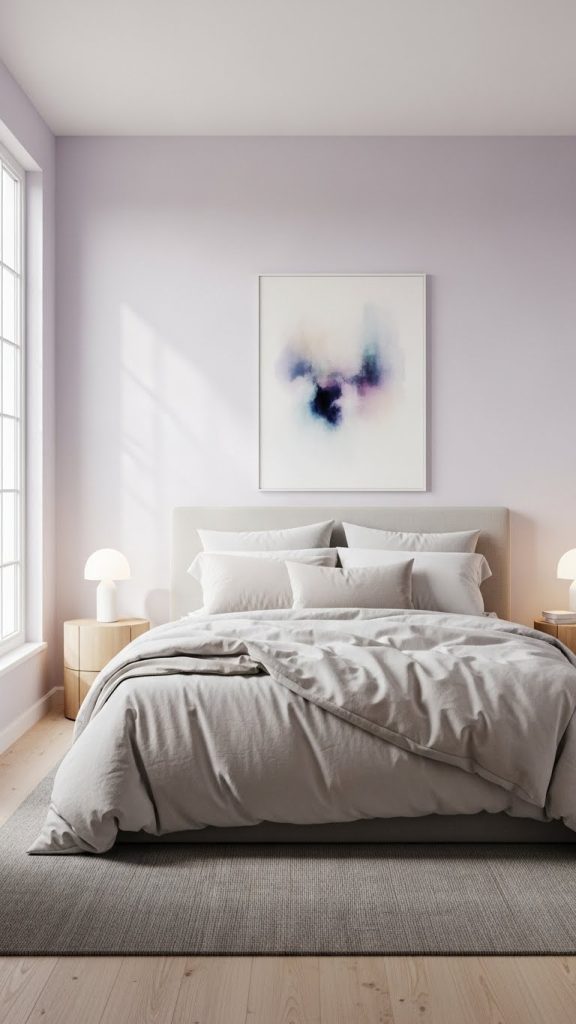
6. Pale Lavender
Pale lavender is a soft, muted version of purple that offers relaxation without intensity. While darker purples can feel dramatic, pale lavender has a calming, almost meditative quality.
This color is often associated with tranquility and healing. In a bedroom, it creates a gentle, dreamy atmosphere that encourages rest and introspection. Pale lavender works best when used sparingly and paired with neutral tones.
Soft lighting enhances its soothing effect, making the bedroom feel cozy and serene rather than stimulating.
Pale lavender is an excellent choice for those who want a peaceful bedroom with a touch of elegance and softness.
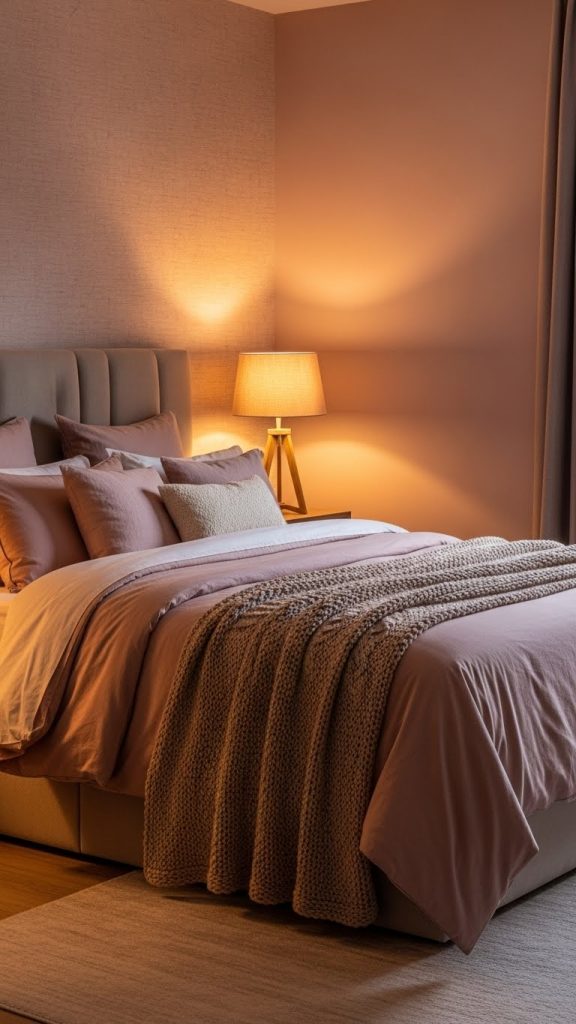
7. Dusty Pink
Dusty pink is a muted, earthy pink that feels warm and calming rather than bold or energetic. This shade brings a sense of comfort and emotional warmth to the bedroom.
Unlike brighter pinks, dusty pink has a subdued quality that feels nurturing and restful. It creates a cozy, inviting atmosphere that supports relaxation.
Dusty pink pairs well with beige, grey, and soft whites, as well as natural wood tones. When used thoughtfully, it adds depth without overwhelming the senses.
This color is ideal for bedrooms that aim to feel gentle, comforting, and quietly elegant.
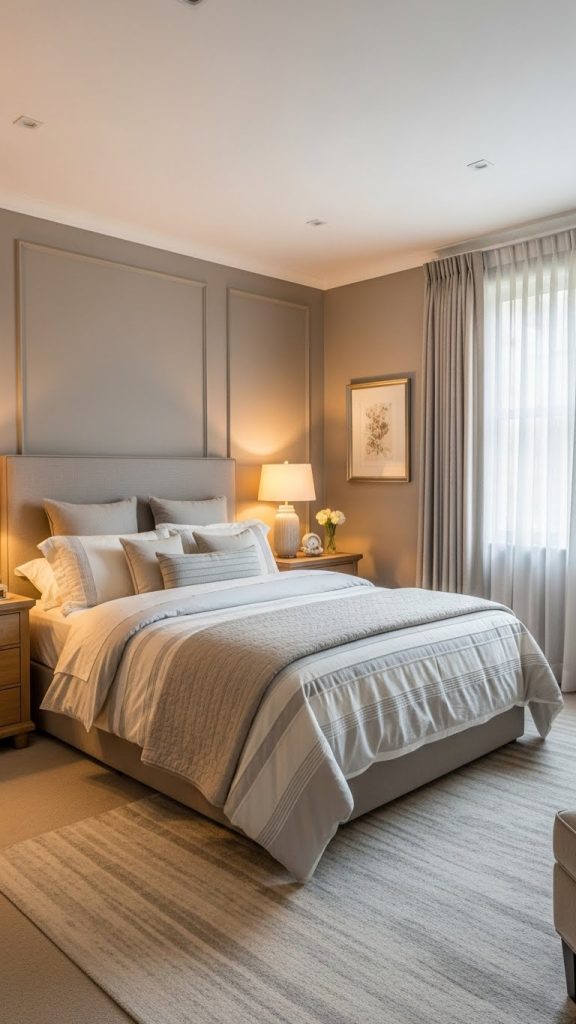
8. Taupe
Taupe is a balanced mix of grey and brown, making it one of the most versatile peaceful bedroom colors. It offers the calmness of grey with the warmth of brown, creating a grounded and soothing environment.
Taupe walls provide a neutral backdrop that feels rich and cozy without being dark. This color works well with a wide range of materials and textures, from wood to metal to soft fabrics.
In a bedroom, taupe promotes a sense of stability and calm, making it easier to unwind at the end of the day.
Taupe is perfect for those who want a peaceful, mature, and sophisticated bedroom palette.
9. Soft Sand
Soft sand is a light, warm color inspired by natural landscapes. It evokes feelings of relaxation, openness, and calm, similar to being in a quiet, natural setting.
This color reflects light gently and creates a soothing visual flow throughout the bedroom. It pairs beautifully with white, beige, and muted blues or greens.
Soft sand is especially effective in bedrooms designed for relaxation and escape, as it feels organic and timeless.
It is an excellent choice for creating a peaceful environment without relying on cool tones.
10. Muted Blue-Grey
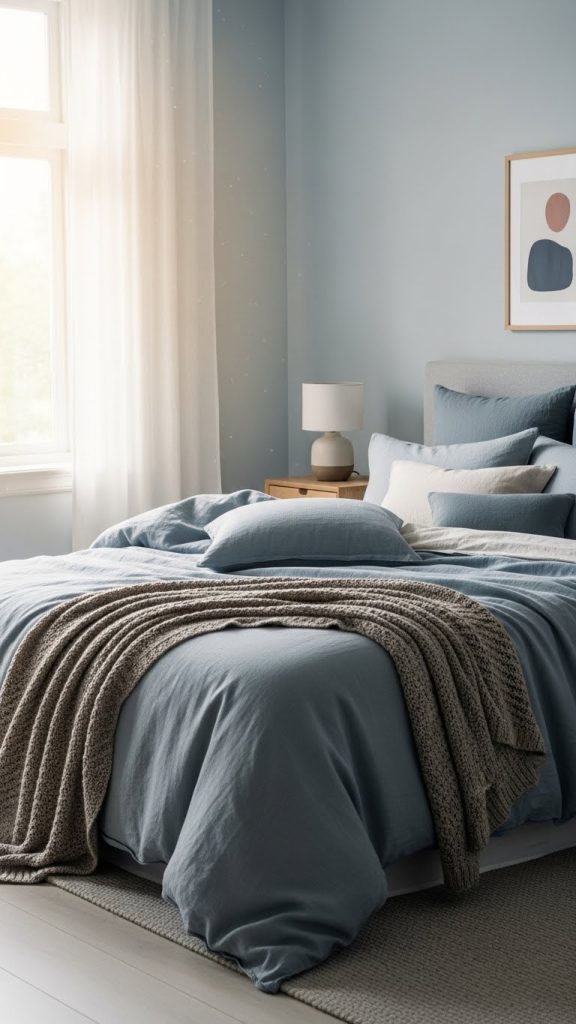
Muted blue-grey combines the calming effects of blue with the sophistication of grey. This balanced color feels serene, refined, and emotionally calming.
In a bedroom, blue-grey creates a quiet, restful atmosphere that supports sleep and relaxation. It works well in modern and transitional interiors, offering depth without heaviness.
When paired with warm lighting and soft textures, muted blue-grey becomes a deeply peaceful and inviting color choice.
This shade is ideal for those who want a calming bedroom color that feels modern yet timeless.
Conclusion
Choosing the right color is one of the most powerful ways to create a peaceful bedroom. The ten colors explored in this guide—ranging from soft whites and warm neutrals to gentle blues and greens—offer a variety of options for achieving calm, comfort, and harmony.
Peaceful bedroom colors work best when combined with soft lighting, natural materials, and uncluttered layouts. Together, these elements create an environment that supports rest, relaxation, and emotional well-being.
By selecting a color that resonates with your personal sense of calm, you can transform your bedroom into a true sanctuary—a place where both body and mind can fully unwind.