Gradient walls have become one of the most creative and artistic trends in interior design. Instead of painting a wall with a single solid color, a gradient blends two or more shades to create a smooth transition from light to dark, or from one hue to another. This creates movement, depth, and visual interest, turning a plain wall into a statement feature.
Gradient walls offer versatility. They can be subtle or dramatic, soft or bold, warm or cool. They bring dimension to small spaces, calmness to bedrooms, vibrance to living rooms, and artistic flair to creative studios. Whether you prefer earthy neutrals or vivid palettes, gradient walls adapt to your personal taste and style.
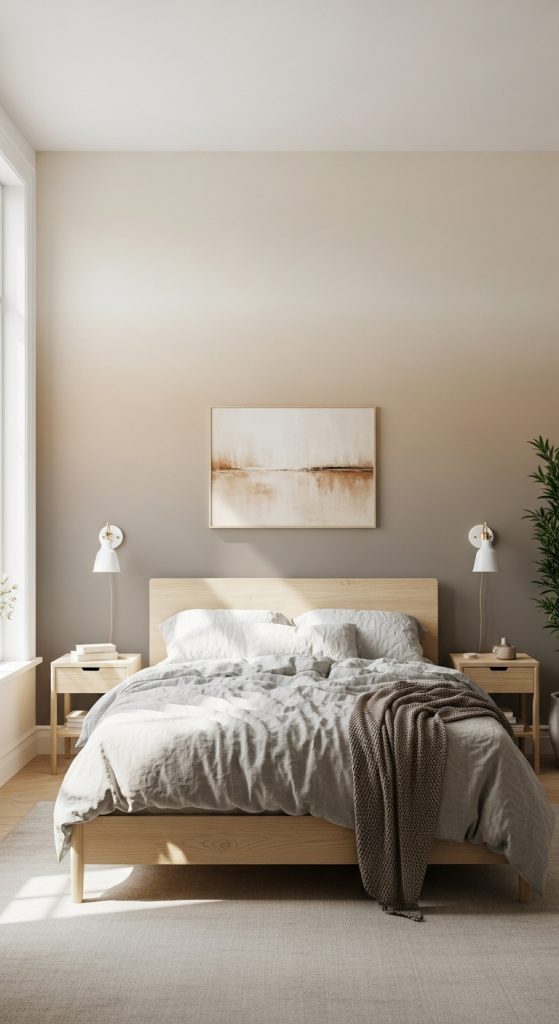
In this guide, we explore ten gradient wall ideas that elevate any room. Each idea includes color inspirations, styling notes, and practical considerations, offering detailed direction for your next design project.
1. Soft Neutral Ombre Wall
A neutral gradient wall is ideal for those who want elegance without overpowering the room. Using shades like cream, beige, taupe, warm gray, or soft sand, you can create a calming atmosphere with a timeless palette.
Start with the lightest shade at the top to draw the eye upward. As the wall transitions downward, deepen the color slowly into a soft taupe or muted beige. This creates a subtle ombre flow that pairs beautifully with modern farmhouse, Scandinavian, minimalist, or coastal interiors.
Neutral gradients work especially well in bedrooms, living rooms, and reading nooks. They complement natural textures, such as wood, linen, sisal, and jute. This gradient style also enhances other accent pieces like wall art, plants, and light wooden furniture.