

10 Cozy House Aesthetic Interior Ideas
A cozy house aesthetic is not defined by trends, luxury, or perfection—it is defined by how a space makes you feel. A truly cozy interior evokes comfort, warmth, safety, and emotional ease. It is the kind of home you want to return to after a long day, where every corner feels intentional, lived-in, and nurturing. In a world that moves quickly and often feels overwhelming, the desire for cozy interiors has become stronger than ever.
The cozy house aesthetic is deeply personal, but it also follows certain design principles. It prioritizes warmth over minimalism, softness over sharpness, and atmosphere over formality. Cozy interiors often draw inspiration from nature, nostalgia, and slow living, blending textures, lighting, and materials in a way that feels effortless rather than curated.
Importantly, cozy does not mean cluttered or outdated. A cozy aesthetic can exist in modern, contemporary, rustic, or eclectic homes. The key lies in balance—layering comfort with functionality, softness with structure, and personality with restraint. Lighting, color, texture, and layout all play critical roles in shaping a space that feels emotionally comforting as well as visually inviting.

This article explores 10 cozy house aesthetic interior ideas, each explained in depth with guidance on color palettes, materials, furniture choices, lighting, and styling approaches. Whether you live in a small apartment or a spacious house, these ideas will help you create an interior that feels warm, grounding, and deeply welcoming.
1. Warm Neutral Color Palettes
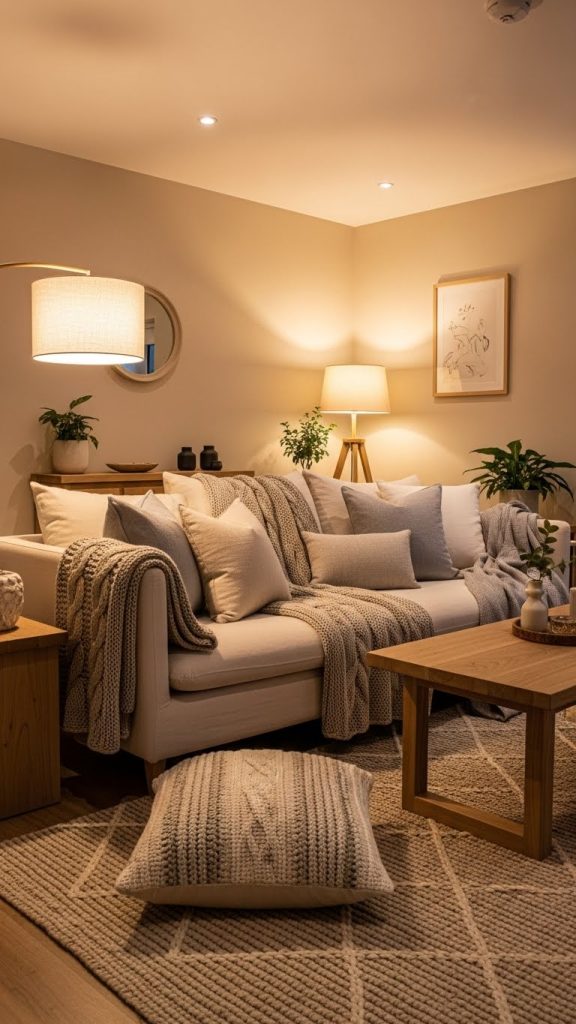
One of the foundations of a cozy house aesthetic is a warm, neutral color palette. These colors create a calming backdrop that allows the home to feel restful rather than stimulating.
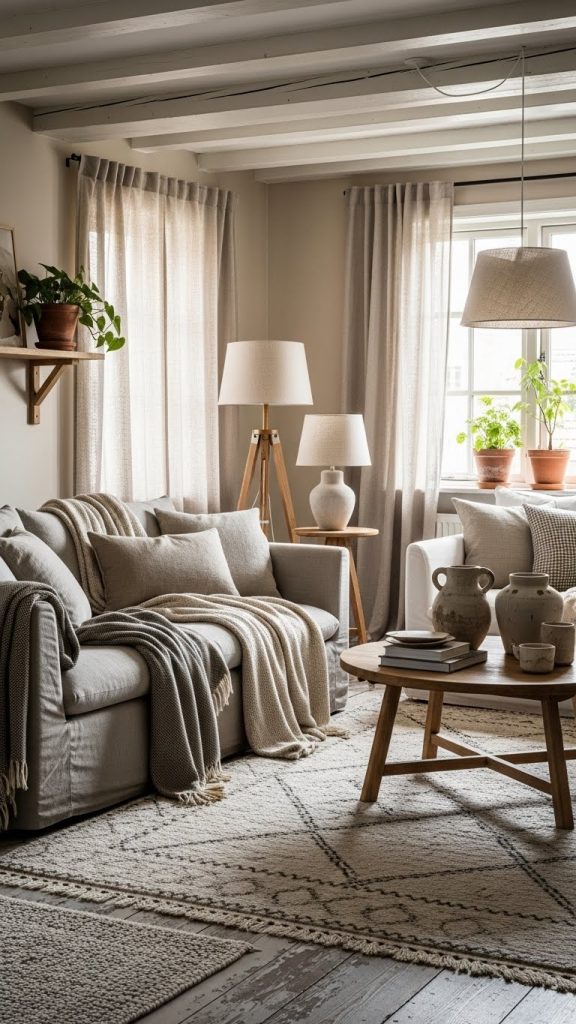
Warm whites, creams, beige, taupe, greige, and soft browns are commonly used. Unlike cool greys or stark whites, these shades have subtle undertones that make spaces feel gentle and inviting. They reflect light softly, enhancing the warmth of the interior without feeling dull.
A cozy home often layers multiple neutral tones together rather than relying on a single color. Walls, furniture, and textiles may all sit within the same palette but vary slightly in shade and texture. This creates depth without visual clutter.
Warm neutrals also provide flexibility. They allow furniture, artwork, and personal items to stand out while maintaining harmony throughout the home.
2. Layered Textiles for Comfort and Depth
Textiles are essential to achieving a cozy house aesthetic. They introduce softness, warmth, and tactile comfort—qualities that make a home feel lived-in and nurturing.
Layering is key. Instead of relying on a single rug, throw, or cushion, cozy interiors often use multiple layers. A sofa may feature a mix of cushions in different fabrics, paired with a draped throw. Beds are layered with sheets, duvets, quilts, and blankets.
Natural fabrics such as cotton, linen, wool, and knits are especially effective. They add texture without feeling artificial or overly polished. Slight imperfections in fabric weave actually enhance coziness by making the space feel authentic.
These layers not only improve comfort but also visually soften furniture and architecture, making rooms feel more intimate and welcoming.
3. Soft, Ambient Lighting Throughout the Home
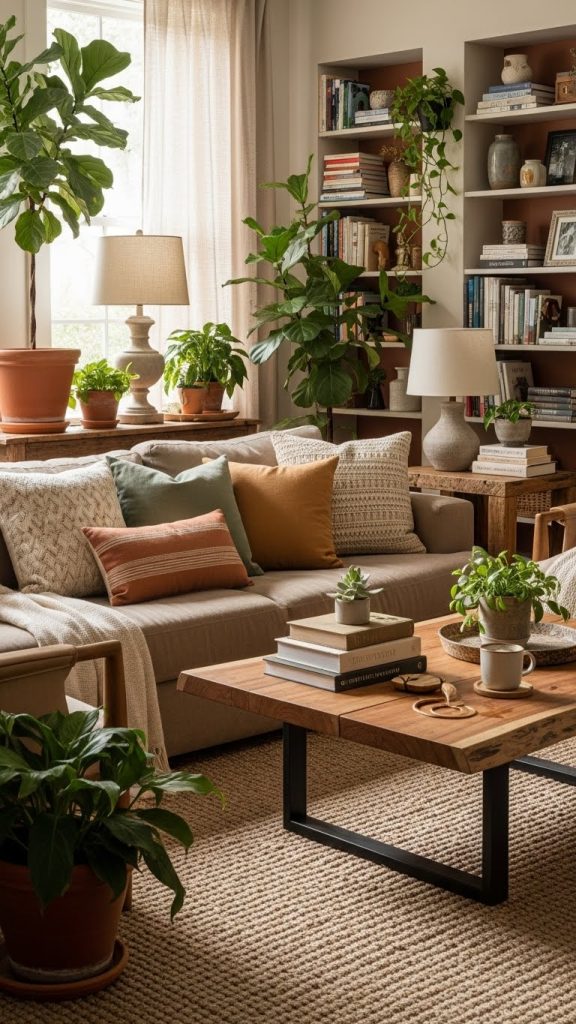
Lighting is one of the most powerful tools for creating a cozy atmosphere. Bright, harsh lighting can make even the most beautifully designed space feel cold, while soft lighting instantly adds warmth and calm.
A cozy house aesthetic relies on layered lighting rather than a single overhead source. Table lamps, floor lamps, wall sconces, candles, and hidden LED lighting work together to create depth and mood.
Warm light temperatures are essential. Soft yellow or amber tones enhance warm color palettes and make interiors feel relaxing. Dimmers allow lighting to adjust throughout the day, supporting both functionality and comfort.
Strategically placed lighting creates shadows and highlights that make rooms feel intimate rather than flat. In a cozy home, lighting is designed to be felt as much as it is seen.
4. Natural Materials and Organic Elements
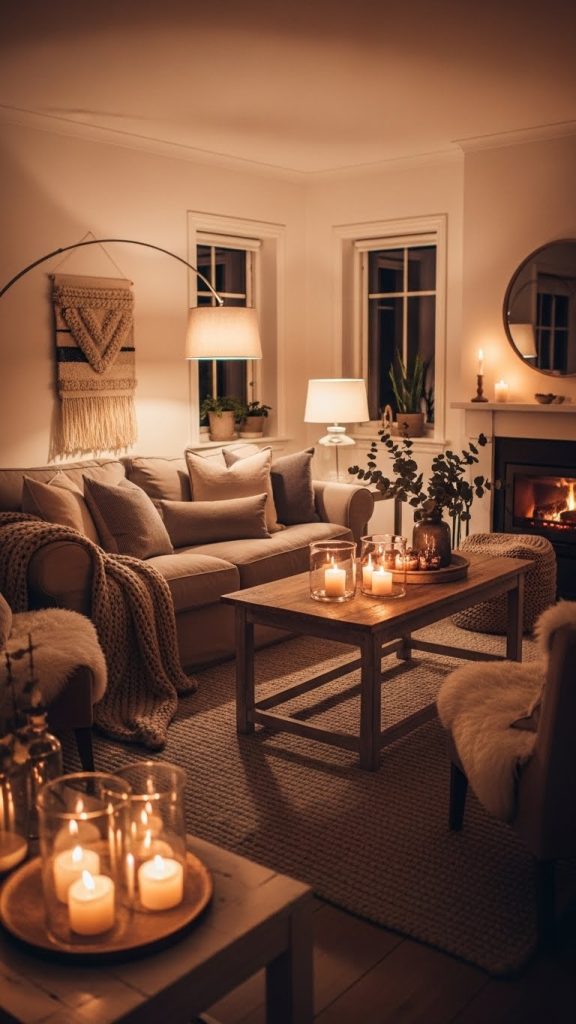
Nature plays a central role in cozy interior aesthetics. Natural materials bring warmth, texture, and a grounding presence that synthetic finishes often lack.
Wood is one of the most important elements. Whether used in furniture, flooring, shelving, or decorative objects, wood adds instant warmth. Lighter woods feel airy and soft, while darker woods create depth and richness.
Other natural materials—such as stone, clay, rattan, linen, and leather—contribute to a sense of authenticity and comfort. These materials age beautifully, adding character over time rather than appearing worn.
Incorporating plants or greenery further enhances the cozy aesthetic. Even a few simple plants bring life and softness to a space, reinforcing a connection to nature.
5. Comfortable, Inviting Furniture Choices
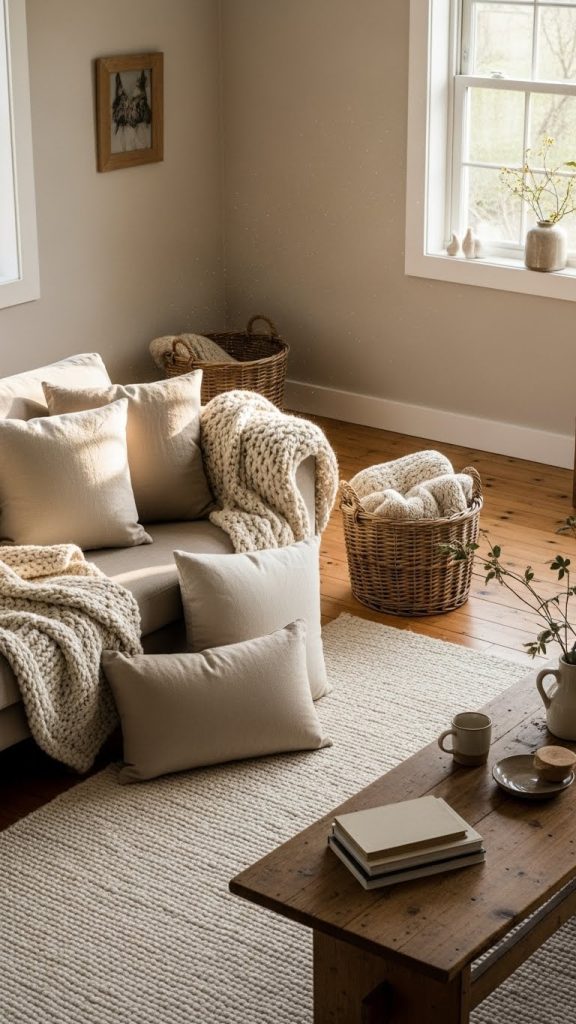
Furniture in a cozy house aesthetic prioritizes comfort above all else. Pieces should invite you to sit, rest, and linger rather than simply look stylish.
Sofas and chairs often have plush cushions, rounded edges, and deep seats. Beds feel layered and generous rather than rigid or minimal. Furniture shapes are soft and approachable, avoiding sharp lines where possible.
Scale is also important. Oversized furniture can feel cozy in larger spaces, while well-proportioned pieces prevent smaller rooms from feeling crowded.
In a cozy home, furniture is chosen not just for appearance, but for how it supports everyday comfort and relaxation.
6. Personal Touches and Lived-In Details
A cozy home feels personal, not staged. It reflects the people who live there through meaningful objects, memories, and details.
Photographs, books, artwork, souvenirs, and handmade items all contribute to a sense of warmth and authenticity. These elements tell a story and create emotional connection.
Rather than being arranged symmetrically or perfectly, cozy interiors allow for a sense of ease. A stack of books on a table, a blanket casually folded, or artwork leaning against a wall adds charm and informality.
These lived-in details make a house feel like a home—comfortable, welcoming, and real.
7. Cozy Corners and Intimate Spaces
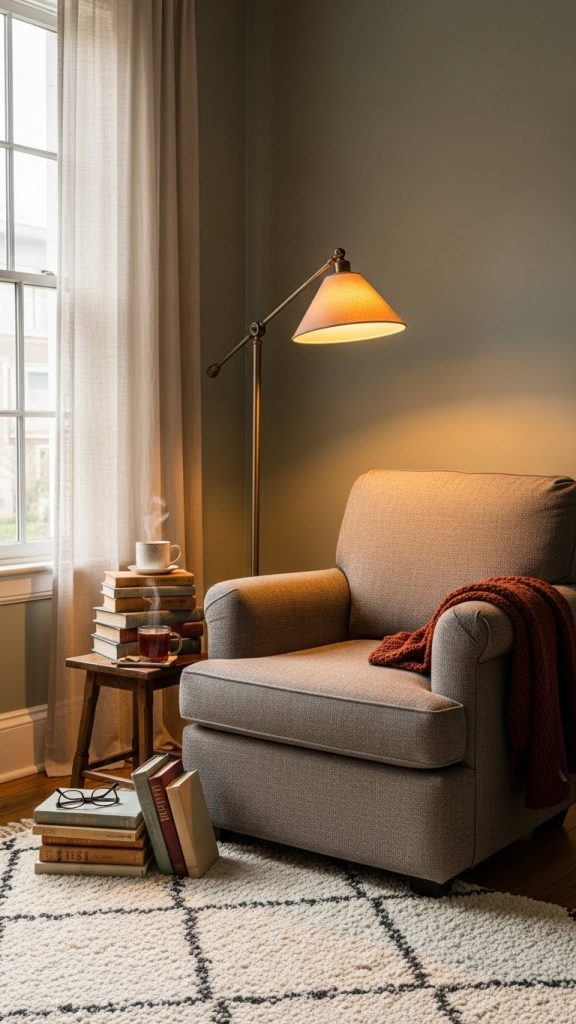
A cozy house aesthetic often includes intentional “small moments” within the larger home. These are quiet corners designed for rest, reading, or reflection.
A window seat with cushions, a reading nook with a chair and lamp, or a small bench with soft textiles creates spaces that encourage slowing down. These areas do not require much space, but they add emotional value.
By breaking up large rooms into smaller zones, the home feels more intimate and human-scaled. Cozy corners invite connection—to oneself, to loved ones, or to quiet moments of calm.
These spaces are what make a home feel nurturing rather than simply functional.
8. Warm Color Accents Used Sparingly
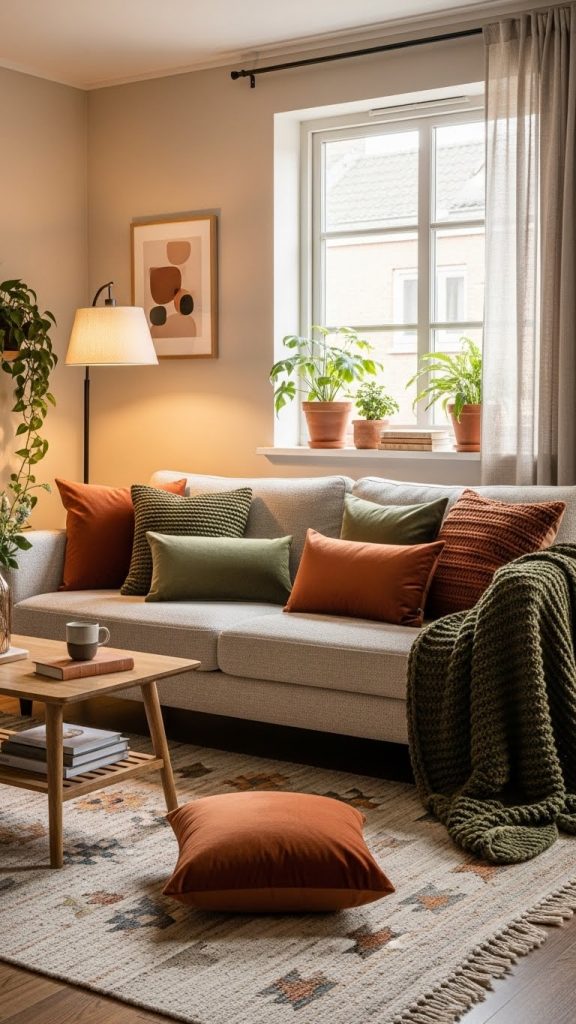
While neutrals form the foundation of cozy interiors, warm accent colors add depth and personality. These colors should feel muted and earthy rather than bright or bold.
Shades such as rust, terracotta, olive green, mustard, dusty blue, and warm burgundy work beautifully in cozy homes. They can be introduced through cushions, throws, artwork, or small décor items.
Using accent colors sparingly ensures they enhance the space rather than overwhelm it. The goal is harmony, not contrast.
These warm hues add emotional richness, making the interior feel layered and comforting.
9. Soft Curtains and Textured Window Treatments
Window treatments play a subtle but important role in cozy interior design. Hard blinds or bare windows can make spaces feel exposed or unfinished.
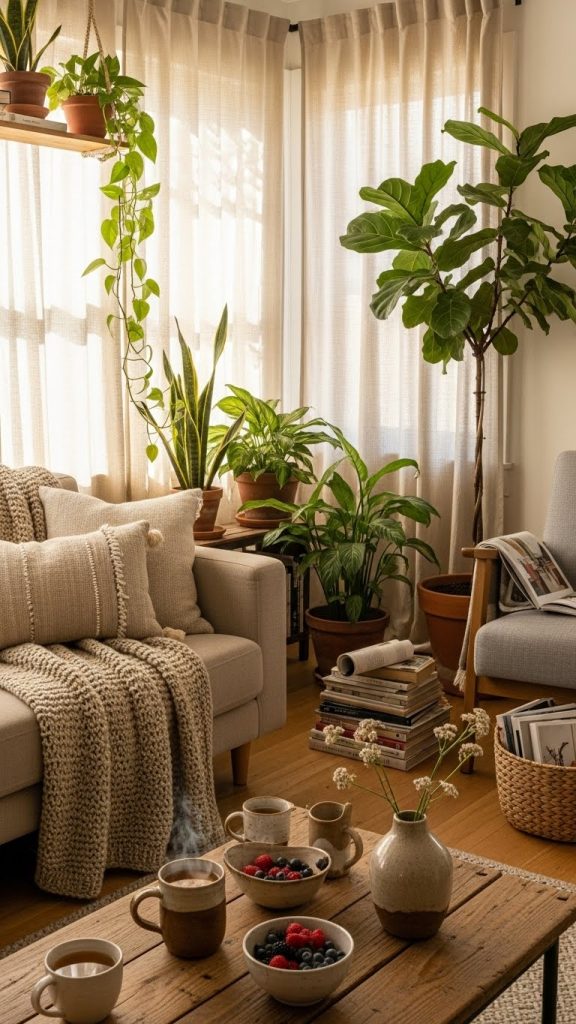
Soft curtains in linen, cotton, or light wool add warmth and movement. Floor-length curtains create a sense of softness and enclosure, even in modern interiors.
Sheer layers allow natural light to filter gently into the space, enhancing the cozy atmosphere during the day. Heavier curtains provide warmth and privacy in the evening.
Window treatments help control light, temperature, and mood, making them essential to a cozy house aesthetic.
10. A Calm, Unhurried Overall Atmosphere
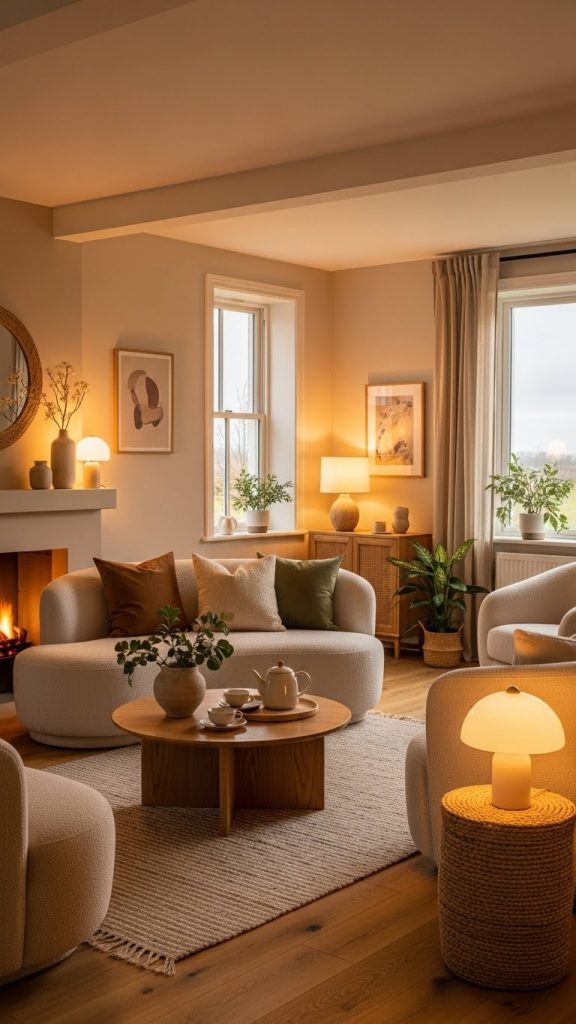
Ultimately, a cozy house aesthetic is not just about design elements—it is about pace. A cozy home feels calm, unhurried, and emotionally supportive.
Clutter is managed thoughtfully, not eliminated completely. The home feels organized but not rigid. There is room for life to happen naturally.
Spaces are designed to support rest, conversation, and comfort rather than productivity alone. The atmosphere encourages slowing down, being present, and enjoying simple moments.
This sense of calm ties all cozy elements together, creating a home that feels deeply welcoming and restorative.
Conclusion
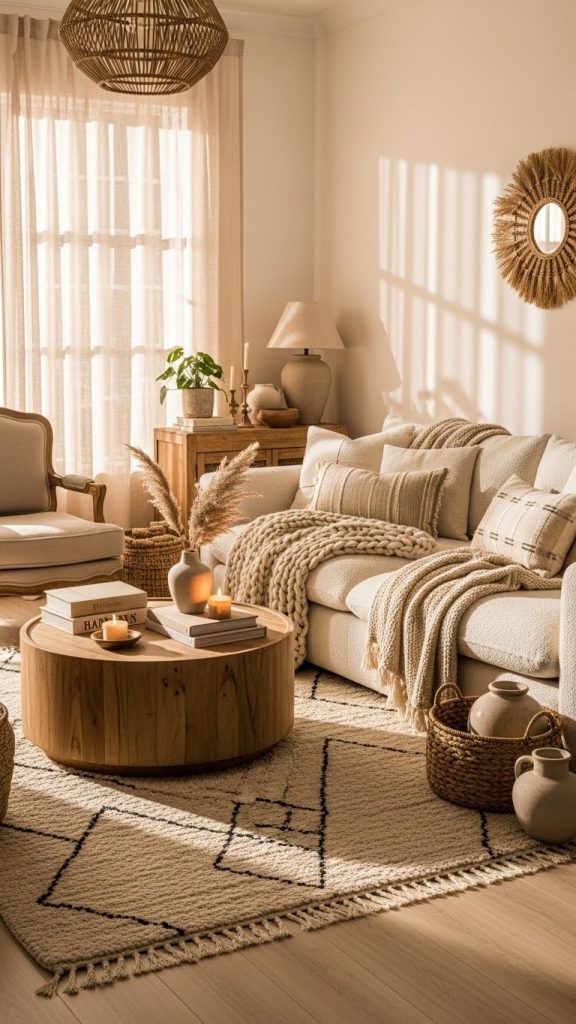
A cozy house aesthetic is built on warmth, comfort, and emotional connection. It is not about following strict rules or trends, but about creating an environment that feels safe, inviting, and deeply personal.
The ten ideas explored in this guide—from warm color palettes and layered textiles to soft lighting and personal details—demonstrate how thoughtful design choices can transform any house into a comforting sanctuary.
Whether your home is modern or traditional, small or spacious, the cozy aesthetic is achievable through intention, balance, and care. When a home feels cozy, it does more than look beautiful—it supports well-being, connection, and a slower, more meaningful way of living.


