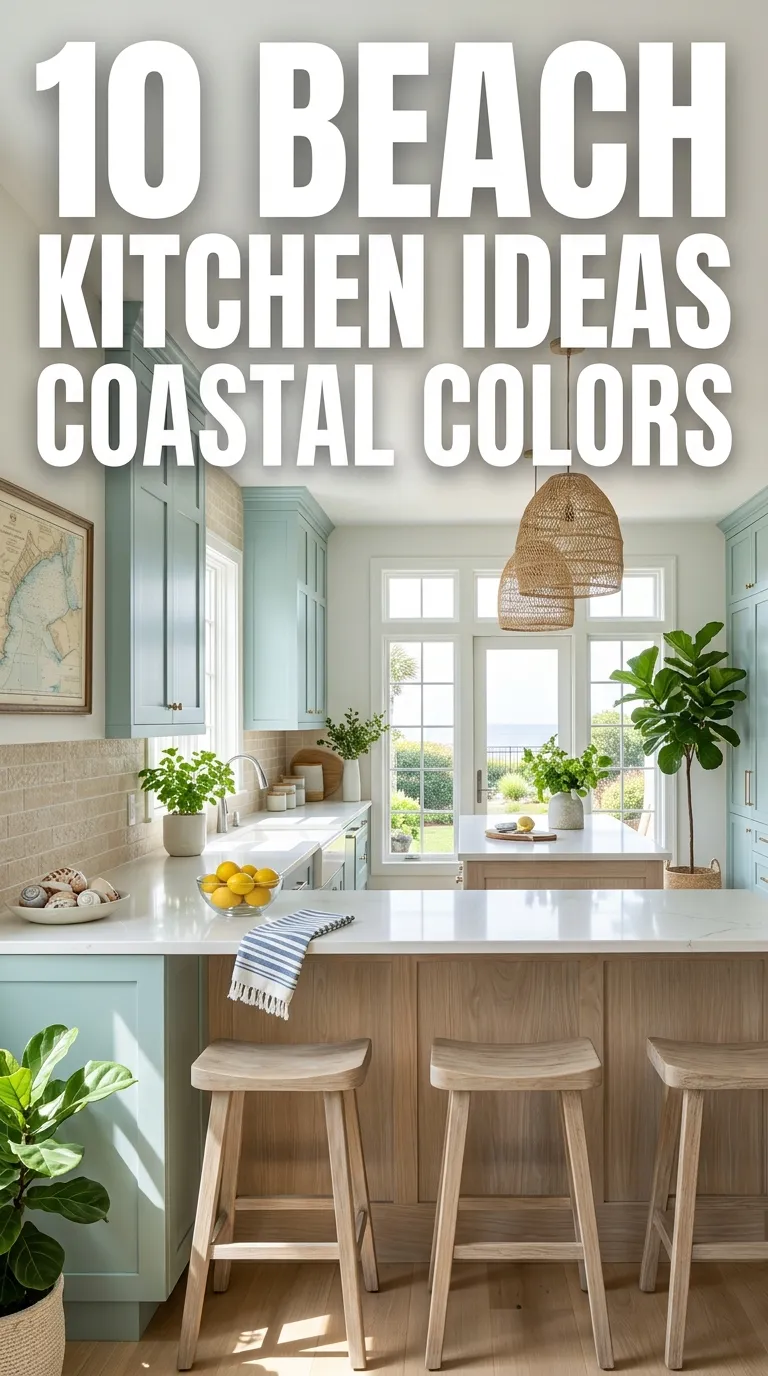
10 Beach Kitchen Ideas Coastal Colors
A beach kitchen is not just a place to cook—it is the heart of a coastal home, where relaxed mornings, sunlit afternoons, and easy gatherings naturally unfold. Whether located in a true seaside house, a lake home, or an inland residence inspired by coastal living, a beach kitchen should feel open, fresh, and effortlessly inviting. At the center of that feeling is color.

Coastal color palettes are inspired by nature: sand, sea, sky, driftwood, shells, and sunlight. These colors work together to create kitchens that feel calm rather than busy, bright rather than stark, and welcoming rather than formal. Unlike trend-driven kitchens that rely on bold contrasts, beach kitchens benefit from soft transitions, muted tones, and layered neutrals.
The best coastal kitchens don’t look themed or overly nautical. Instead, they feel timeless and livable—spaces where color supports light, texture, and flow. Whites are warmer, blues are softer, greens are grounded, and wood tones feel sun-washed rather than polished.
This article explores 10 beach kitchen ideas using coastal colors, each explained in depth with guidance on palettes, materials, finishes, and how to create balance. Whether you want a bright white coastal kitchen or a more layered, earthy seaside look, these ideas will help you design a kitchen that feels relaxed, fresh, and connected to nature.
1. White, Soft Blue, and Natural Wood
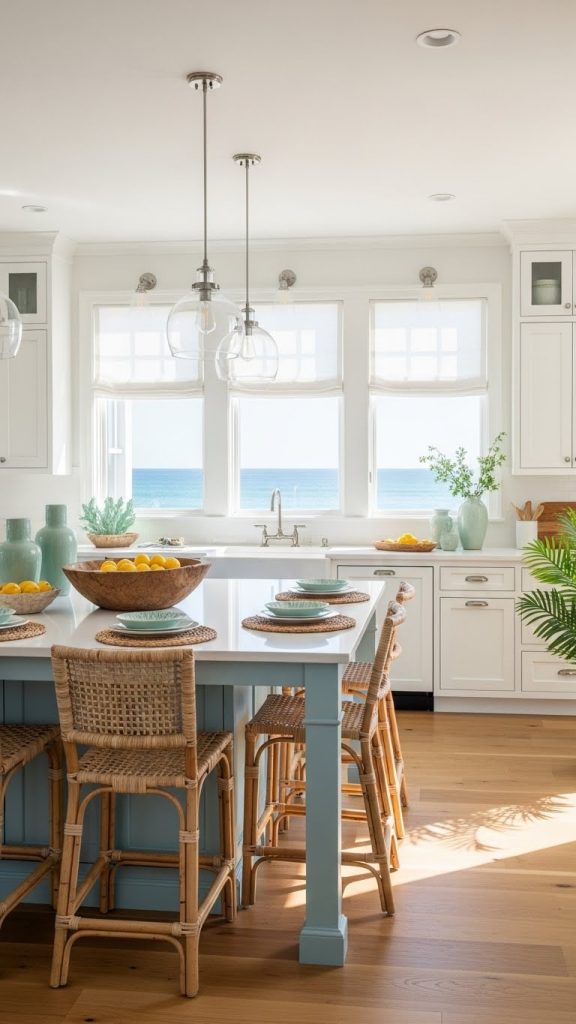
This is the most classic beach kitchen palette and one that never goes out of style. It captures the feeling of open skies, calm water, and sun-bleached wood.
White cabinetry creates a bright, clean foundation and reflects natural light beautifully. Soft blue—used on an island, backsplash, or accents—adds a gentle coastal note without overwhelming the space. Natural wood, whether in flooring, beams, or open shelving, grounds the palette with warmth.
The key to success with this palette is softness. Blues should be muted rather than bold, and whites should be warm rather than stark. Wood should feel natural and lightly finished, not glossy or dark.
This kitchen feels breezy, timeless, and perfect for both everyday living and vacation homes.
2. Sand Beige, Creamy White, and Driftwood Gray
Inspired by shoreline textures, this palette feels subtle, calm, and effortlessly coastal.
Sand-toned cabinetry or walls introduce warmth and softness. Creamy white balances the palette and keeps the kitchen light and inviting. Driftwood gray—used in flooring, countertops, or stools—adds depth and a weathered coastal character.
This palette works beautifully in kitchens where you want a neutral look with coastal influence rather than obvious beach colors. It pairs especially well with stone countertops, woven textures, and simple hardware.
The result is a kitchen that feels relaxed, grounded, and naturally elegant.

3. Pale Aqua, White, and Light Oak
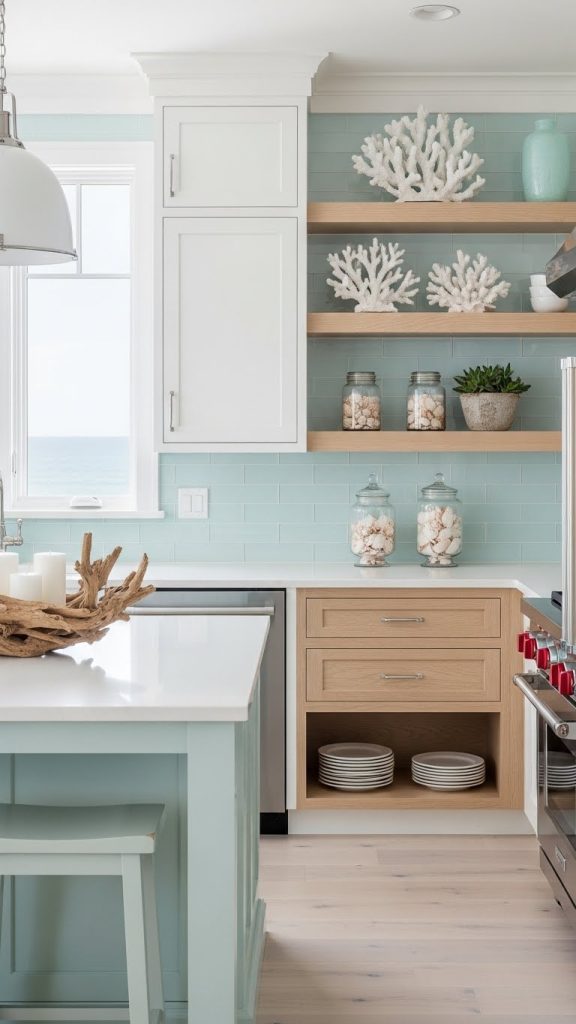
For those who want a slightly more playful coastal kitchen without going nautical, pale aqua is a perfect choice.
Aqua brings freshness and energy while still feeling soft and calming. When paired with white cabinetry and light oak or maple wood, it feels youthful yet sophisticated.
This color works especially well on islands, backsplashes, or lower cabinets, while keeping upper cabinets white to maintain openness.
The palette feels sunny, cheerful, and ideal for kitchens that open to outdoor spaces or dining areas.
4. Soft Sage Green, Warm White, and Natural Stone
Green is increasingly popular in beach kitchens, especially when inspired by sea grass, dunes, and coastal foliage.
Soft sage green cabinetry adds color without heaviness. Warm white walls and trim keep the kitchen light and balanced. Natural stone—used in countertops or backsplashes—adds texture and an organic feel.
This palette feels calming and slightly earthy, perfect for homeowners who want coastal style with a grounded, modern edge.
It works especially well in kitchens that blend into living spaces, creating a seamless flow.

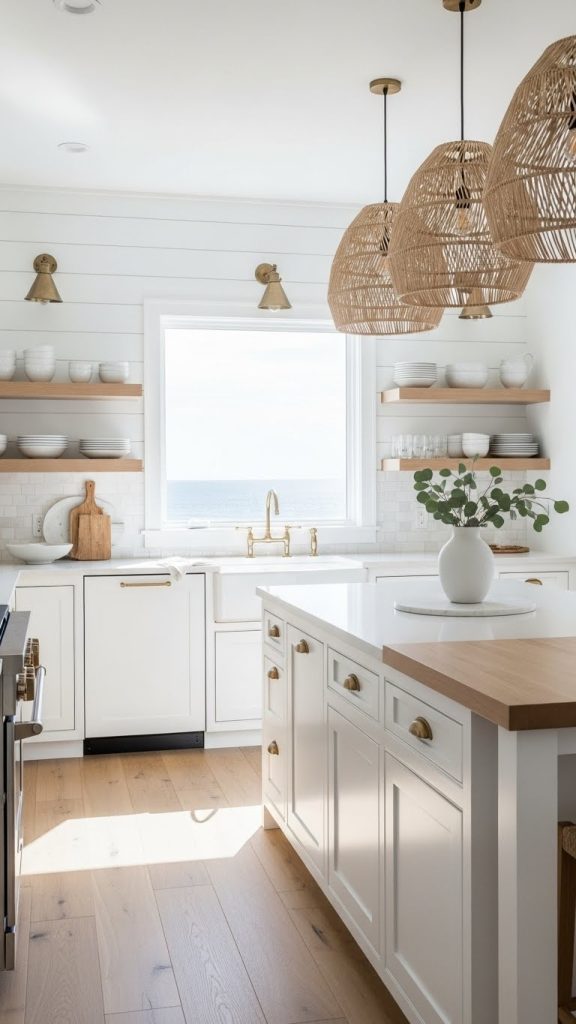
5. All-White Coastal Kitchen with Texture Layers
An all-white kitchen can feel cold if done incorrectly, but in a beach kitchen, texture makes all the difference.
Use warm whites rather than stark ones. Layer textures through beadboard, shiplap, zellige tiles, woven pendants, and wood accents.
Subtle variations in white—on cabinets, walls, and countertops—create depth without introducing color.
This kitchen style feels bright, clean, and timeless, making it ideal for small beach kitchens or spaces with limited natural light.
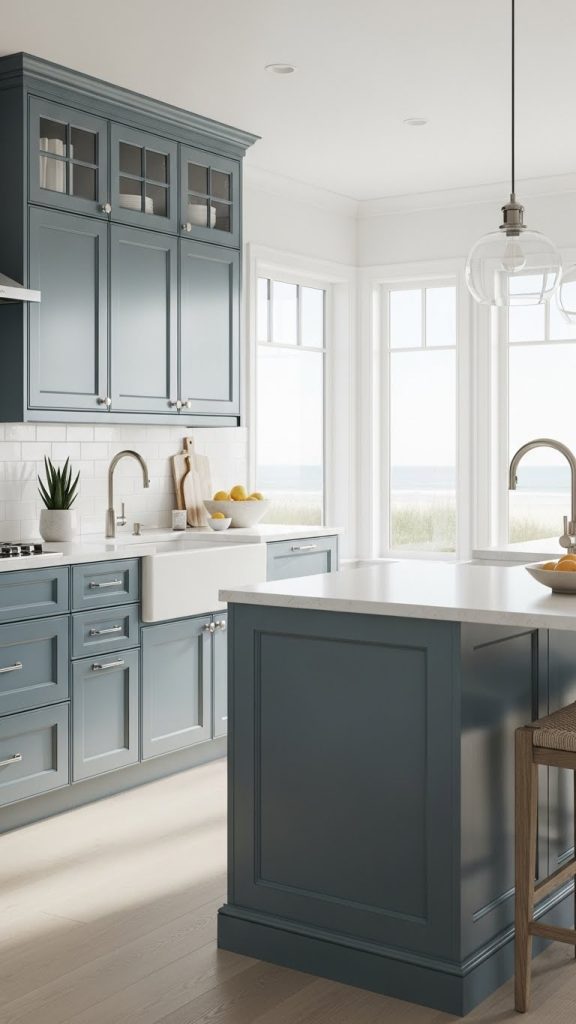
6. Blue-Gray, Soft White, and Brushed Metal Accents
Blue-gray sits beautifully between coastal blue and neutral gray, making it an excellent choice for modern beach kitchens.
Use blue-gray cabinetry or islands as the focal point. Pair with soft white walls and countertops to keep the space open.
Brushed nickel, chrome, or soft brass hardware adds subtle contrast and reflects light gently.
This palette feels fresh, modern, and slightly refined—perfect for coastal homes that lean contemporary.
7. Warm Taupe, White, and Weathered Wood
This palette leans toward understated coastal elegance rather than obvious beach tones.
Taupe cabinetry or walls feel neutral and adaptable to changing light. White brightens the space, while weathered wood introduces a relaxed, seaside character.
This kitchen style works beautifully in lake houses or coastal homes where the goal is warmth and comfort over brightness.
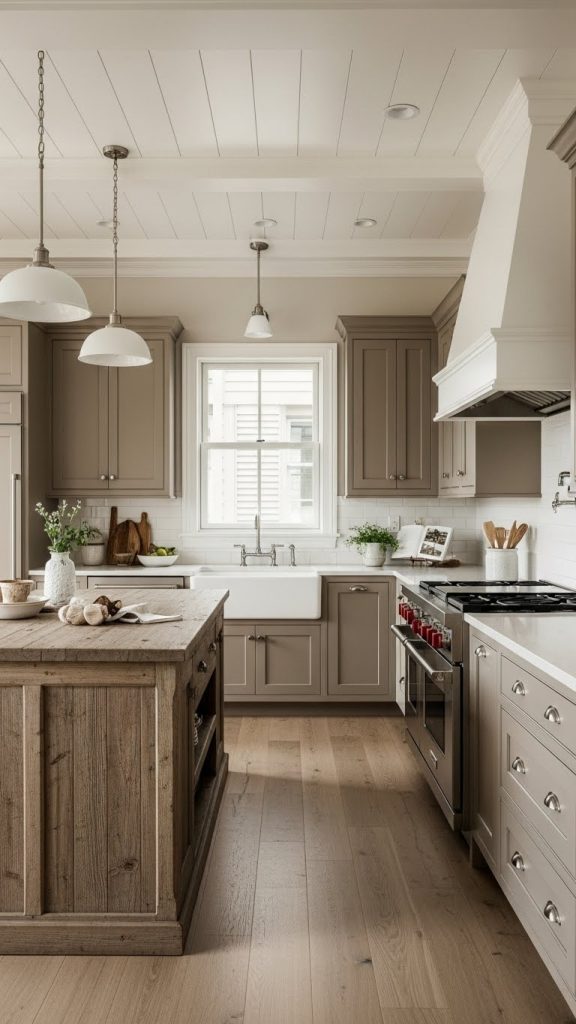
The result is a kitchen that feels welcoming, lived-in, and timeless.
8. Seafoam Green, White, and Soft Gray
Seafoam green is a classic coastal color that feels light, fresh, and nostalgic without being dated when used carefully.
Use seafoam green sparingly—on an island, backsplash, or accent cabinetry. White keeps the kitchen bright, while soft gray adds balance and maturity.
This palette works especially well in vintage-inspired or cottage-style beach kitchens.

It feels cheerful, calming, and full of personality.
9. White, Light Gray, and Subtle Blue Accents
For homeowners who want coastal influence without committing to colored cabinetry, this palette offers flexibility.
White cabinets and walls create a clean base. Light gray introduces depth without heaviness. Subtle blue accents—such as stools, ceramics, or tile—hint at the sea without dominating the space.
This approach is ideal for those who want a timeless kitchen that can evolve with décor changes.
It feels calm, fresh, and endlessly adaptable.

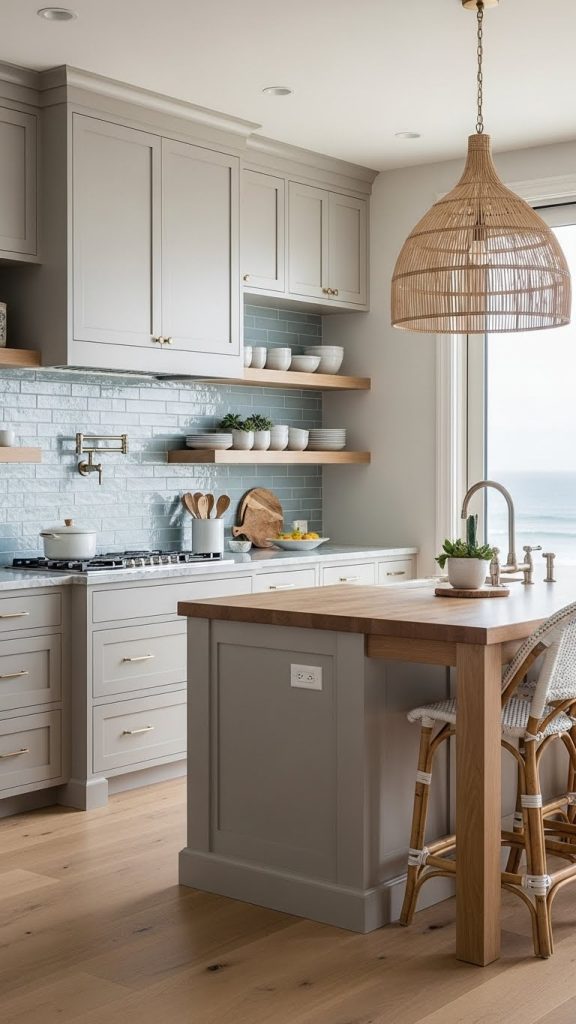
10. Soft Greige, Pale Blue, and Natural Textures
Greige—blending gray and beige—offers the perfect neutral for coastal kitchens.
Use greige cabinetry or walls as a foundation. Pale blue accents bring in coastal freshness, while natural textures like wood, rattan, and stone add warmth.
This palette works beautifully in open-concept kitchens and feels balanced in both bright and low-light conditions.
The result is a sophisticated coastal kitchen that feels modern, relaxed, and livable.
How to Make Coastal Colors Work in a Kitchen
- Choose muted tones over saturated colors
- Let natural light guide your palette
- Balance color with white and texture
- Use wood to warm cooler hues
- Avoid overly themed or nautical décor
A beach kitchen should feel like a breath of fresh air, not a costume.
Conclusion
A beach kitchen designed with coastal colors is about more than aesthetics—it’s about atmosphere. The right palette creates a space that feels open in the morning, relaxed in the afternoon, and warm in the evening.
The ten beach kitchen ideas explored in this guide show how coastal colors can be subtle, sophisticated, and deeply livable. From classic white-and-blue schemes to earthy greens, taupes, and textured neutrals, each palette reflects the calm rhythm of life near the water.
When chosen thoughtfully, coastal colors don’t overpower a kitchen—they support it, allowing light, materials, and everyday moments to shine.